Yearly Archives: 2020

the wrong way round #by boat

the wrong way round #by boat

by Rob and Lesley Pearson

The Wrong Way Round #byboat is a journey of discovering the 2,000 miles of inland waterways. This of course led to Lesley & Rob taking Artistic licence to record their adventures, by drawings, maps and the written word.

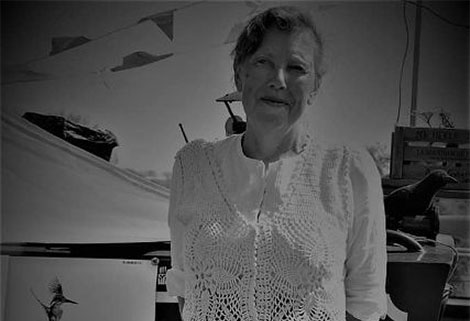
Rob & Lesley Pearson have been travelling traders since 2014. Lesley is an Artist who has taken to creating drawings and maps of their journeys. Rob is a computer programmer.

Rob's claim to fame are his jottings about the beginnings of their journey on NB Hekla. They came into being initially as a short story about ‘The Long Way Round’ which was featured in Canal Boat Magazine. The success and feed back from this article prompted Rob to divulge more of the  journey, as the magazine article alone didn’t seem to give enough of the essence of that journey.

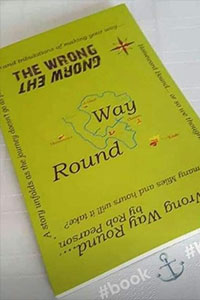
Rob's book came to life in 2015 as ‘The Wrong Way Round’ which is available on Amazon.

Lesley is a member of the Guild of Waterway Artists and of the Association of Animal Artists. She describes herself as a travelling artist: "the journey is the artwork and the art work is the journey".  For the last four years the Pearsons have been exploring the inland waterways, with Lesley making drawings & maps of things they have seen, and putting her art together with Rob's prose - so combining history and the things they encounter.

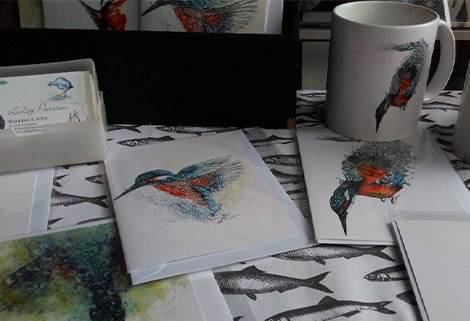
Lesley offers prints of her beautifully illustrated maps for sale, as well as prints of her waterways and countryside paintings. She also sells mugs with her paintings on and stunning cards for all occasions.

cards, prints & mugs by Lesley Pearson

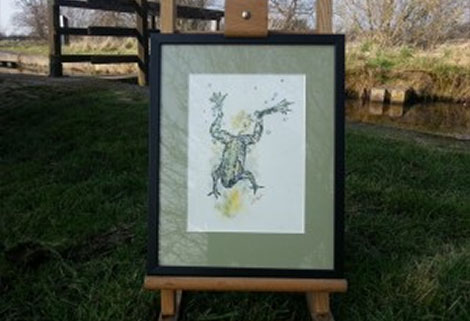
lesley pearson, easel & painting

our journey

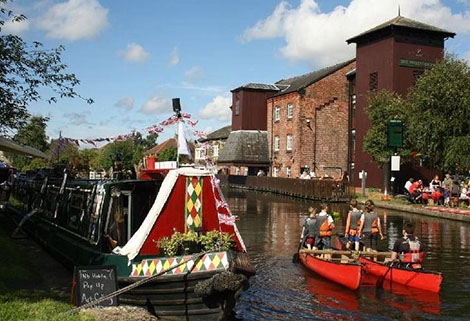
We have travelled almost all of the northern canals and river navigations in the UK. It has been a carry on from our genuine interest of ways to travel. It’s a way of seeing a country, people,  and  how people live and interact with each other. We try to embrace it as a way of life, which leads me on to ‘steampunk’, an alternative way to look at life and to what is important about how you embrace it.

steampunk

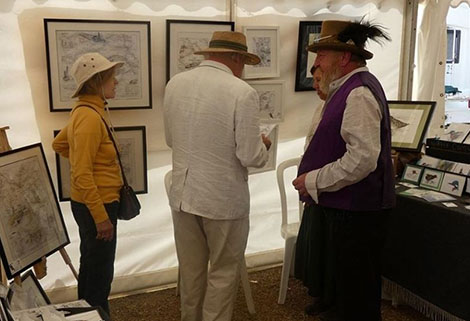
Our alter egos are Captain Pepsi and Miss Mavis Ming; which is why you will see us dressed in a peculiar way. Time travellers from the last century - with a tongue in cheek humour which we find amuses people we meet.

Rob Pearson

lesley pearson

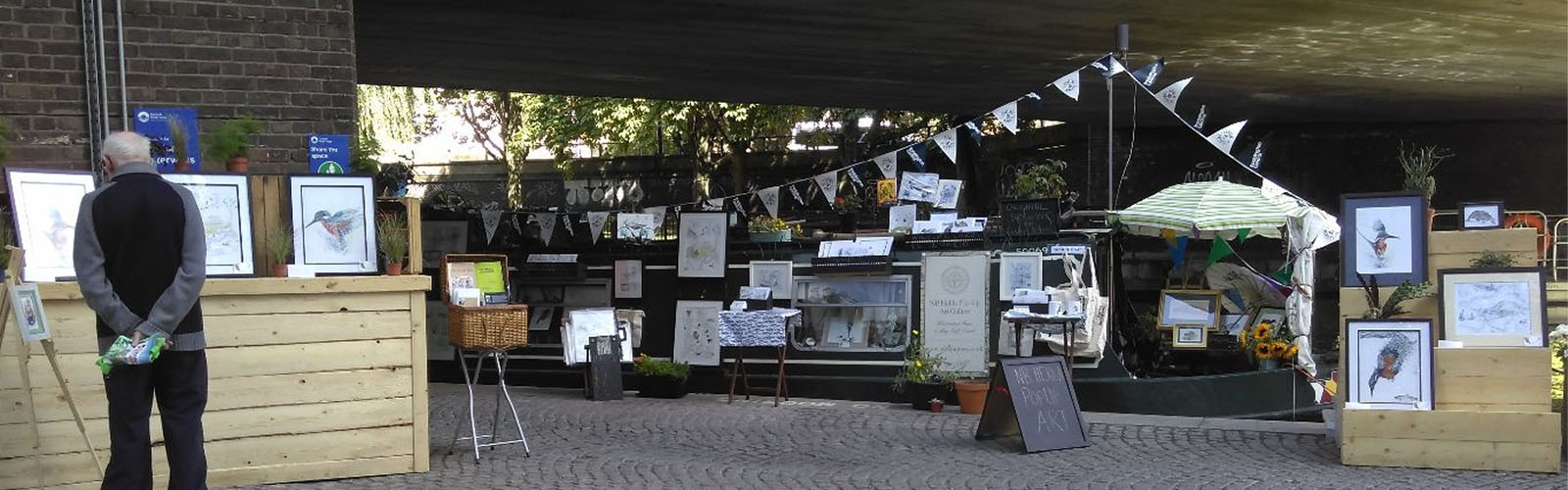
NB Hekla PopUp Art

It is what it is.. we PopUp in unexpected places, much to the surprise of our followers. We enjoy festivals, markets and of course we open up in places we visit - be it a town, city or just out on the towpath. There is no rhyme or reason to it -  it’s what takes our fancy.

This year has been a bit strange as we were deciding to head South for the summer. However, as with most people, Corvid19 has put a halt to any plans we might have had. We just watch the tide and see where it will take us. We are currently on the Chesterfield Canal in Nottinghamshire, waiting for the news of the all clear. Then we will be off South, hopefully.

Lesley & Rob PearsonRob and Lesley are currently open for business on the Chesterfield Canal, and of course with their on-line shop.

Check out their webpage for more of what they  are and have been up to; follow NB Hekla PopUp Art on Facebook, and visit their on-line shop.

To buy a copy of The Wrong Way Round, visit Amazon.

rescue of river soar narrowboat

rcr to rescue narrowboat on river soar

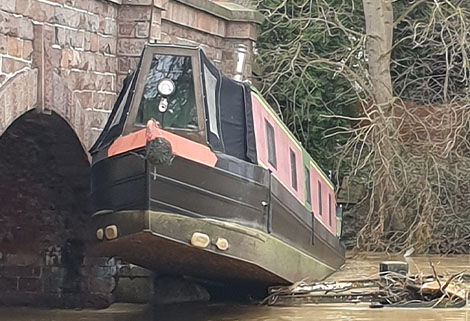
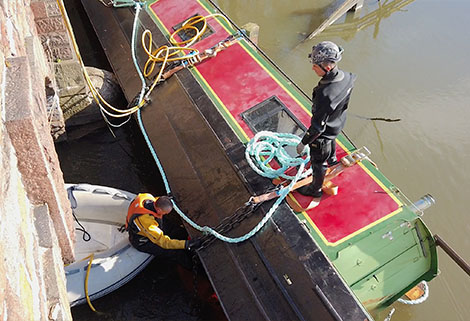
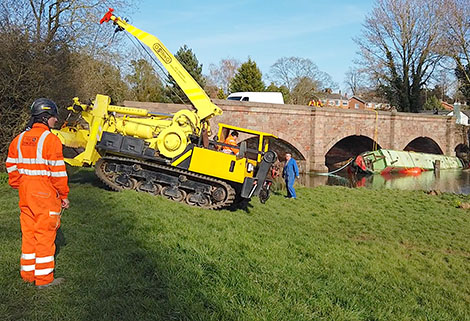
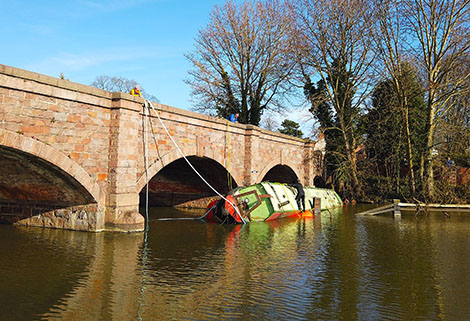
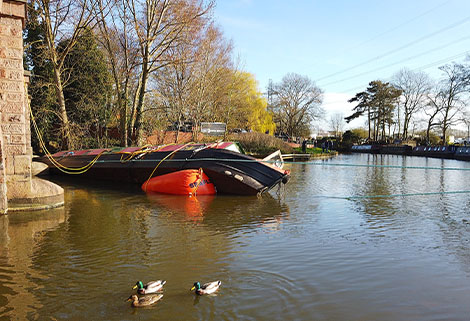
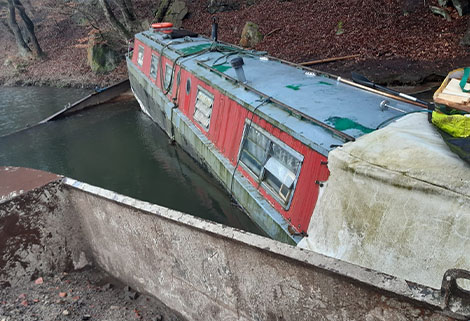
River Canal Rescue will be raising the capsized narrowboat at Barrow, on the River Soar, on Wednesday 25 March. Torrential rain and surging water caused the boat to break its moorings, sending it down river to bridge 30 where it became wedged.

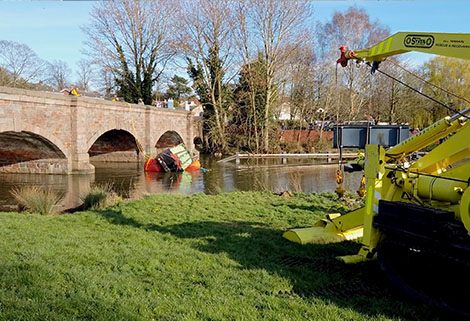
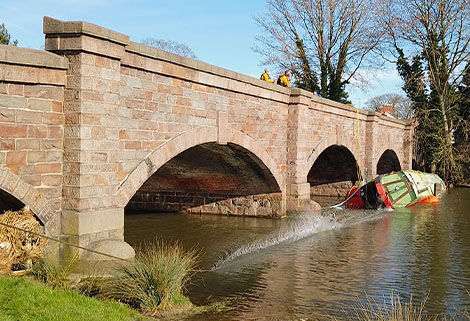
rcr boat rescue at Barrow on SoarThe vessel was left in a precarious position, with the bow in the air and stern in the water, see-sawing on the barrier.  A refloat could not be undertaken until flood waters receded, however as levels quickly went down, the barriers gave way, resulting in the vessel capsizing and becoming trapped between the bridge pillars and the barrier pole.

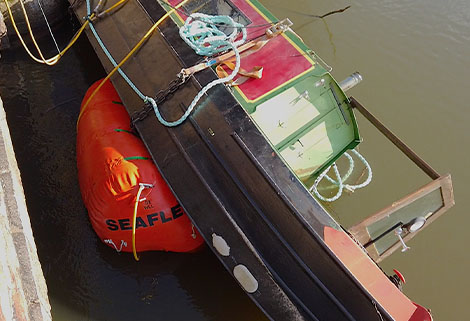
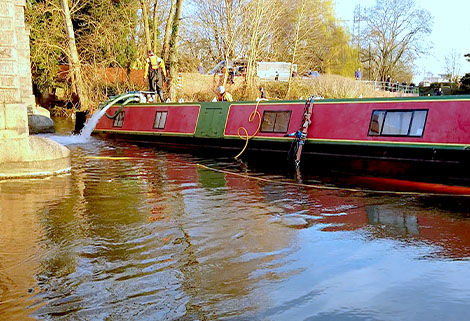
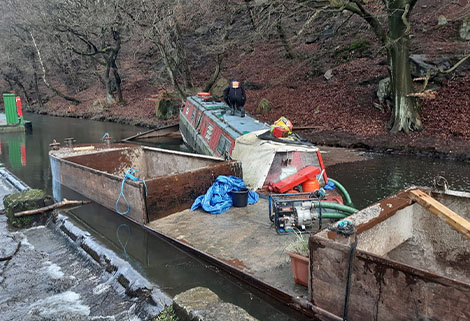
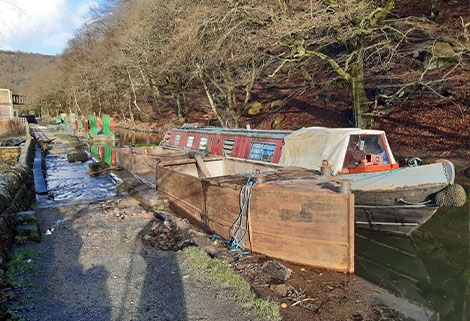
This multi-agency rescue will also involve Essex Boatyard and Crouch Recovery. RCR managing director Stephanie Horton explains: “The best way to undertake this recovery without the vessel overturning and sinking in the river is to use divers, airbags and plant machinery. We’ll inflate the airbags, right the boat and then pull it forward away from the bridge with airbags on it. We’ll then pump it out, make it secure and tow it to a safe location – Pillings Lock.”

From here, the boat will be lifted onto a transporter and taken to a local yard for storage and assessment.

RCR narrowboat at barrow on soarGiven the extreme weight of the boat, RCR is using four winches with a total of 20-ton capacity to pull it away from the bridge. Stephanie continues: “This ‘pulling power’ will be attached to plant machinery and we’re removing a fence in the field opposite to get access to the location without causing too much damage to the meadow.”

In order to prepare the rigging, Essex Boatyard practised on a narrowboat that was capsized at the same angle as the stricken vessel.

River Canal Rescue will be onsite from Monday 23 March, preparing equipment, strapping the boat and managing health & safety issues.

Narrowboat Rescue on 25th March

photos by Mike Brown

rigging

soar narrowboat rescue

air bags attached to stricken narrowboat

fixing the tow

start of haul

castles and roses

castles and roses

phil speight introduces his dvds and tells us how he came to make them

course bookings now being taken

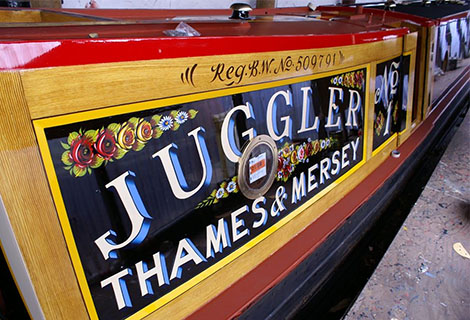
Book your course today.  Learn signwriting skills and become an expert in painting castles and roses from the well renowned Phil Speight

To book your place or request further information, see contact details below

Canals Online asked me to write a piece about my motivation in producing a series of tuitional DVDs on traditional narrow boat decoration: I thought it would be easily done. However, having thought about the subject for three or four days now, it seems it was harder than I expected it to be!

To do so I must go back forty years, to the beginning of my career on the canal. The first roses and castles I painted were much admired by friends and family. This, and my own satisfaction with them, was – I now realise – misplaced. In short, they were attractive in their own way, but WRONG. Not perhaps wrong in their actual appearance, but wrong in the description I knew them by. I described them as ‘traditional canal art’ and certainly, the word art in itself begs the question – was it in fact art, or was it craft? The distinction has not gone away with the passing of the years. It’s still a valid question. My bigger error was in describing them as ‘traditional’. I did so because at that time, I had not made the in-depth study of canal art and culture which I am still pursuing to this day. It seems to me that, innocently enough, my mistake is one that many modern painters still make.

Phil Speight Canal ArtTimes have changed on the canal. The ‘old days’ are fading and a whole new community of canal dwellers and leisure boaters has arrived. This cannot be a bad thing, because it ensures that we still have canals to enjoy. With it has come a whole new generation of painters, many of whom have taken up painting roses and castles. A substantial number of these are producing attractive work, which is much admired but has drifted away, over the years, from the original.

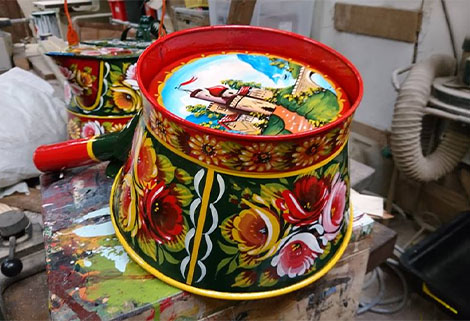
Roses and castles were, in the days of the working boats long before the leisure boom, part of the culturally important decoration applied to the boats. Working canal families, a completely separate subculture, had many cultural, social and working practices that were entirely their own. The decoration on the boats was of great importance to them. It appeared not only on the boats themselves, but also on some items of boating equipment: water cans, nose tins, hand bowls, cabin stools, seat boards and so on. The flowers were bold, as big as the space would sensibly allow, and painted with great verve and vigour.

Phil Speight canal artNowadays the painting has, quite understandably, spread to all manner of items which can be acquired, painted and sold more easily than the original boating equipment. As a result of this, when some of this painting is applied to boats and associated items, it does not have the power and panache of the original. It has been developed for much smaller articles, and a much different market. None of this implies any criticism of the excellent painters who are producing this work. It is simply that the traditional motifs which we all love have, of necessity, been greatly modified and adjusted to suit a completely new range of artefacts. Consequently, they can’t rightly be described as ‘traditional’ good as they are.

Now, to my DVDs. They were produced for a number of reasons. One has to be money! But be assured that the amount earned this way should be seen as beer money, not a significant proportion of my income. Secondly, they are self-published and I suppose there must be a degree of ego or vanity involved.

The main reason, though, is that I wanted to record, for the benefit of newcomers to the art (or craft), the things I have learned about the real tradition and its practice over forty years of continuous learning. I hope that although I myself still have much to learn, my pursuit of this important area of English cultural heritage will be of use to those who really wish to learn it.

This is my contribution (though others of great scholarship have done so much more) to preserving our canal heritage. Hopefully future painters will be able to look at my DVDs and add my research to their own, to produce something even more authentic.

Phil Speight Canal Art
Phil Speight signwriter

No1:  Roses

  • Around I.5 hours long.
  • Filmed over the shoulder and with close ups of the various brushes as they work.
  • All materials in use in any given process are listed on screen as well as described in the commentary along with verbal descriptions throughout.
  • Two swags of roses painted. They are the same layout but the first is relatively basic and the second is much more developed.

No2: Castles

  • Around I.5 hours long.
  • Filmed over the shoulder and with close ups of the various brushes as they work.
  • All materials in use in any given process are listed on screen as well as described in the commentary along with verbal descriptions throughout.
  • One castle is painted.

.

No3: Signwriting

  • Set of 5 DVDs, running time about 6.5 hours
  • Starts with how to paint the simplest of block capital letters and goes through the alphabet as far as necessary
  • It covers both sans-serif and serif letters
  • Then how to lay out writing on a cabin side
  • The whole finishing up on screen as a fully written panel with serif, sans and script lettering

Phil Speight SignwriterHow to Paint Roses and How to Paint Castles are available for £13.50 each, or £25 for the two.

The 5 disc box set To the point - Signwriting is available for £25.

Email or ring Phil 07368 244866 for details and to order.

MNA becomes volunteer ambassador for RNLI

MNA becomes volunteer ambassador for RNLI

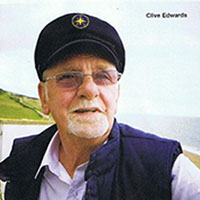
Clive Edwards tells MNA members how they can become ambassadors for the RNLI

Merchant Navy Association (MNA) Boat Club become RNLI Ambassadors to promote the RNLI’s Respect the Water Campaign on the UK’s inland waterways

merchant navy association boat clubOn behalf of the MNA Boat Club I’m delighted to announce the publication of the leaflet (transcribed below) outlining the partnership  between the MNA Boat Club and the Royal National Lifeboat Institution (RNLI) to promote the RNLI’s “Respect the Water” campaign to reduce the number of drownings around the coast and especially on our inland waterways.

I am delighted that the hugely respected RNLI has recognised the experience, skill and knowledge of MNA members by choosing to work with the MNA Boat Club.  The RNLI has now extended the opportunity to all members of the MNA with an invitation for them to play a part as “Ambassadors”  in promoting the RNLI’s “Respect the Water” campaign aimed at significantly reducing the 150 plus fatalities each year as a result of drowning.

“I am delighted to be working alongside the MNA with this initiative. We have a variety of ways of promoting our safety messages, but nothing beats a face to face conversation with a knowledgeable person. MNA members acting as RNLI Volunteer Ambassadors will be able to pass on their experience and knowledge to others in order to save more lives around our coasts and waterways.”  Steve Instance, RNLI Community Safety Partner.

This initiative has now been endorsed by Sir Robin Knox-Johnston who says “I am really pleased to see the Merchant Navy Association (MNA) Boat Club join forces with the RNLI to reach inland waterway users with safety messaging, helping to raise awareness of the Respect the Water campaign. MNA Boat Club members are former professional seafarers with a wealth of maritime experience and expertise so they are perfectly placed to support the RNLI’s prevention work in non-coastal waters. As a former Merchant Seaman and a Vice President of the RNLI, it’s great to see these two organisations working together to reduce accidental drowning in the UK.Sir Robin Knox-Johnston CBE RD

For further information please contact:

Katie Beney, RNLI National Community Safety Partner, Email  or Clive Edwards, MNA Boat Club Commodore Email  

Why is the MNA supporting the RNLI?

RNLI flag

The RNLI’s mission is to reduce accidental drowning by 50% by 2024; around 150 lives are still lost at the coast every year. Through a combination of communication, products and face-to-face interaction, the RNLI’s Community Safety Team is driving behavioural change in and around the water. These interventions are delivered at a local level by some 500 Community Safety Volunteers across the UK and Ireland.

Most of these volunteers are based in coastal communities, close to RNLI lifeboat stations and lifeguarded beaches.

However, two in three accidental drowning fatalities take place at inland waterways.

The RNLI is collaborating with the MNA to reach these inland communities and coastal areas where they currently don’t have representation and/ or require additional support.

Working in conjunction with the MNA’s Boat Club members and SeaVue Surveillance Scheme will enable the RNLI to reach wider audiences with safety messaging and signpost water users to additional resources and support available. In doing so, the MNA will play a valuable role in helping the RNLI reduce accidental drownings by 2024.

I am really pleased to see the Merchant Navy Association Boat Club join forces with the RNLI to reach inland waterway users with safety messaging, helping to raise awareness of the Respect the Water campaign. MNA Boat Club members are former professional seafarers with a wealth of maritime experience and expertise so they are perfectly placed to support the RNLI’s prevention work in non-coastal waters. As a former Merchant Seaman and a Vice President of the RNLI, it’s great to see these two organisations working together to reduce accidental drowning in the UK.” Sir Robin Knox-Johnston CBE RD #PreventingDrowningTogether

The role

merchant navy association ensign

The RNLI is asking MNA Volunteer Ambassadors to promote safe practice on inland waterways and around the coast by communicating guidance to boat owners, watersports enthusiasts, marina operators, boat-hire companies, waterside pubs/restaurants and walkers. Using your maritime skills, knowledge and experience, you will be essential ambassadors for the RNLI’s safety messaging and Respect the Water campaign. This could be through passing conversation with fellow water users, discussing the latest means of calling for help and encouraging lifejacket use to distributing leaflets and posters to operators and venues.

Prior to getting out and about, the RNLI will discuss your locality with you to ensure there is no crossover with other volunteer networks.

Please note: there is no requirement to deliver safety presentations; should an individual/organisation require further advice, an RNLI Community Safety Volunteer will be available to deliver Advice Onboard sessions, Lifejacket Clinics etc.

See THE RNLI – WHAT WE CAN DO FOR YOU

Time commitment

As much or as little as you can offer

RNLI Respect the Water campaign

RNLI Respect the Water Campaign

Respect the Water (RTW) is the RNLI’s national drowning prevention campaign. RTW is aimed at promoting safety advice to all who visit the coast and inland waterways, from walkers to commercial fishermen. RTW aims to show those most at risk the potential dangers of water, to encourage them to reconsider their actions, and adopt safer behaviour. Since 2017, it has focused on asking the public to fight their instincts and remember two memorable skills:

  • floating which could save lives from drowning;
  • and to call 999 or 112 and ask for the Coastguard.

The 2019 campaign launched on 30 May and ran through to the end of August with radio,  cinema and print advertising and social media content.

Support and resources available


On agreeing to be an MNA Volunteer Ambassador you will receive a pack with further guidance, key safety messages and printed materials (leaflets and posters) to distribute in your agreed areas. You will also be sent a tally sheet to record conversations/ interventions to enable the RNLI to monitor reach and impact. Additional resources can be requested at any time.

The links below provide additional information and downloadable resources.

www.respectthewater.com
public facing campaign website with practical advice on how to float with stories of survivors who have followed the advice

www.rnli.org/rtwresources
here you will find all the resources you need to support the national RTW campaign and advice on key ‘at risk’ activities (angling, boating, walking, kayaking, scuba diving, commercial fishing and walking) plus ‘How To’ videos on fitting, checking and maintaining your life jacket.

www.rnli.org/safety
essential safety advice so you can make the most of your time on the water

www.rnli.org/safety/what-we-can-do-for-you
additional safety advice provided by RNLI Community Safety Volunteers

MNA contact

For further information on the MNA Boat Club and its collaboration with the RNLI, please contact Clive Edwards: Email

RNLI contact

RNLI logo

If you are interested in becoming an MNA Volunteer Ambassador, please contact Katie Beney in the first instance: Email

If you are based near a RNLI Lifeboat Station, Katie will put you in touch with the relevant  contact at the station. If not, she will remain your point of contact and be able to provide  assistance and resources to support your role.

Should you be interested in becoming a RNLI Community Safety Volunteer, working alongside your local RNLI Lifeboat Station, Katie will be able to make the relevant introductions.

Clive EdwardsCLive Edwards, Commodore MNA Boat CLub:  email

a fresh water warning

a fresh water warning

by Elliott Berry

Elliott Berry MIIMSAs some of you may know I contracted Leptospirosis in May 2014 and although I didn’t really want to write this article and elicit sympathy from anyone and have avoided writing it for a few years, I felt that now was the time especially with the increase in vessels being converted into houseboats.

I was called to a vessel that was apparently sinking in the River Medway.

Upon arrival at the vessel it was clear that the vessel was in fact afloat still but had a large volume of water in the after cabins. My first response was to ascertain whether the water was  indeed from an external source i.e river water or from an internal source i.e. a fresh water leak.

As I had done many times previously I conducted simple taste test and quickly ascertained that it was in fact “fresh” water. I then examined the vessel’s water system and found that all piping was still well installed and properly connected and that the water tank was in good order with no sign of leaks, a mystery indeed.

I advised the owner to pump out the water and to keep the area under observation and to call  me if any further water were to appear. After six or seven days I had heard nothing.

During the next couple of days, I had been doing some work in the garden at home and started  to feel unwell but initially I put that down to having overdone it. Over the next few hours I started to feel weak and developed a serious headache, at this point I rang the doctor and made an appointment. Initially the doctor intimated that it may be meningitis but that as I had no rash or sensitivity to light was quickly dismissed. The advice was to go home, drink lots of water and take paracetamol and to return in a few days if the symptom persisted.

Unusually for me I followed the doctor’s orders but the weakness and headache became  progressively worse and I developed uncontrollable shivering and so a visit to the Accident and Emergency department ensued upon which it was decided that I had contracted hepatitis A and should go home, drink lots of water and take paracetamol.

That night my wife became increasingly concerned as I had developed a fever so a further visit to hospital was undertaken. Upon arrival, it was clear to the doctors that something was  seriously wrong and I was admitted immediately and placed on a saline drip.

The next few hours are a bit of a blur but a huge number of blood tests, CT scans and ultrasounds were carried out and initially nothing was diagnosed although the blood tests showed that my liver had extremely elevated readings.

I was given numerous antibiotics and liquid paracetamol over a 24 hour period but the 41 degree fever would not subside, to the point that it was clear that my life was at risk.

A series of different medications were administered to me and, after eight days in hospital, I  had recovered sufficiently to return home although at that point nothing had been officially  diagnosed and the only possible suggestion to fit the symptoms was leptospirosis despite not  showing up in blood tests.

After a further three weeks convalescing, I was able to return to work and some investigation into what may have caused the illness was undertaken.

As it turned out, the vessel in question had been converted to a houseboat some twenty years previously and the bilges were cleaned out but, instead of disposing of the contents properly, the liquid and debris were placed into one of her ballast tanks. The tank had subsequently corroded from the inside and had deposited its contents into the aft cabin ready for an unsuspecting surveyor to taste it. Obviously, the true contents of the water are unknown but I can assure you that I no longer undertake taste tests on water and advise that no one else does the same.

In order to prevent anyone suffering the same as I did, I thought it prudent to highlight the  dangers faced when working in or around water.

Introduction to Leptospirosis

Leptospirosis is a bacterial infection caused by certain members of the genus leptospira.

LeptospirosisMost people who develop a leptospirosis infection only get mild symptoms but a bit more serious influenza- like symptoms are also quite common. In a minority of infected persons, leptospirosis develops into the dreaded Weill’s disease. Weill’s disease is a serious condition that can involve liver failure, kidney failure, meningitis and sepsis. Weill’s disease can be fatal.

Weill’s disease is caused by leptospira interrogans belonging to the serogroup Icterohaemorrhagiae or Pomona. A person who develops Weill’s disease will usually have gone through influenza like symptoms of leptospirosis for a week or so and seemingly be well on their way to recovery. After a short period of no symptoms or only mild symptoms, the person gets very ill with symptoms of poor liver function, poor kidney functions, meningitis and/or sepsis. The lethality for Weill’s disease is 5% – 10%.

Transmission

Urine and blood from a leptospirosis infected person or animal can contain a sufficient amount of bacteria to spread the disease. A common transmission route for humans is getting urine or blood from an infected animal on damaged skin. Even a tiny skin abrasion can be enough for the bacteria to get into the body. Leptospira bacteria can also enter the body through mucous membranes, e.g. those found in the eyes, nose, mouth and genitals.
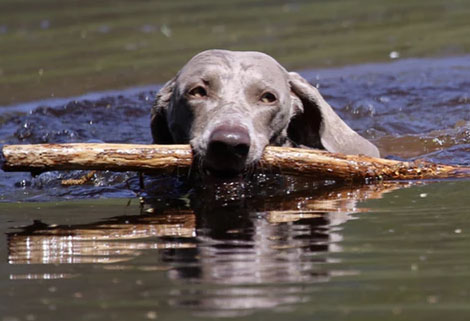
dog retrieving stick from waterWhen infected blood or urine gets into water or soil, the bacteria can survive there for several months.

Many different animals can carry and transmit leptospirosis, including dogs, rodents, cattle, horses and pigs. An infected animal is often symptom free and can continue to excrete bacteria into the environment year after year.

The incubation time for leptospirosis in humans is usually one to two weeks but anywhere from 48 hours to more than a month has been reported.

​Symptoms

Examples of symptoms from the eyes
  • Eye inflammation can occur, with reddening of the eyes and increased sensitivity to light.
  • If leptospirosis bacteria causes liver inflammation with poor liver function as a result, one noticeable symptom can be the yellowing of the sclera. The sclera is the white part of the eye; the part that surrounds the iris. When the liver isn’t working properly, the sclera becomes yellow due to increased levels of bilirubin in the body. In some cases, the sclera can even look greenish. Always check your eyes before you put in your contact lenses if you wear colored lenses. If you do not you risk not seeing the symptoms of leptospirosis, liver damage and a long row of different diseases.
Examples of symptoms from the skin
  • Skin rash
  • If leptospirosis bacteria causes liver inflammation with poor liver function as a result, symptoms can include the yellowing of the skin due to increased levels of bilirubin. In such situations, itchy skin is also common. In severe cases, the skin can look greenish rather than yellowish.
Examples of symptoms from the digestive system
  • Stomach ache
  • Diarrhea
  • Vomiting
  • If leptospirosis bacteria causes liver inflammation with poor liver function as a result, symptoms can include pale faeces and dark urine.
Examples of symptoms from the respiratory system
  • Coughing up blood (caused by lung bleeding)
Examples of other symptoms
  • High fever
  • Chills
  • Headache
  • Muscle ache

Edema Treatment

Leptospira bacteria are sensitive to several different antibiotics, including well-known ones such as Penicillin and Doxycycline.

If the infection is diagnosed early and symptoms are mild, oral antibiotics are often sufficient. In more severe cases, intravenous treatment with antibiotics may be necessary. Each individual symptom can also require specific treatment. If kidney function is impaired, dialysis can be carried out.

When an MD has good reason to suspect leptospirosis in a patient, antibiotic treatment is typically started right away, without waiting for test results.

How quickly can an illness develop?

Human leptospirosis takes a while to incubate, and the normal range between exposure and illness is 3 to 14 days, although it can take up to 21 days. It’s considered extremely unlikely that the illness would show earlier than 24 hours after exposure, even if the patient was otherwise unwell. In rare cases the incubation time can be very long (several weeks) but we normally assume that if there is no illness after 30 days then infection is either not present, or was subclinical.

Illness that develops within 12 hours of the exposure event would not be leptospiral in origin. Often infections that involve contaminated water can show illness very rapidly, caused by the effects of other unrelated bacteria and viruses in the water (such as E.coli or cryptosporidium) or from some chemicals, and while these would not in themselves normally be life-threatening, they can mask the later symptoms of leptospirosis.

The incubation time depends on the strain of bacteria involved, as some strains reproduce faster in human blood than others, but the main factor is the size of the ‘inoculum’ – the dose of bacteria that entered the patient during their exposure. Although it’s perfectly possible to be infected from a single bacterium, in reality the illness develops because the rate that the bacteria are reproducing is faster than the patient’s immune system can control. Bacteria grow by splitting in half, so one becomes two, two become four, and so on. If the patient received a large number of bacteria from the initial contact then the numbers in their bloodstream will be larger, and increase faster – hence the illness develops sooner.

It’s very difficult to predict the incubation time in a patient, but in very general terms the concentration of bacteria in the inoculum will be important (water from a large clean river will have many times less bacteria per litre than urine direct from a rat) and the volume that enters the body (infection via small cuts to the skin usually involve very small volumes of liquid, but swallowing water after a fall into a lake will of course involve far more. The balance of course is that the situations where patients suffer a high-volume intake are usually those where the liquid has a low concentration (you are unlikely to fall into a tank of rat urine).

Precautions against infection

To minimise the chances of infection, the only truly effective way is to avoid contact with contaminated water and animals, thus avoiding exposure to the bacterium. If you are in a high risk area, you should always attempt to minimise contact, as there are many hundreds of other organisms that can lurk in the water apart from Leptospira. Unless you are required to enter the water, you should stay away from it. Animals themselves present a risk while infected, as their body fluids can contain the bacteria.

Water

The vast majority of human cases are from contaminated water, and of those the majority are  occupational cases from areas of the world where agriculture and rodents mix – rice-farming, cane-growing and so forth. Recreational exposure is next, with cases amongst swimmers being the obvious top grouping. Lowest of the risk groups is occupational exposure in the developed world – water and sewer engineers, construction, pest control and so on.

Clearly there are problems in preventing exposure in the highest risk activities (rice-farming and such) and in those areas the only option is to be aware of symptoms and seek early treatment. At this time there is no universally-agreed human vaccine, and the preventative use of antibiotics can only be considered for short periods.

Swimming is the greatest risk, and several cases are reported each year from swimming in  contaminated water (both in the developed world and in activities such as adventure racing). There is no practical way to prevent exposure as some water will always enter the mouth. For one-off activities such as expeditions there is an argument for using a preventative antibiotic (doxycycline) which can offer increased resistance to illness for a few weeks. It should never be used long-term.
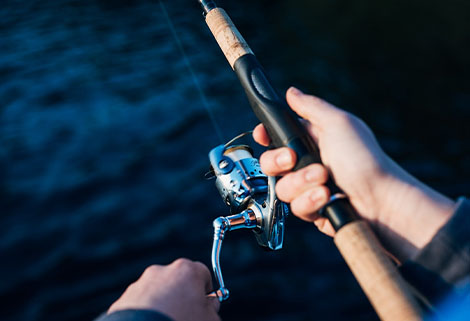
Anglers and bankside/sewer workers should wear splashproof clothing and expecially gloves. Anglers are at higher risk as it is reasonably common to cause minor cuts with hooks, knives and the like, and this greatly increases the ease by which the bacteria can enter the body. Fish caught from suspect areas should of course never be eaten. Whilst cooking does in theory kill any bacteria within a fish, very often the level of cooking is insufficient to guarantee safety.

Recreational exposure (swimming, skiing, sailing, caving, etc) is clearly done at the person’s own risk and they must weigh up their own balance of risk vs. desire. The same preventative measures apply – minimise the risk of water entering the body by any and all means, consider antibiotics if the risks are very high, and be aware of the symptoms and seek treatment immediately. There are no ‘quick fixes’ to prevent infection. Some swimmers wash their mouths with antibacterial rinse, though this has not been proved to offer any significant benefit other than keeping their teeth clean.

Scuba divers, who are particularly at risk, should opt for drysuits and try as much as possible to avoid swallowing any water when purging or changing regs. Commercial divers are required by their employment regulations and insurance to comply with strict rules when working in contaminated water, these include the use of hard-hat systems, wash-down stations and regular medical testing.

Remember that this advice applies to FRESH water – the risks in saltwater are virtually zero.

Elliott Berry is the owner of Marsurv, Independent Marine Surveyors and Consultants, and is himself an independent Marine Surveyor/Naval Architect & Consultant.

This article was first produced for and published by The Report in June 2017

Call: 0844 567 7709 / 07500 881731; Visit website or write

overwater marina celebrates 10th anniversary

overwater marina celebrates 10th anniversary

Overwater Marina

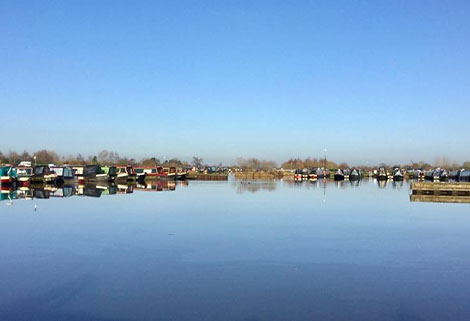
This year one of the networks best known new-build marinas celebrates its 10th birthday.

Overwater, on the Shropshire Union, near the vibrant canalside village of Audlem reaches its milestone in the spring and to celebrate its first decade the owners, Janet & Angus Maughan are planning a big giveaway of gifts to moorers.

The marina has come a long way since 2009 when it began life as a diversification project for the Maughan family farm. Richard, Angus’s father had farmed the land for over 50 years and was keen to see his son and daughter-in-law diversify into such a picturesque project. The Overwater name itself was chosen as the farm in the late 1800’s was originally called ‘Over the Water’. When Richard came to the farm in 1960, he set up a pedigree dairy herd under the name Overwater.

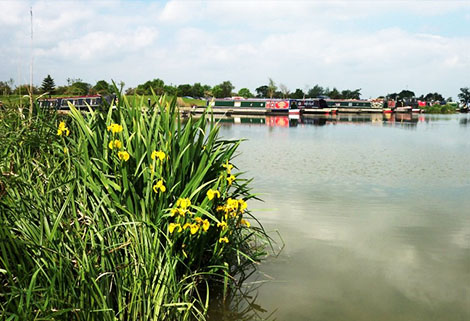
Overwater Marina with irises

Overwater Marina in tune with environs

Overwater was carefully designed to embrace its natural surroundings, with every mooring having a view over its lakeland design. The construction by Land and Water Services was carefully managed to allow the marina to concentrate on conservation and wildlife, and this,  coupled with its location in the middle of the rural Cheshire countryside result in it being a haven of peace and tranquillity.

The marina has become one of the most award winning in the country with a string of small business, corporate responsibility and Marina of the Year accolades to its name. Manager David Johnson believes “one of the reasons behind our success is the team that has been put in place to run the marina. Each and every member of staff complements the feeling of a family run business, one that puts the customer at the heart of everything”.

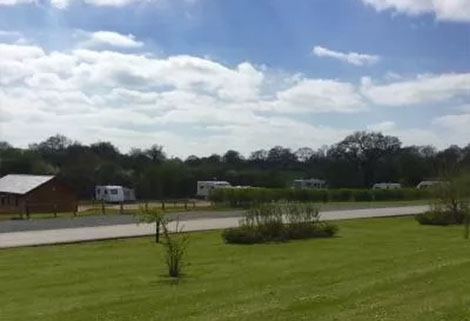
Over time the marina has matured and developed to embrace many aspects of the leisure industry. The addition of a workshop has meant that moorers can have their boats maintained without the need to travel. Also available are a small number of Caravan and Motorhome Club pitches and a small caravan touring park with fully serviced hard standing pitches. In addition, there are now only 2 pitches remaining on a small and bespoke development of holiday lodges which are available to buy with a 100-year site licence.

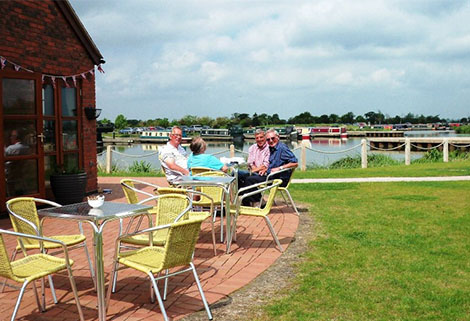
One popular attraction also remains Café at Bridge 80 which serves home cooked food, hot and cold drinks and delicious homemade scones and cakes 7 days a week.

Overwater Marine, the Café

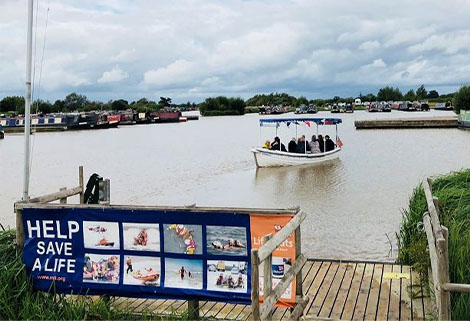
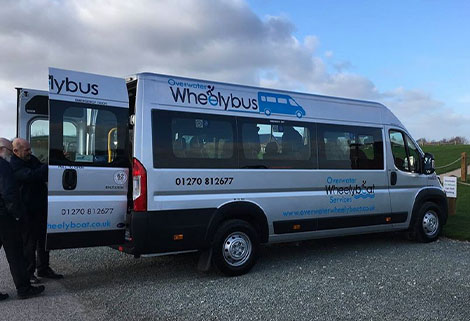
Always keen to support the local community and its adopted charity, the RNLI, the marina provides a base for the Audlem Lass Boat Service, a volunteer run water taxi which ferries passengers from the marina to the bottom of the Audlem flight and back every weekend and bank holiday between Easter and the end of October. For the less able bodied the marina is home to Overwater Wheelyboat Services, which provides wheelchair friendly transport on road and via the Overwater Wheelyboat.

Audlem Lass @ OVerwater Marina

Wheelybus at Overwater Marina

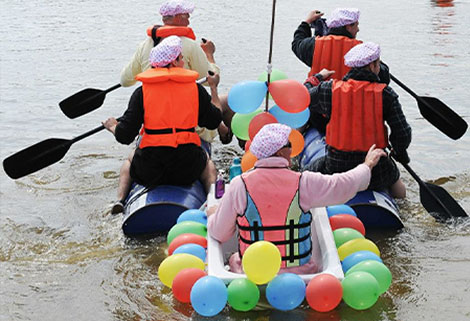
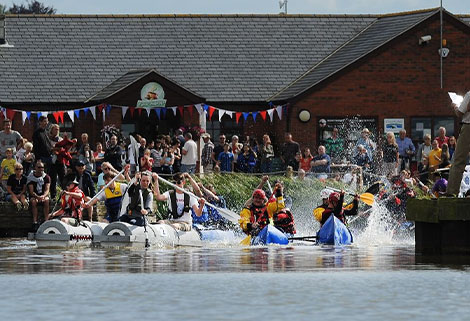
On the 12/13th September this year will also see the 10th anniversary of the popular RNLI festival which encompasses all things fun about being near the water, including a raft race, dog show and marquee craft market.

RNLI raft race at Overwater Marina

RNLI raft race at Overwater Marina 2019

Janet Maughan, one of Overwater’s owners says “family is at the heart of our business and our local community is very special to us. These are the gifts which we have which we can share with our customers. We’ve had a fabulous first 10 years developing Overwater and now look forward to many years to come.”

Overwater Marina LogoOverwater Marina is an award winning marina set in the Cheshire countryside at Audlem and offers moorings on the Shropshire Union Canal.

Tel: 01270 812 677 Write: info@overwatermarina.co.uk Visit: https://www.overwatermarina.co.uk

aftermath of the storms

aftermath of the storms

recent storms prompt 50+ major rescue call-outs for RCR

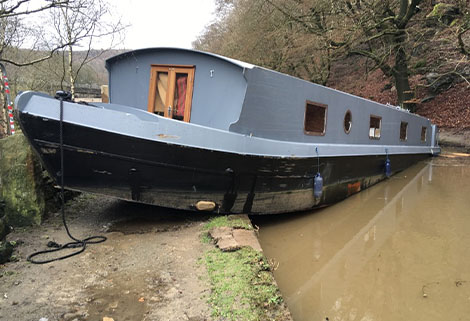
Since the beginning of the year, storms Brendan, Ciara, Dennis and Jorge have battered the UK, causing problems for boat owners across the inland waterway network. During this time - from 1 January to 3 March - River Canal Rescue carried out 52 major rescues (categorised as submerged, partially sunken or grounded craft).

From their bases in Chester, London, Manchester, Nottingham, Oxford and Stafford, RCR’s team of four rescue specialists and 12 supporting engineers worked flat-out, attending an average of around six rescues a week; all complex cases involving hands-on crews and head office support staff who monitored water levels, managed logistics and communication, and liaised with third-parties/stakeholders (often trying to pair up stricken boats with unaware owners).

Unprecedented rises in river/canal levels and sudden water surges across the country separated boats from their moorings, pushing them to new locations, often on towpaths and in fields, or wedging them against pontoons and other craft. Boats unable to cope with the downpours were soon reported as submerged.

A high number of calls were from boats on the rivers: Aire, Cam, Soar, Trent, Witham and Yare, and from vessels on the Aire & Calder, Calder & Hebble, Huddersfield Broad and Rochdale canals.

RCR reports that while some vessels were easily moved, others were trapped, unable to refloat until water levels receded or indeed rose again, and there are those posing more of a challenge.

Rescue co-ordinator, Tushka Horton, comments: “From the calls coming in, you could quickly identify the path of every storm and the destruction each left in its wake. Not every case was or is a simple boat raising; we sometimes had to use divers to help with the rescue or deploy a drone to find the vessel. Some could not be accessed with vehicles, others needed plant machinery to lift them which means liaison with third-parties such as the Canal & River Trust, landowners and the highways agency, and there were a few where we had to track down the owners and secure permission to attempt a rescue.”

Managing director, Stephanie Horton, continues: “These past few months have certainly been testing for boat owners and our staff alike, but we endeavour to act as quickly as we can to secure boats in trouble. I’m sure we haven’t seen the last of these storms this year and we will continue to work with everyone to ensure they keep their vessels as safe as possible during these difficult times.”

Case Studies

Pillings Lock, River Soar

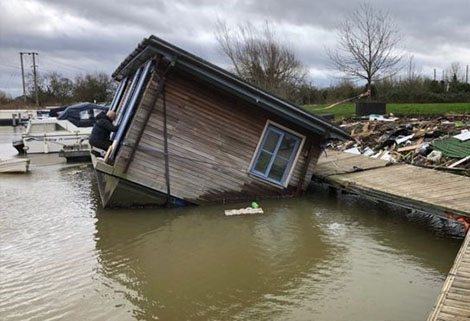
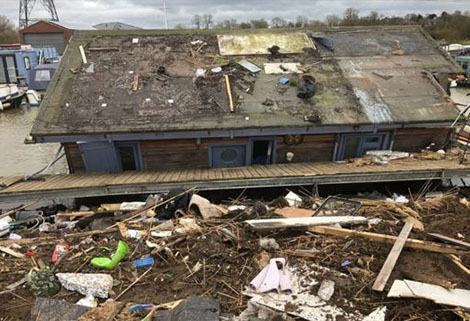
February - a houseboat at Pillings Lock on the river Soar. Moored next to a pontoon, the water levels rose so quickly the boat couldn’t adjust itself on its pilings in time. Water poured through the doors, causing it to list at a right angle and wedge itself on the pontoon. Despite attempts from a five-man team, the houseboat was too unstable to pump-out. A telehandler and tractor were used to brace the houseboat so further pumping out could be done.

Houseboat at Pillings lock courtesy BBC

houseboat rescue Pillings Lock

River Trent

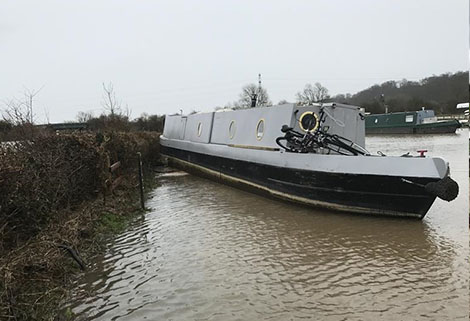
February – a 57ft narrowboat pushed onto river Trent towpath. A three man-team used ropes and scaffolding poles to manoeuvre the boat back into water.

Grounded narrowboat on river Trent

River Soar

February – a narrowboat on the river Soar, left stranded on the barriers by bridge 30 at Barrow. Surging water caused it to break its moorings, sending it down river to bridge 30 where it became wedged. The liveaboard was woken when the boat hit the bridge and he had to be rescued from the boat.

The vessel was left in a precarious position, with the bow in the air and stern in the water, see-sawing on the barrier. Until flood waters receded, it was decided that a refloat could not be undertaken. Unfortunately, as the waters receded the barriers gave way, resulting in the vessel capsizing and becoming trapped between the bridge pillars and the barrier pole. Due to weight restrictions on Barrow bridge and the condition of the ground, the rescue is not going to be straightforward.
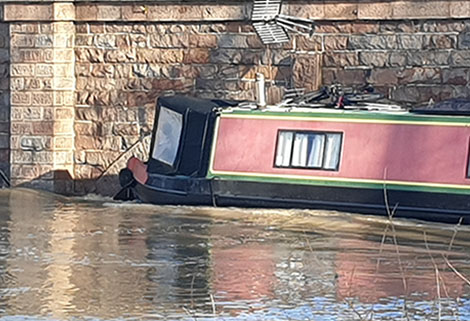
Leicester council and the tenant of the field opposite have agreed to access for heavy pulling equipment and divers are all in place. The rescue is now dependent on river levels, weather and authorisation from the Canal & River Trust.

RCR narrowboat at barrow on soar

rcr boat rescue at Barrow on Soar

Rochdale Canal

February – wide beam on Rochdale canal. water levels High water levels pushed boat onto tow path. The river rose so fast the boat floated onto the towpath and when levels receded, the boat was stranded. Rescue involved a three-man team, tirfors, rope, scaffold poles and a pump-out.

Widebeam grounded on Rochdale Canal

Hebdon Bridge, Rochdale Canal

February – narrowboat at Hebdon Bridge ended up wedged between CRT working boat and bank of Rochdale canal. The rescue team had to wait for levels to lower (in between the storms) and with pumps, manpower, tirfors, ropes and their experience, released the vessel.

rcr rescue boat at Hebden Bridge

the view from the boat broker’s desk

the view from the boat broker's desk

With a new decade starting the Aqueduct Marina team at Church Minshull in Cheshire began to discuss the changing way people view, buy and sell boats through the brokerage.

Aqueduct Brokerage and Sales Manager Ian and team look at the evolution of the boat brokerage.

Read More

heavy cable crimping

heavy cable crimping

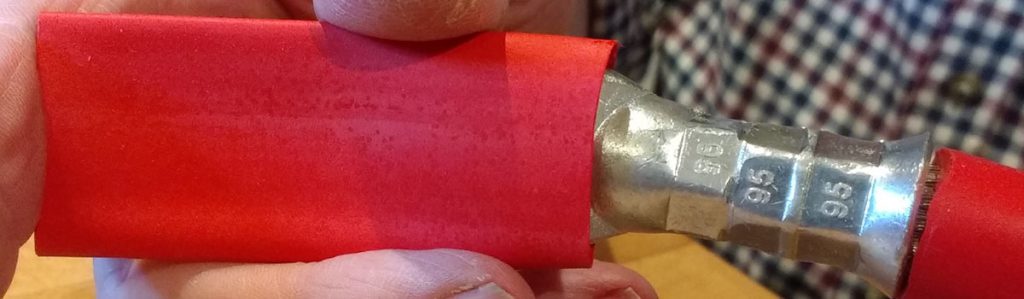
Oh dear what have I taken on, promised to do an article on crimping cable and ended up with 49 photos some duplicates so let's see how it goes.

Let's start with what is needed

heavy crimps

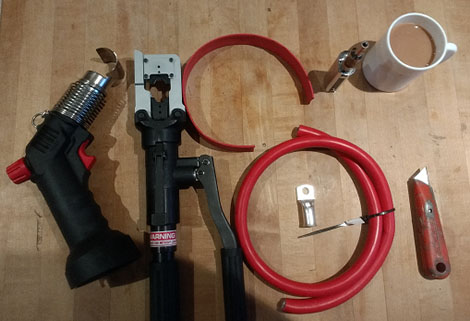
1. left to right: Heat gun for heatshrink; Crimper; Heat shrink insulation; Cable in this case 95mmsq; Termination 95mmsq with a 10mm hole; Vaper; Tea; Sharp knife.

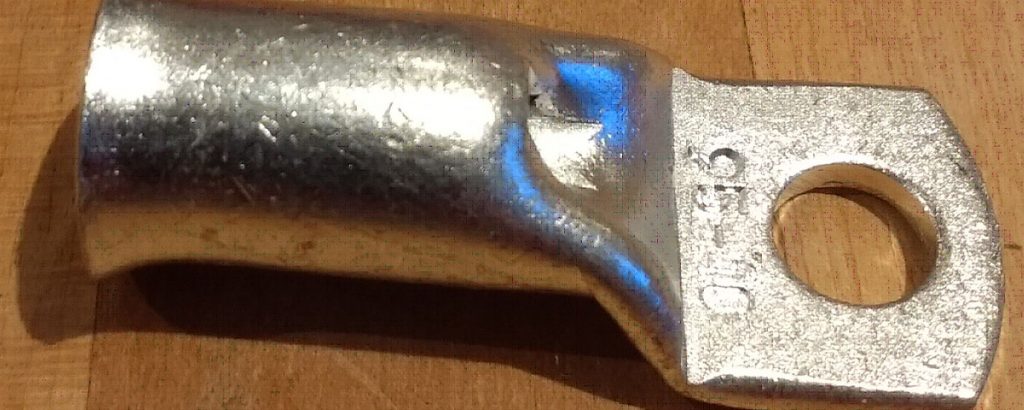
I suppose the next item should be the termination. All terminations that we use on boats should be tinned copper and the size of the cable it will fitted to and the size of the hole should be impressed on the spade of the termination.

To make our lives easier it is better to buy ones where the cable entrance is slightly belled – that makes it easier to insert the cable. The hole for the cable is a close but loose fit.

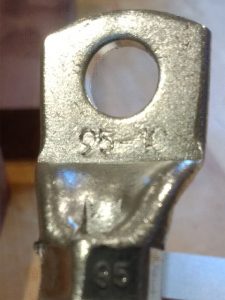
2. termination

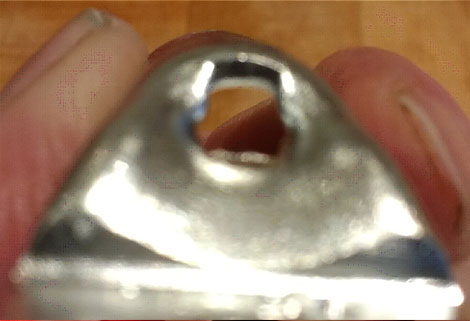
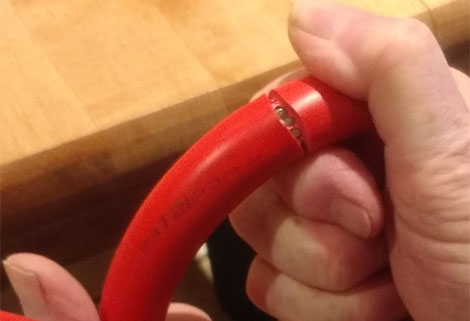
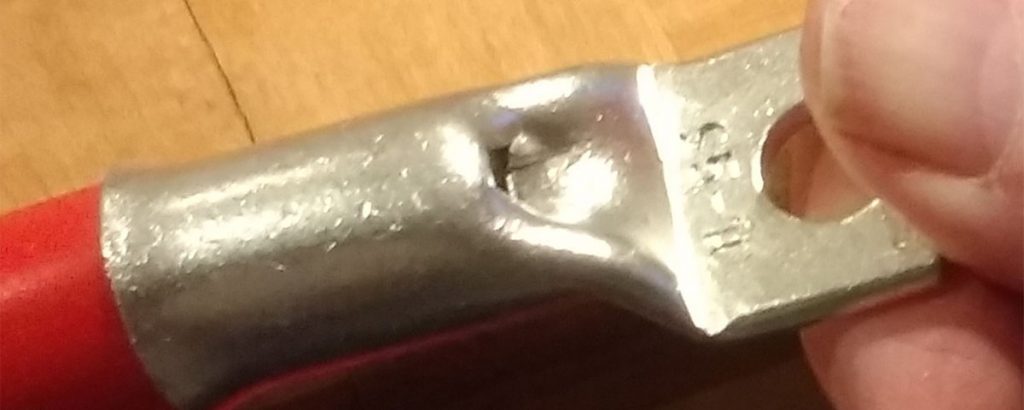
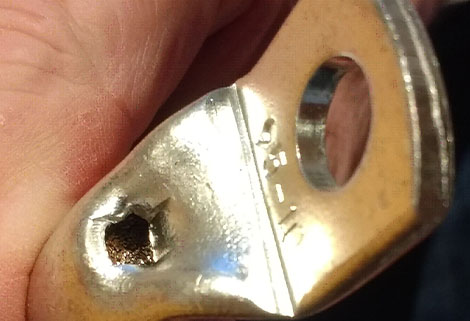
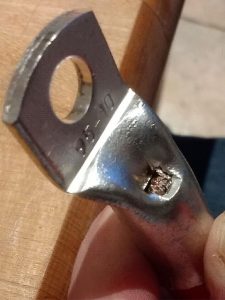
At the spade end of the tube is a hole the hole is useful as it allows you to see if strands are fully filling the barrel and the ends of the stands should be very visible but we will get to that later.

3. hole in the termination

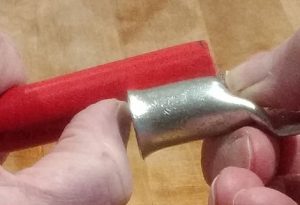
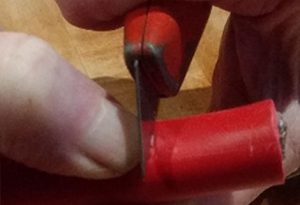
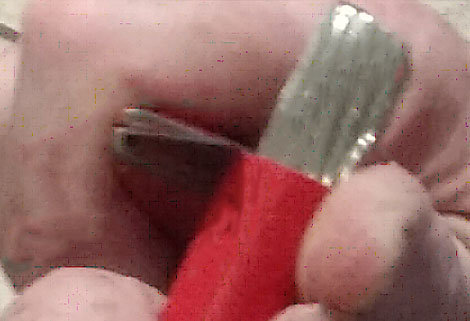
Now we need to prepare the cable end to go into the termination, The easiest way I find is to put the cable along side of the termination so that its end is level with the centre of the hole and I mark where I am going to cut the insulation back to with my thumb nail.

crimps 4

4. measuring the insulation to be removed

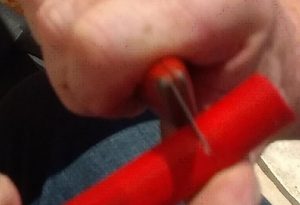
5. position knife for cut

6. cutting insulation

heavy cable crimping

7. showing the insulation breaking away on the final 1/2mm

Then using a very sharp knife, gently but firmly cut around the cable – being careful
not to damage the copper strands under the insulation. Then bend the cable at the cut and the insulation should break through the last 1/2mm or so to the copper.

heavy cable crimping

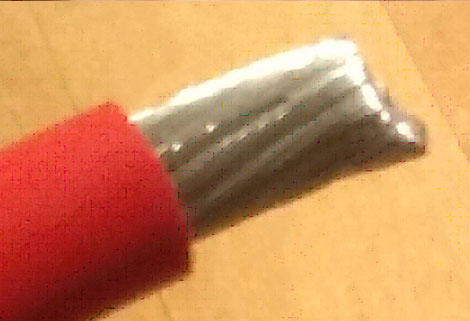
8. bare end ready for insertion

You end up with the bare strands. Gently and with minimum pressure, coax any strands that have come out of place back into position by using fore finger and thumb. Starting at the insulation, rotating your finger and thumb round the strands, going in the direction the strands lie, and smooth any out of position back into the body of the strands. The object is not to screw the strands tightly together just coax the strays back into position.

Now insert the strands into the termination, rotating the termination normally in the direction the strands lay in the cable can assist this.

heavy cable crimping

9. termination on

Now we come back to the hole I mention in the end of the barrel that the cable goes into. The strands should be right up to it and easily seen. Looking into the hole the strands are a couple of millimetres back, so we need to lengthen the bare strands by taking of about 2mm more off the insulation. Again sharp knife and gently remove about 2mm of the insulation.

heavy cable crimping

10. showing strands further back than
they should be

heavy cable crimping

11. taking off an extra 2mm or so

Put the termination back on and pushing the cable into the termination it should look something like this:

heavy cable crimping

12. strands about where they should be

heavy cable crimping

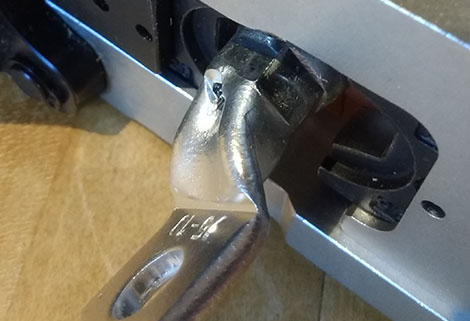
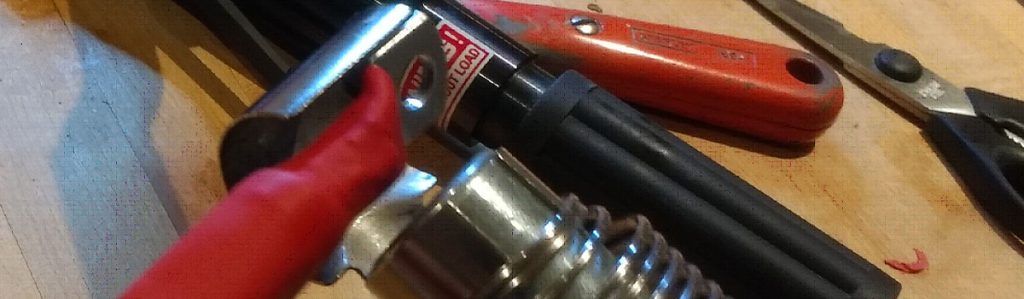
13. termination in the crimper for the first crimp

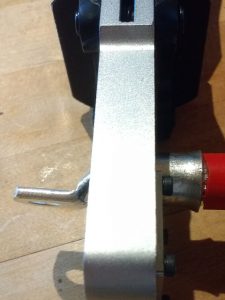
Now comes the actual crimping, make sure the crimper has the correct moulds in. Put the cable into the termination and partially close the crimper so termination can just slide in. Position the termination so that it is set in the crimper so that the first crimp will be just behind the hole in the termination. While pushing the cable firmly into the termination, crimp the termination to the cable. Remove from the crimper when completed and it should look like this picture on right.

heavy cable crimping

14. after first crimp

Now reinsert the termination so that it will put a second crimp immediately the cable side of the first crimp.

heavy cable crimping

15. in crimper for second crimp

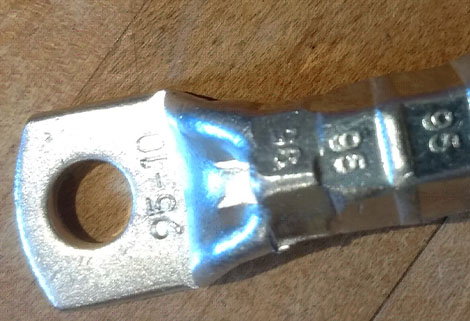
Then with this size of termination repeat with a third crimp. How many crimps a termination will take depends on the width of the mould and the length of the termination. It is particularly important with cables that will carry heavy currents, that as much of the termination as possible is crimped to give the greatest good contact area for the current flow. Now get hold of the termination and pull as hard as you can. If it stays put, all is OK.

heavy cable crimping

16. completed third crimp

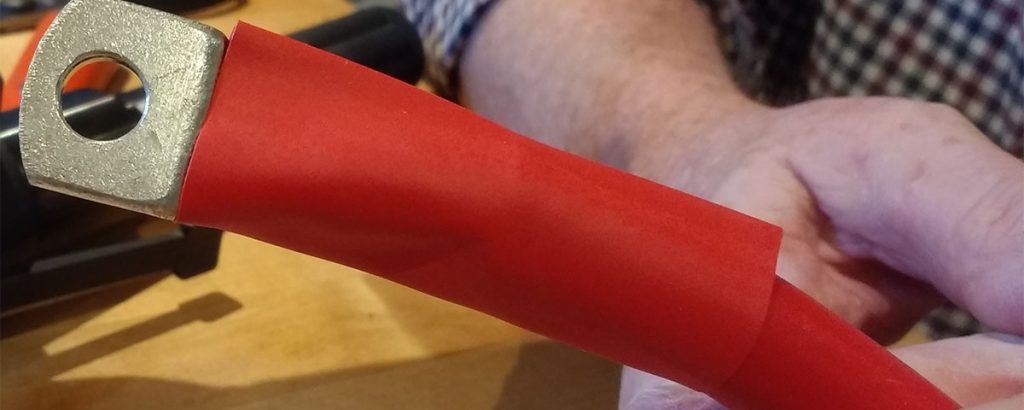
All crimps should be insulated, please do not use insulation tape, it does not look good and gradually comes off. The best I have found is heat shrink tubing. Cut a piece double the distance from the back edge of the spade to the insulation slide it over the terminal. On sea boats where salt air is a problem a blob of silicon sealant to fill the hole and keep the sea air out before heat shrinking is a good idea.

heavy cable crimping

17. putting heat shrink onto the cable

Slide it on so that the outside edge is just behind the back edge of the spade of the termination.

heavy cable crimping

18. heat shrink on the cable end just behind the back edge of the spade

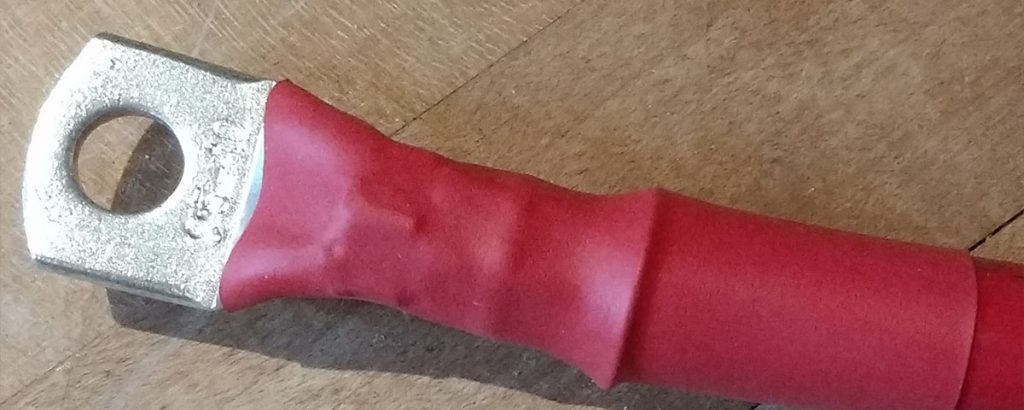
Heat the heat shrink with a hot air gun starting at the termination end – remembering to rotate the cable – moving along as the tubing shrinks.

heavy cable crimping

19. hot air gun shrinks tubing

heavy cable crimping

20. completed crimp

© Graham Mills 2020

so good, it went in the book

so good, it went in the book

Michal Nye

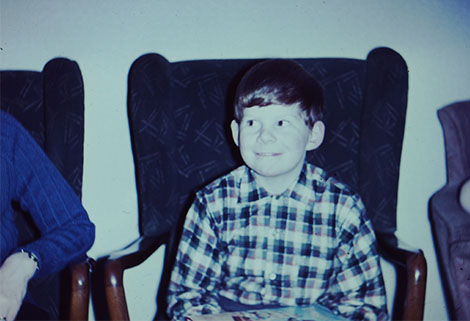
The 9 year old me looking a little shifty...

Going back to the summer of 1965, when I was just nine years old, it was time for our second waterways holiday on a boat hired from T. W. Allen and sons of Molesey.   This time it had been decided, in discussions that I was not privy to, that my maternal grandmother would come with us.

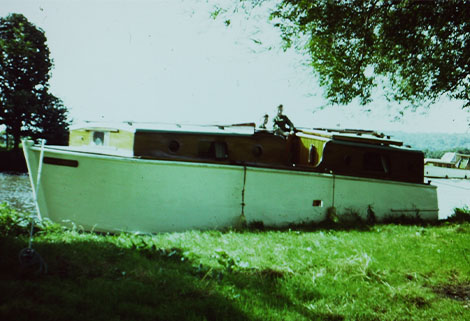
A bigger boat was needed so we plumped for a wooden one that T. W. Allen had christened River Rose. The boat dated back to the mid to late fifties and was typical low to midrange fare.

We had a chemical toilet (not for the faint hearted) and sinks that were converted (due to a change in regulations) so that they no longer discharged into the river. This conversion was in the form of a bucket under the plughole with the pipe to the external discharge simply chopped short!

After a very short time Dad had decided that the thing was both underpowered and ungainly but we were happy to go, crab fashion, as Mum put it, along at just below the 7 knot speed limit, tying up at Runnymede for our first night.   When it rained, we discovered that it leaked rather copiously and, worse than that, when dad pumped the bilges, he discovered that the leaks were not wholly confined to the superstructure.   We weren’t sinking though, so we pushed on.   We were going to enjoy ourselves even if it killed us!

River rose with the canopy down

River Rose with the canopy down

It was the second day afloat that a vantage point on the back-cabin top became something of an issue with my elder brother claiming ownership because he found it first.   John’s extra two years in the world were something of a major factor to the nine-year-old me but I still protested the claim - getting the threat of a foot in the face if I tried climbing the short ladder from the cockpit to the vantage point.

Mum eventually intervened in the territorial battle before it turned into open warfare with the proclamation that we had an hour each or we were both banned.   With the issue settled, John and I more or less lost interest and disappeared into the front cabin to make paper cut-outs and play board games.   For the most part we got on fairly well and I remember us decorating the boat with the collection of chopped up scrap paper for Mum and Dad’s 12th wedding anniversary.   There were even two snakes made (by me) out of string as part of the decorations with a caption “Bromrikong and Sallikong wish you a happy anniversary.”

The midpoint and destination of Thames holidays was always Lechlade (though some people would do a turnaround at Oxford and it was at Osney lock that we discovered the reason for the leaky superstructure.

“They turned that around pretty quick,” the jovial lock keeper said.

It transpired that the cockpit cover was too low for the famous Osney bridge and had to be lowered, a simple process that the keeper was happy to demonstrate.   Shame that the previous hirers ignored his advice and help, saying that they would sort it.   They did this by heading at the centre of the bridge at whatever speed the craft could muster, smashing the windscreen and various other bits of the cockpit canopy to bits.   End of their holiday!   In less than a week, Allen’s had fixed it all up and dispatched us to enjoy our holiday, leaks and all.   Again, the Lock keeper was more than helpful, handing dad half a tin of old varnish and telling him to plaster it on from the outside around anywhere that leaked.

“I’ll tell old man Allen, so you won’t lose any deposit,” he smiled as we headed on (canopy down) to the bridge.

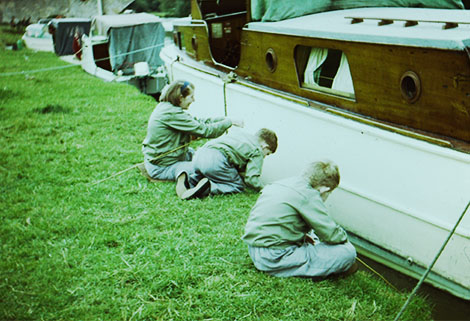
Michael Nye, his mother & brother net fishing in Lechlade

Mum John and me fishing for tiddlers at Lechlade

A couple more days and in brilliant weather, we tied up at the meadow below Halfpenny Bridge in Lechlade.

I still have a soft spot for the place, though I haven’t been there for over 30 years.

The meadow was massive, with plenty of space for John, me and some of the other holidaying kids to run around and play football or whatever other games we concocted.  This was that stuff that a childhood summer was made from with blue skies and seemingly endless blisteringly hot weather.   Then I was not so cynical as to be aware that it would eventually end in a thunderstorm and yet more leaks.

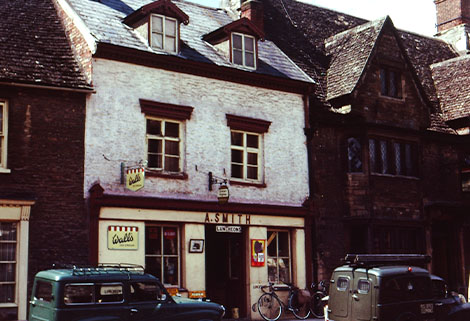
Something that was not subject to the weather was the treat that was dinner at the café that bore the name of A. Smith, run by two very kind old gentlemen.   The food was basic good cooking and the atmosphere was the genuine version of timeless.

A.Smith Cafe in Lechlade

A Smith Lechlade

I had been looking forward to going there again for the whole year and was not disappointed when we sat down for our meal.   Part of this eagerness to revisit the place was the conundrum of the framed print of a seemingly random group of letters.

“YCWCYTFTB” it said, and I was determined to find out what it meant… So I asked one of the kindly gentlemen.

“Your curiosity will cost you thruppence for the blind,” he chuckled.

I’d been had!   But his delivery of the words made me laugh so much that I willingly coughed up half the price of a “Matchbox” toy car for the local blind charity.

Two memories of the holiday stuck so much that, when I wrote my second book, “Here we Go!” I included a visit to the café by my two heroes (Jim and Amanda) at a pivotal point in their relationship.   I changed its location and menu a little, but if you remember A. Smith, you will spot the origin of the café instantly.   River Rose also appears, in somewhat altered form as the basis “Clearwater Sky.”

Interestingly, whilst A. Smith’s café is long gone, I am pretty sure that the “River Rose” has survived in private ownership.   ©2019 Michael Nye.   www.michaelnyewriter.com