
rnli advice to boaters before putting to sea after such a long period of inactivity:
1. Take extra care to access their craft safely and in accordance with government guidance on travel and social distancing
2. Carry out a check to ensure that their craft has remained seaworthy and mechanically sound
Read More
Yearly Archives: 2020
covid 19 advice for boaters
before putting to sea after such a long period of inactivity we recommend that boat owners should:
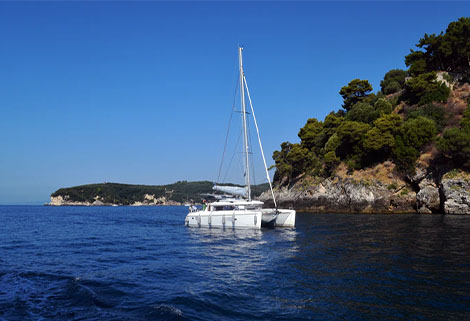 1. Take extra care to access their craft safely and in accordance with government guidance on travel and social distancing
2. Carry out a check to ensure that their craft has remained seaworthy and mechanically sound. In particular check for fuel contamination resulting from condensation in the tank(s) blocked filters and fuel lines etc
3. Check that emergency equipment such as Lifejackets, flares, VHF radio, PLBs etc are still in working order and remain in date
4. Give due regard to the prevailing and forecast weather conditions
5. Pay due consideration to the risk that their activities may result in their having to depend on emergency services particularly at a time when social distancing is impacting on lifeboat crews, Coast Rescue Teams etc
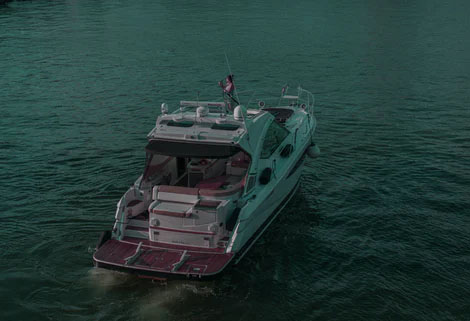
6. Bear in mind that some marine leisure facilities in the area may still be closed and therefore unavailable
7. Make sure you always have a means of calling for help (such as a VHF radio or mobile phone in a waterproof pouch) and keep it within reach.
Clive Edwards, RNLI Water Safety Officer Weymouth Lifeboat Area
MNA to launch WaterWatch with RNLI
listed canal bridge damaged by motorist
Charity urges motorists to take care when crossing historic canal bridges after damage to Grade II* Listed gem
The Canal & River Trust, the charity caring for 2,000 miles of canals and rivers in England and Wales, is calling for motorists to slow down when crossing historic canal bridges after a driver caused major damage to one of the most ornate bridges on the waterways network.
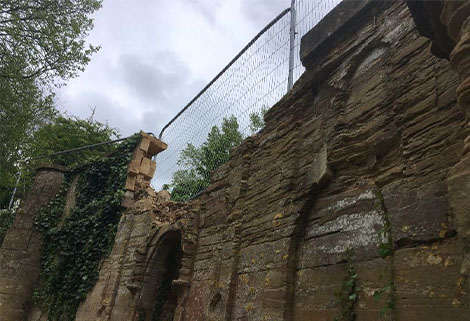 Bridge 65 on the Grand Union Canal, known as Ornamental Bridge, was hit by a driver over the weekend causing extensive damage to one of the parapets, or walls. Police arrested the driver at the scene and the Trust will, if possible, recover the costs of repair from the driver’s insurance.
Ornamental Bridge is a 200 year old gothic limestone bridge which is Grade II* Listed, putting it in the top 10% of buildings listed in England and giving it a greater level of protection than the famous Abbey Road Studios and the BT Tower in London.
The collision has demolished a 5m length of parapet and it’s possible that other sections of the bridge that have been displaced will need to be rebuilt. Much of the historic stone will be recovered and reused in the repair but some of the ornamental elements will need to be completely replaced. Due to the bridge’s listed status the repairs will be carried out carefully and sensitively, under guidance from Historic England.
The bridge carries the main road into the village of Cosgrove, just North of Milton Keynes so temporary barriers and traffic lights have been put up to ensure that it can be used safely by local people.
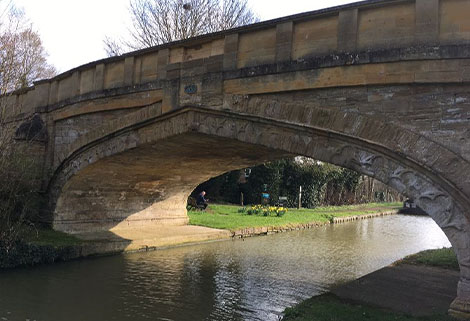 It’s not known why such an ornamental bridge was built in this location but the presence of the nearby Cosgrove Priory, home to the Lord of the Manor at that time, may have had something to do with it. Today the bridge is much loved by people living in Cosgrove and is often used as a backdrop for artists, photographers and even wedding parties.
Hump-back bridges, synonymous with Britain’s canal network, were built for the passage of horse-drawn carts, not for today’s speeding motorists, who cause up to £1 million of damage to the Canal & River Trust’s bridges each year. The majority of accidents are ‘hit and run’, leaving the Trust unable to recoup the cost of the damage from drivers’ insurers, and diverting vital funds away from work to conserve the nation’s waterways.
Richard Bennett, heritage and environment manager for the Canal & River Trust, said: “All historic canal bridges are special but this one is a real gem, it’s beautiful, eccentric and full of character so it’s especially heart-breaking to see it damaged like this.
“It’s also massively frustrating for the people of Cosgrove who really value the bridge and want to use the road.
“Each year we have to spend more than £1million across the country repairing bridges hit by drivers and that’s money which could be better used maintaining and looking after the region’s canals.
“If motorists just slowed down a bit and took more care and attention, then they would save themselves and us a lot of cost and aggravation and protect the nation’s important canal heritage.”
To find out more about the work of the Canal & River Trust, including how you can support through volunteering or making a donation go to CRT website.
- Grade I buildings are of exceptional interest, only 2.5% of listed buildings are Grade I
- Grade II* buildings are particularly important buildings of more than special interest; 5.8% of listed buildings are Grade II*
- Grade II buildings are of special interest; 91.7% of all listed buildings are in this class
Article reproduced from press release by Canal & River Trust
listed canal bridge damaged by motorist
Listed canal bridge is damaged by motorist. Canal & River Trust is calling for motorists to slow down when crossing historic canal bridges after a driver caused major damage to one of the most ornate bridges on the waterways network. Bridge 65 on the Grand Union Canal, known as Ornamental Bridge, was hit by a driver over the weekend causing extensive damage to one of the parapets, or walls.
Read More
tower works development on leeds & liverpool canal
Working with the Canal & River Trust at Tower Works
Richardson and Ask are proud to be supporting waterway and wellbeing charity Canal & River Trust, the organisation that looks after Leeds & Liverpool Canal.
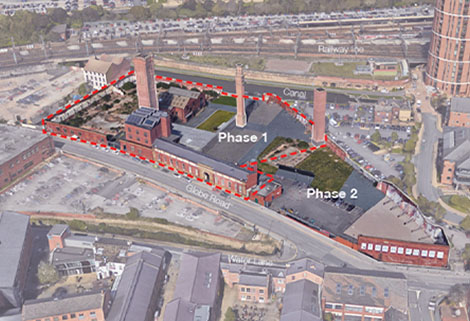
Richardson and Ask are working with the Trust and its neighbouring developments, including Mustard Wharf, to improve a 200-metre stretch of the towpath, from the Canal Office to the Railway Bridge to provide a route by the water to and from Leeds train station.
Having been in need of repair for some time, the 200 year-old pathway is popular with
walkers, joggers, cyclists and anglers. This traffic-free route is a popular spot away from the hustle and bustle of the city centre. Design work is currently underway which will improve the section of towpath adjacent to the Tower Works site in the heart of Leeds and a start on site will be made as soon as the current restrictions allow.
 Commenting on the works, Alan Daines, Infrastructure Services Regional Manager for Canal & River Trust said: “Leeds Southbank area is undergoing a huge transformation presently.
"Landmark developments close to our canal network, such as Tower Works, are coming to fruition all the time. With our research showing that spending time by water can help to improve our health, wellbeing and happiness we are working closely with developments to help communities to connect to their local waterway and realise the benefits of being by the water.
“Previous custodians of the Leeds & Liverpool Canal have undertaken a variety of approaches to towpath repairs over the years, leaving a disjointed and uneven surface due to the different materials used. Thanks to the support of developers like Richardson and Ask our charity is able to realise more ambitious programmes and extend existing works to provide safe pathways with improved access near to water. We have already begun work at Mustard Wharf and the new, continuous path of York stone will look superb."
 Alison Carroll, development project manager for Ask Real Estate said: “Canal & River Trust is a key stakeholder and we are delighted to be working with them and our neighbours on this important work.
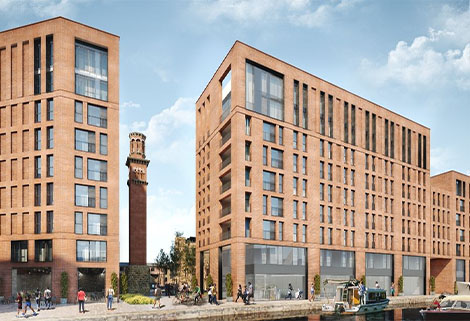
“When building work commences on the Tower Works site we will be partnering with the Trust and our construction contractors Sir Robert McAlpine to erect hoardings along the canal path where it borders the site which will ensure we have no impact on the canal during the build programme.
“During the construction phase the towpath will be out of bounds for safety reasons and the path improvement works will take place concurrently to the building of phase one at Tower Works, so when the development work is completed the canal path will also be ready for use.”
Tower Works
Tower Works site is located within the Holbeck Conservation Area, which features a number
of listed buildings across what was Leeds’ primary industrial area. The area is one of the only remaining places within Leeds where 19th Century industrial buildings have survived largely unaltered and uninterrupted, leaving a special character and appearance to the area.
Tower Works was founded on the site by T.R. Harding in 1864 to make steel pins for carding and combing in the textile industry. In addition to these items the company also developed a range of innovative and advanced industrial instruments, including speed indicators, counters, and gauges. The factory’s products were world class, selling all over the globe.
The original buildings, designed by Thomas Shaw, were erected in 1864-6, with the design being heavily influenced by his love for Italian architecture and art.
Within the Tower Works site, the Giotto Tower, Verona Tower are Grade II* listed, and the Engine House, Little Chimney, and 6-10 Globe Road are Grade II listed. The three towers are Holbeck’s most prominent landmarks and are an integral part of the area’s history and heritage.
The Grade II* listed Verona Tower can be recognised as the smaller ornate tower of the site. It was the first of Tower Works’ Italianate towers to be built and is based on the Lamberti Tower in Verona.
The Grade II* listed Giotto is recognised as the most ornate and largest of all the towers both in height and massing. It was designed as a ventilation tower and its structure contains filters that are able to collect metal particles produced during the pin making process. The Tower is based on the iconic Giotto Campanile, the bell tower of Florence’s Cathedral.
The Grade II listed Little Chimney is the latest of the towers and it is known as the Boiler House Chimney. It can be seen to represent typical Tuscan towers, such as the medieval towers in San Gimigniano, Tuscany.
 For information about Canal & River Trust visit
 tower works development on leeds & liverpool canal
Design work is currently underway to improve the section of the Leeds & Liverpool canal towpath adjacent to the Tower Works site in the heart of Leeds and a start on site will be made as soon as the current restrictions allow.
Read More
rcr launches new midi bilgeaway filter
River Canal Rescue (RCR) has extended its range of Bilgeaway filters with the addition of a new smaller midi filter, suitable for boat owners who have little or no bilge pollution, but want peace of mind they will not pollute the waterways if anything does happen.
Read More
river canal rescue launches midi bilgeaway filter
River Canal Rescue launches midi Bilgeaway filter
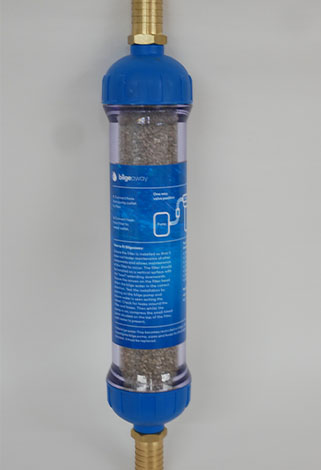 River Canal Rescue (RCR) has extended its range of Bilgeaway filters with the addition of a new smaller midi filter, suitable for boat owners who have little or no bilge pollution, but want peace of mind they will not pollute the waterways if anything does happen.
Retailing at £60, the cartridge-free, ‘plug and play’ filter removes up to ¼ of a litre of hydrocarbon contaminants (petrol, diesel, engine oil etc) from the bilge area, using a non-toxic solution to render them non-reactive.
Typically requiring maintenance only once it reaches capacity, users empty out the filter by unscrewing the top and decanting the ‘crumb-like’ environmentally-friendly deposits into a container before disposing of them. The filter can then be refilled and repositioned back in place.
The Bilgeaway team describes the midi as an ‘ideal solution’ for those wanting peace of mind a filter’s in place to maintain their bilges. And with midi refills costing £12, the firm says there’s no excuse for pollution from bilges.
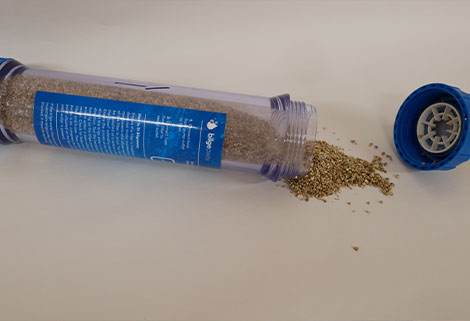
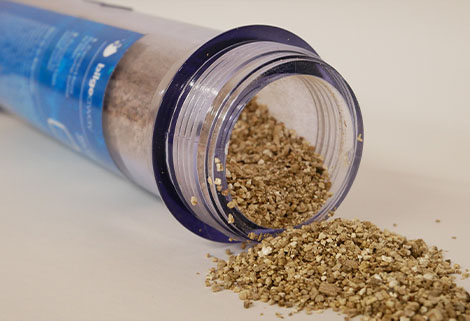
Its larger 10” counterpart - launched last year and described as ‘the world’s first truly environmentally-friendly bilge discharge filter’ - extracts ½ a litre of contaminants, leaving them in a cartridge which can be disposed of and the housing re-used.
In 12 months, demand for the 10” filter pushed its price down to £99 and ABC marinas and Lakeland Leisure now stock it in their chandleries. RCR is also looking to sign up more retailers.
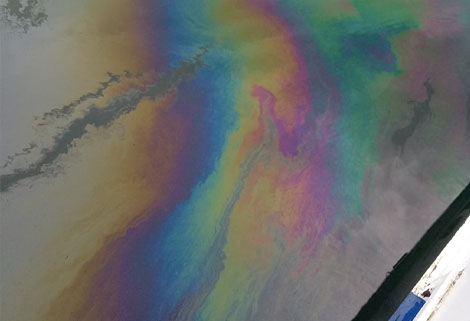 RCR attends, on average, around 24 call-outs a month which it logs as ‘environmental near misses’ or pollution incidents, where fuel, oil, coolant and antifreeze has leaked into bilges caused by cracked filter pipes or there are spills into the engine bay, battery acid spillage and contaminated bilges.
Sales director, Damien Forman comments: “The midi and 10” filters are ‘no-brainers’; if everyone installs a bilge filter it will dramatically reduce the oil/fuel vessels discharge annually, reducing environmental pollution. In France it’s mandatory for boats to have bilge filters fitted and I hope the UK follows this example.
“If they do, in 10 years’ time the waterways environment could look completely different and the oil slicks in marinas and harbours would be a thing of the past.”
Simple to install and intended for use with a conventional bilge pump, both filters work with any current bilge system. Buy online
For more information on product there is a useful clip on YouTube
walking the cheshire ring 2
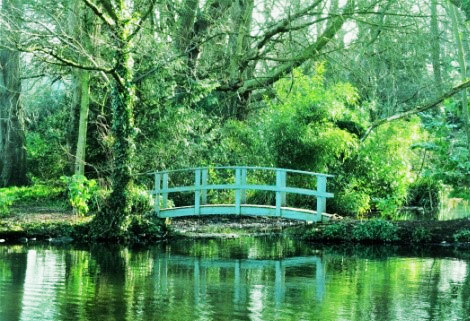
Bridgewater Canal near Thelwall
Over the past three years, I have walked on or off The Cheshire Ring with an intention of doing it either in a clockwise or anti clockwise direction starting at the Ashton Canal. It turned out that I walked the ring in no intended order as friends and family wanted to join me. I had opportunities to enjoy a number of return visits to the Ashton, Peak Forest and Macclesfield Canals. We didn’t literally follow the “ring” either way due to logistics i.e. transportation and in some cases we had to park the car at a nearest town and get the bus/train to the canal.
This is the second article of my Cheshire Ring walking experience. My experiences include multiple trips to the canals and they are consolidated into the canals’ summaries as below.
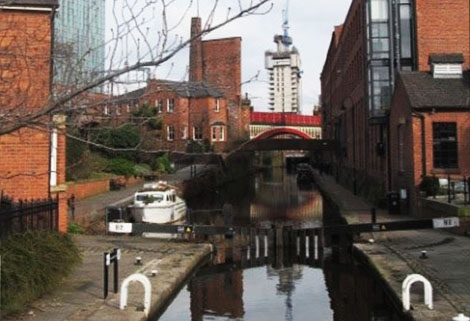
Lock 92, Rochdale Canal, Manchester
On the Rochdale Canal in Manchester we descended underground to Piccadilly Locks, 84 and 85.
This area was insalubrious and seedy to say the least and we passed people smoking illicit substances and we noticed needles on the towpath.
We soldiered on and continued towards Canal Street, the heart of Manchester’s Gay District, towards Lock 86. Apart from the lovely, colourful, safe and relaxed Canal Street, it was an uneventful walk down to the final lock, 92, and beyond this lock is where the Rochdale meets with the Bridgewater Canal.
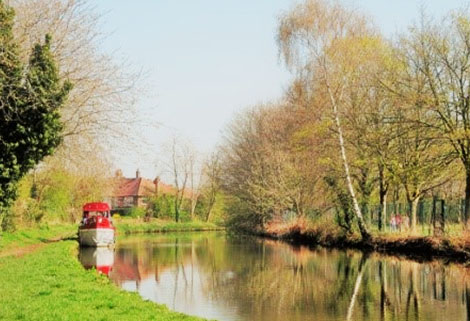
Bridgewater Canal near Grappenhall
We began our adventure on the Bridgewater Canal at Castlefield, Manchester, and joined the towpath.
We saw the Ponoma locks where the boats are able to access the River Irwell and subsequently the Manchester Ship Canal. We also passed Manchester United’s football stadium and eventually reached Waters Meeting point, not the prettiest sight on the canal. Some walks we would have walked right towards the Leigh Branch towards Worsley and eventually Leigh via its infamous Barton Aqueduct (we walkers go across the road’s swing bridge).
On another walk we started walking to the main branch from the Trafford Centre, a large shopping centre on the Leigh Branch, passed the Kellogg’s factory, and eventually reached the Waters Meeting Point. We walked to Altrincham via a brunch stopover at a café in Stretford and through the trendy suburb of Sale. The Main Branch was interesting and we took the opportunity to observe the sights and sounds. We also the crossed an aqueduct over the River Mersey: this river marks the once historic county boundary between Lancashire and Cheshire. On arrival in Altrincham we got the bus back to the Trafford Centre.
Our subsequent walk from Altrincham to Grappenhall took us on a journey from the Greater Manchester suburbs to the countryside. We passed the Victorian Linotype factory where the façade has been incorporated into a new housing estate (being built at the time of walking). We passed the Dunham Massey Estate and soon after stopped for a drink at the Barn Owl Inn. After Lymm and meeting the Trans Pennine Trail, we reached Grappenhall and got the bus back to Altrincham.
Our final walks on the Bridgewater Canal were done over a weekend and we used Warrington as a base to access the canal by public transport. We picked up our walk from Grappenhall and continued on towards Stockton Health, a popular suburb of Warrington and near the Manchester Ship Canal. We stopped there for a drink at The London Bridge Inn. We had glorious weather throughout which made our walk through the Cheshire countryside a pleasant one. I stopped for an ice cream at Moore’s village shop and we walked the remainder of the canal to Preston Brook Tunnel. There we explored the tunnel’s portal and walked to East Runcorn for our bus back to Warrington. We also explored the Runcorn Branch of the canal on another day and it is such a nice stretch especially walking through the Norton woodlands.
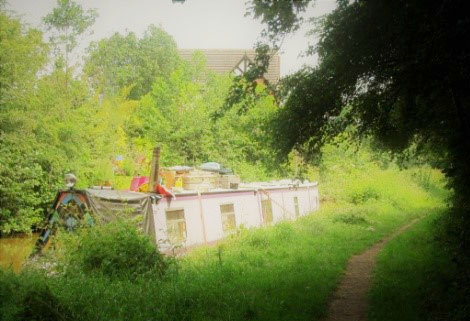
Trent & Mersey Canal
Our first walk on the Trent and Mersey Canal walking adventure was from Middlewich to Kidsgrove. It was a tough 13 miles or so walk as it was a very hot day.
We parked in Crewe and caught the bus to Middlewich and we ascended up the canal via its locks and I briefly checked out the Wardle Canal, one of the shortest canals on the network and now incorporated in the Shropshire Union Canal’s Middlewich Branch.
The beginning of our walk isn’t the prettiest with evidence of industrial activity connected with the production of salt. We continued onto the Sandbach area and reached Wheelock where we stopped for a drink.
From Wheelock the canals begin to become more rural and interesting, particularly with its double locks as we were descending. We went under the busy M62 motorway at Hassal Green and up Heartbreak Hill. After a long exhausting walk we reached Kidsgrove – where James Brindley, the famous canal engineer is buried. Before catching the train back to Crewe, we had a look round the Northern Portal of the Harecastle Tunnel.
Our penultimate walk was from Anderton to Middlewich and we caught a bus from Northwich, where we parked the car, to Anderton. On arrival and before we started the walk, we had a coffee stop at the Anderton Boat Visitors Centre’s Café. We were hoping to visit the Salt Barge Pub in Marston but it was closed as we arrived a little early. Instead went to the Lion Salt Works Museum. There my Dad had a look round the museum while I indulged in a Cheshire Cream tea.
After an enjoyable visit there we continued our way towards the industrial landscape of Northwich’s outskirts. Resulting from the salt mining industry and its subsidence we passed numerous flashes (lakes) en route to Middlewich and along the River Dane and the Dane Valley Way. We eventually reached Middlewich Big Lock and had a drink at the Bridge Lock Pub. It was nice to watch the boating activity down below from the balcony. It was a short walk to the bus stop for our bus back to Northwich. We had a little look round Northwich, a charming town centre by the River Weaver and with black and white Tudor style buildings on its high streets.
Our final walk was a circular one from Anderton and back via the River Weaver and the canal. We turned left on the canal after a pit stop for coffee at the visitors centre’s café and reached Soote Hill Bridge where we walked towards Saltersford Lock. There we met a friendly dog and we had a play with it. We continued on to Little Leigh where we had a drink at The Leigh Arms, besides the Action Swing Bridge. The black and white swing bridges on the navigation fit nicely with the landscape. We even saw a ferry boat in operation on the navigation with day trippers on board.
We did the final stretch to Dutton Locks and walked the Delanmore way to rejoin the Trent and Mersey Canal. We did the short walk to the stop lock and the Preston Brook Tunnel at Dutton. We then retraced our steps towards Saltersford and Barnton Tunnels where we walked over the tops. We eventually reached Anderton where we joined the car for the journey home.
We have now completed walking the Cheshire Ring Towing Path. We saw and experienced a lot of interesting sights and things over approximately 100 miles of walking. It’s a popular cruising ring but also it’s a popular walk which we were glad to do. I look forward to sharing another walking experience on another canal in the not too distant future.