Yearly Archives: 2020

the miners of crick

tales from the old cut 4

the miners of crick

The little village of Crick is these days best known for the annual Crick Boat Show, thousands of pounds worth of canal related paraphernalia is showcased in an attempt to get visitors to mortgage a kidney and buy some of it. The show is, these days, all about the modern boat, and while the visitors may comment on how picturesque the location is, rarely does the history of it cross their minds.
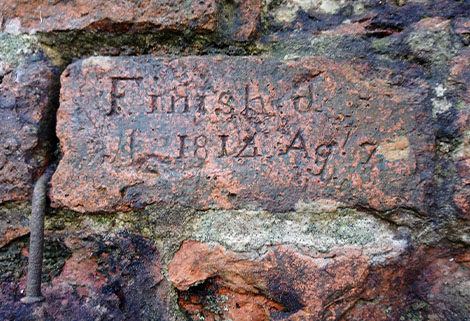
Crick Tunnel engraving showing date of completionA casual walk down the towpath from the show-ground will lead you to the mighty tunnel portal, where if you stand on the water’s edge and face the tunnel, you will find a small, worn brick inscribed with a date.

On that date, with great pomp and circumstance, a boat loaded with the great and good was legged through, the tunnel declared officially open and everyone clapped themselves on the back for completing such a momentous task.

Of course, the people in the boat that day hadn't lifted more than a pen in actually getting the tunnel built, and most history books that a visitor to the boat show can pick up, only speak of those fancy suited gentlemen.

I, however, prefer the grubbier story of the tunnel, the one full of blood, sweat, tears and a lot of sex.

We'll bypass the boring paper-trail and begin our story in 1810. The village was a busy little place, sat comfortably on a trade route between Oxford and Leicester, and the travellers it tempted supported a selection of forges and inns. The village was still hanging onto its cottage crafts in the weavers, spinners, shoemakers and saddlers, and it was forward thinking enough to have a couple of day schools, an apothecary and  a doctor. It of course had the usual butchers and bakers, and obviously a good selection of farmers and a lot of labourers.
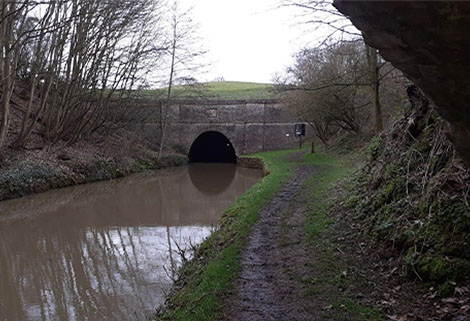
Crick tunnel entrance

There were masons at the stone pits and at least 2 brickyards quietly churning out building materials, and in 1810 it is our brickyards that open up our story by signing up to produce 2 million bricks for the princely sum of 1 & ½ farthings per brick, or 32 shillings per thousand.

Within a year, the busy little village was bustling more than usual. There doesn't appear to be a full list of who was employed, so it is impossible to say how many men were professional canal builders and how many were local labourers ready for a change of career, but we know that 350 men were employed and were making rapid progress.

There was a minor blip late in 1811 when the labourers had nearly finished a deep cutting at one end of the new tunnel, when someone with a theodolite and some sense, dug test bores for said tunnel and found it dangerously unsuitable.

A few frantic meetings later, and a new site was chosen on the other side of the village and work restarted with all haste.

Haste is perhaps the operative word here. The new site had less shifting sand, but it did have streams. By late 1813, the tunnel itself was well past the halfway mark, but at least one man had died at shaft 10 (stories differ as to whether he fell down it or whether something fell down it and landed on him), and a few others suffered “some maiming” from roof falls. This was on top of the usual range of accidents, with at least one man being run over by a full wheelbarrow that slipped back on him; humorous this might sound at first, remember that these were timber monstrosities shod with iron and loaded as heavily as possible.

You may have noticed that so far, I have carefully avoided using that dreadful term: “navvies.” We must remember that there had been no real concept of tunnel building prior to the canals arriving. If you were digging tunnels you were generally a miner, and it is this logic that accounts for our first glimpse of the real men behind the tunnel each being recorded in the parish register as “miner.”

Meet William Morse, his wife Mary, and their baby son, John.
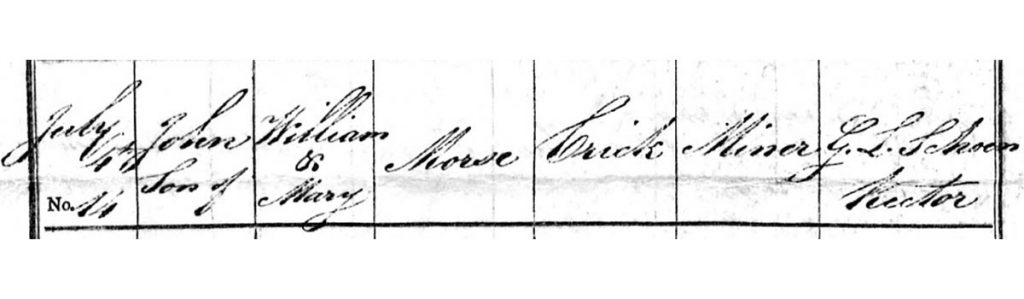
registration of John Morse, son of William & Mary Morse

We don't know where our miners lived; if we take the sister site at Husbands Bosworth as a guide, we can assume that somewhere near to the site would have been a couple of long wooden dormitory huts capable of housing a couple of hundred men. They were being quite well paid (contrary to the mental image one might get when one thinks of the canal builders), so it is likely that some of the men, perhaps the married ones, would have rented rooms in the village.

They certainly would have descended on the village after the day was done in search of sustenance, and it is likely that it was during one of these sorties into the village that Hugh Nail first spotted Ann Blakemore.

Hugh seems to have been born on the outskirts of Liverpool and joined the canal gangs aged around 14, then made his way around the country, digging as he went. We can speculate that he arrives on the scene fairly early in the proceedings, as by the time he goes to the Rector in January of 1813 asking for the banns to be called, he's considered “of the parish.”
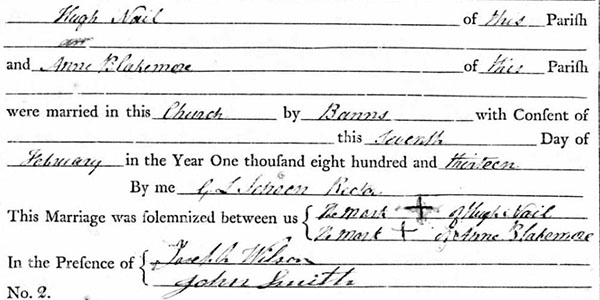
marriage certificate of Hugh Nail & Anne Blakemore1813

Hugh and Ann leave the church hand in hand watched by Ann's family and, chief among Hugh's fellow miners, his best friend Joseph Wilson.

Perhaps it was this romance that introduced Joseph to Ann's sister Sarah. Indeed, perhaps it's in an advanced state of alcoholic refreshment following the wedding that Joseph and Sarah became more intimately acquainted.

The following year, Hugh, Ann, Joseph and Sarah make their way back to the church where the resigned Rector baptised William and Mary respectively.
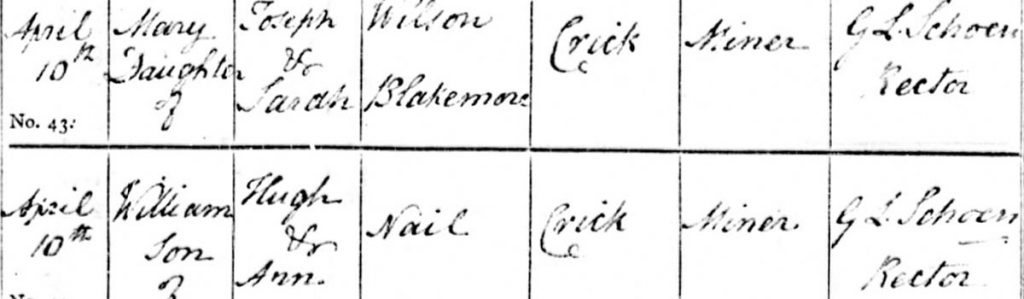
It may surprise you to learn that Sarah and Joseph stay together and produce a son the following year.

Sex before marriage didn't carry quite the same badge of shame for people of the regency era, especially the “country folk” who were frankly far more understanding of the mechanics and didn't bat an eyelid at a woman walking up the aisle with a big belly. Illegitimate children were frowned upon but once they'd arrived no one really bothered about them provided they were cared for without posing an expense on the parish.

In fact, Crick appears more tolerant than most as the Rector doesn't bat an eyelid when George Crowder and James Schofield leave the tunnel for a walk out with Esther and Sarah Vaus and produce babies John and James, or when William Harrison downs his shovel to dally with Hannah Gent and produces another baby John.

Indeed, the only time we see anything that could be taken as disapproval is when the Rector notes in 1811: Nov 12th. I privately baptised Mary, daughter of James and Ann Morris. The father (a brickmaker) having absconded and the mother with the infant being about to undertake a long journey.

Perhaps James had been overwhelmed by the amount of bricks the new tunnel had demanded.

We can't avoid the potential that some sex work was taking place at this time, but there is no evidence to suggest that the babies were the receipt from a miner’s night-out.

Considering how many men were working on the tunnel and the reputation that they gain later in the Victorian period, it is refreshing to see that out of 16 children baptised, only 4 are born fully out of wedlock, and a fifth whose parents had the banns called, but they don't appear to actually manage to get up the aisle. Percentage wise, the miners are veritable gentlemen against the rest of the village.

There are many more stories of these forgotten men waiting to be uncovered, and I hope to find the rest of their names for a start.

It seems likely that it's thanks to these men that Crick gained the story that it had a treacle mine, but I like the fact better - that these men mined for a canal and found it.

Tunnel Miner Rollcall:

William Morse, Mark Flint, George Crowder, Edward Corby, James Cope, William Cox, Richard Hodges, John Betty, Joseph Wilson, Hugh Nail, William Harrison, John Jones, James Schofield, George Hillyard

featured author – Kitty Irvine (spring 2020)

featured author - spring 2020

Kitty Irvine

I was born and grew up in the north of England. From an early age, my parents were heavily involved in Scouting, so I spent many weekends and school holidays camping and sailing. My family holidays were spent in the north west of Scotland. I suppose this is where I get my love of wildlife and countryside.

Read More

an embarrassing problem

dawncraft chronicles

an embarrassing problem...

It's dark , the worst days of winter and not very inspiring but I have a personal problem that needs addressing . I have Polleniardus – and its not the kind of complaint that you can get the one-off. It's cluster flies, masses of them.

Read More

Sue Meades & Colin Shearer – Cheese Aboard inc Mugs Afloat

Sue & Colin - Cheese Aboard inc Mugs Afloat

Sue Meades & Colin Shearer are entering their 4th year as Roving Canal Traders on their narrowboat

That’s D’riculous.

mugs afloatWe have travelled the Leeds & Liverpool canal, the Shropshire Union, The Staffs & Worcs, The River Severn, The Trent & Mersey, the River Soar, the Grand Union, the Ashby Canal, the Coventry canal & some of the Oxford Canal during the time we have been traders.

We started off selling personalised mugs & mugs printed with our own bespoke designs along with up cycled jewellery.  Gradually we added some wooden goods as Colin started to learn how to do Pyrography.

It soon transpired that Colin's love of Celtic designs was going to be a good seller for us at festivals & markets.

mugs & chopping boardsThis developed into the range of beautiful chopping boards that we currently sell alongside our mugs. We have made many personalised mugs for customers at events & also boaters especially other traders who seem to want mugs with their own logo on.   

After only a few months of trading we joined the RCTA (Roving Canal Traders Association) as they seemed to be a helpful organisation, little did I know that 3 years later I would be a committee member & responsible for organising floating market events for other traders in the Association! Who are currently organising approximately 16 events for their members over the 2020 season.   

We love trading at festivals & floating markets, the atmosphere is wonderful & the camaraderie of the trading community is amazing.  This has been a fabulous journey as I have met many very talented traders, attended & organised lots of events.  

For the past 3 winters we have worked as self employed operators for www.calendarclub.co.uk to boost our income when it is too cold & wet to trade from the boat, they welcome traders as operators & have units all over the country if you need extra winter income.  

We were trying to think of a way of streamlining our stock & the items we sell at the end of last season when we heard that the Cheese Boat that covered the Shropshire area had retired from canal trading. 

With a lot of deliberation, we decided this was a perfect addition to our existing wares. 

Coffee mugs, wine racks, cheese/pizza boards what a perfect combination to add actual cheese to! Hence the birth of Cheese Aboard our new trading name. For the near future we will be Cheese Aboard inc. Mugs Afloat 

We have sourced a fabulous chiller, found a supplier that suits our trading ideas, achieved our 5 star food rating & made the long overdue rain canopy so we are set for the 2020 trading season to start. 

You can find us on Facebook where you will find our trading schedule for the season. 

Sue Meades & Colin Shearer

Sue Meades & Colin Shearer

Sue Meades and Colin Shearer have been Roving Canal Traders for the last three years, and have become very well known on the cut on their narrowboat D'riculous. Sue also volunteers with the RCTA.

You can like and follow them on Facebook: https://www.facebook.com/mugsafloat or https://www.facebook.com/cheeseaboard1/

caledonia glass – illia price

roving canal traders

illia price - caledonia glass

Illia Price - Caledonia Glass

I've lived aboard my beloved narrowboat since August 2014. Previously I was buying, renovating and selling on houses in order to own my own outright. I also worked on major renovation projects for other people, mostly as part of a team. I'd lived in Scotland (various parts) for 30 years before moving to the Midlands in 2012. In my time I've also been a Signmaker, a plasterer and a groom (horses) as well as doing several more menial jobs to earn a crust.

My main source of income is my industrial engraving business which I started in 1986 with a small bank loan and a second hand manual engraving machine. I specialise in producing botanical garden labels and am a well known supplier in horticultural circles. My labels are used in many major UK horticultural institutions. I also send them overseas, from Jersey to Japan. These days I have modern computer driven engraving tables and associated equipment, all housed in a cosy garden office.

caledonia

I got the idea to live on a boat when I saw one for sale whilst walking along the towpath around Alvechurch.
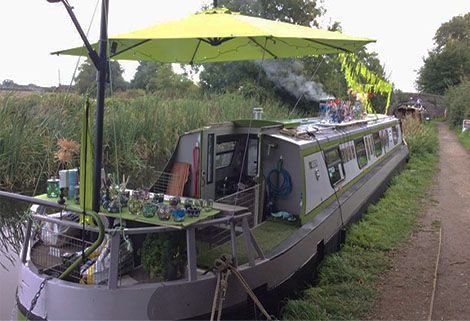
After much research I discovered the rules and regulations would allow me to live aboard as a continuous cruiser.

While I was finishing my last house I read everything I could find about narrowboating method and etiquette.

When I was ready to buy I searched online.

My boat was the only one I actually went to see, being the right size, with cruiser stern, within budget and in need of refitting which I wanted to do to my taste. And I liked the look of her.

The boat was at Aldermaston and I needed to get her back to Alvechurch ASAP to get on with the ever mounting engraving orders.
I'd only briefly steered a narrowboat before so I booked a one to one helmsman's course for the first day of my single handed journey.

It gave me the confidence to tackle the 130 miles of river and canals and as many locks without any major mistakes. It took me 12 days, with two lost to breakdowns.

life changing experience

It was one of those life changing experiences and I loved most minutes of it!

Since then I've refitted the interior. Put in new windows etc. Had a new engine and back decks fitted last winter. This winter it's overplating after which Caledonia will probably outlive me. She was built in 1974, a 48' Fernie (very similar to a Harborough Marine but with a steel top)

I cruise many miles and commute to work during the milder months. Over the winter I cruise, take a mooring in the Midlands, or have the boat out of the water for Winter Works.

caledonia glass is born

I've always been keen on crafts and love glass in all its forms.
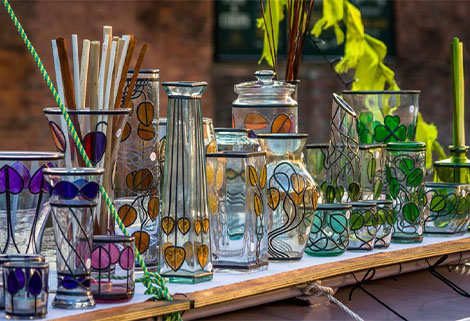
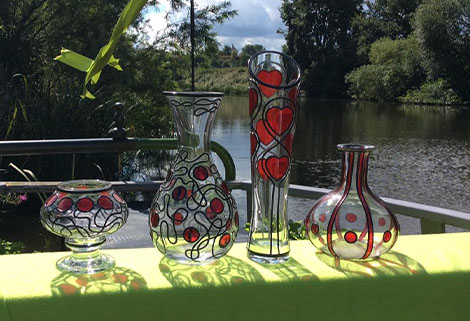
I decided to have a go at decorating with lead and glass paint a few years ago for Christmas presents for the family and got hooked!

Soon my boat was full of it so I applied for a trading licence which was granted. To my surprise others liked and bought it. It's now become my spare time passion, seeking out interesting items to decorate and planning what design to use. Most of my designs are inspired by nature.

Since I became a canal trader I've been welcomed by other floating traders and made some fantastic friends. I feel it's important not to copy something another boater does and I'm confident I have a unique product.

I sell as much as I can make in my spare time, attending some of the wonderful canal festivals and floating markets during the spring and summer months and at land based craft fairs in the run up to Christmas.

I also like to go to a Christmas floating market if I can. The atmosphere is generally great.

I don't sell online or post glass out as I just don't have the time (or will) to administer it.

I like to cruise in a different direction each year if possible, though the Midwest is a firm favourite so far (Shroppie, Llangollen, Trent &Mersey, Macclesfield, Peak Forest, River Weaver and the delightful Bugsworth Basin).

I'd like to get much further afield eventually...


Illia Price, trading as Caledonia Glass, has been a member of Roving Canal Traders since she began her canal business. She creates beautiful works of art using lead and glass paint, and it's a great testament to her skill as a boat designer (and her boat handling skills!) that she can carry so much glass aboard a narrowboat without breaking any of it!
Follow Caledonia Glass on Facebook to find out where she is trading. Illia will only sell from the towpath or land based craft fairs; she is unable to accept online orders or post items out.

wigan pier

inter tidal zone

5: wigan pier

This edition explores the intertidal zone between history and the 21st Century Canal system within Wigan. The Leeds and Liverpool Canal reached Wigan from Liverpool in 1781.  2019-1781=238 years ago! Around the same time as General George Washington began the siege known as the Battle of Yorktown, against the British General Lord Charles Cornwallis. Plus, the planet Uranus was discovered by William Herschel. I wonder, what Wiganers were thinking of at the time? This is what George Orwell wrote in his book The Road to Wigan Pier (source: The Orwell Foundation)

GEORGE ORWELL: Well, I am afraid I must tell you that Wigan Pier doesn’t exist. I made a journey specially to see it in 1936, and I couldn’t find it. It did exist once, however, and to judge from the photographs it must have been about twenty feet long.

Wigan is in the middle of the mining areas, and though it’s a very pleasant place in some ways its scenery is not its strong point. The landscape is mostly slag-heaps, looking like the mountains of the moon, and mud and soot and so forth. For some reason, though it’s not worse than fifty other places, Wigan has always been picked on as a symbol of the ugliness of the industrial areas. At one time on one of the little muddy canals that run round the town, there used to be a tumble-down wooden jetty; and by way of a joke someone nicknamed this Wigan Pier. The joke caught on locally, and then the music-hall comedians get hold of it, and they are the ones who have succeeded in keeping Wigan Pier alive as a by-word, long after the place itself had been demolished.

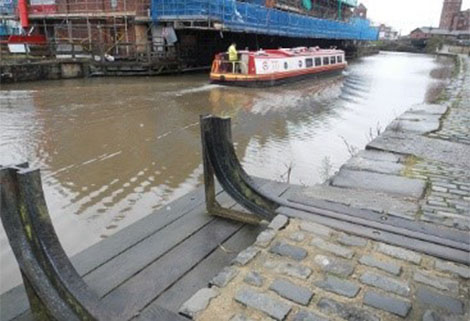
Wigan Pier - what is left of itThe present-day photo depicts the spot associated with what is left of the pier, where the coal was loaded onto the barges.
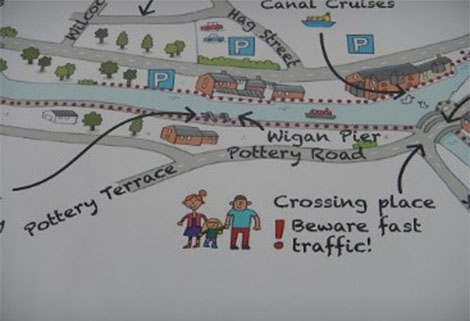
Currently there are plans coming to fruition known as the regeneration scheme, being led by developers Steps Places, together with The Old Courts cultural organisation, Wigan County Council and the Canal and River Trust.

With promised highlights of a wedding venue, gin distillery, micro-brewery, food hall and waterside town houses. If you visit soon, scaffolding is in evidence as work is well underway, directly on the opposite bank from the remains of the pier.


Wigan PierNot for me to say, but I propose that Wigan Pier is not a thing, a joke or part of a structure, it is more of an intangible link to the very fabric of the Canals, passed down through the generations of boaters and workers, by author’s and  comedians alike and yes by me now in December 2019.
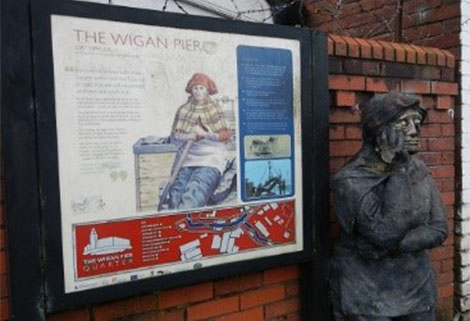
If you want to see a genuine ‘cross-road’ of canals, or to be able to say “I’ve been to Wigan Pier” and in some small way, become part of the legend, then you must visit. No rush though, it will be there for you for simply ages yet. Maybe re-engineered with Wigan’s pubs and shops, along side their Rugby and Football teams. Examples of engineering from another age, including a working steam engine and, would you believe, an indestructible fan, next to a refurbished mill and a boat yard. All on the banks of the Leeds and Liverpool and the Leigh Branch, leading to the Bridgewater.

The Wigan waterways also have events and cruises. If you want to wander a little further from the Pier itself, you will also find the River Douglas, Wigan’s river, once made navigable (canalised) around 1720 with its own 13 locks! and still tidal, just a few miles downstream, eventually joining the River Ribble.

There are also several cycleways to help you enjoy the environs around Wigan Pier in the here and now, as the sign in the photo suggests and helps with distances and direction.

Facts and points of interest loosely playing to our Intertidal Zone as a metaphor.


Useful Links:
The Orwell Foundation
Leeds & Liverpool Canal
River Douglas Navigation

super yachts

super yachts

When most people buy a National Lottery ticket or other various money- making ventures, the majority who win fantasise about fast cars, helicopters, holidays of a lifetime or real estate. How many think, Super Yacht? Not many I would imagine.

There is a reason for this, purely because they would need to win an absolutely obscene amount to even get close to buying one.

Most people would think £1 million would be enough. Think again... That would not get you anywhere near, even if you won the latest Euromillion`s jackpot which amassed to an astounding 160 million euros, it would still not be enough.

When you are talking about total luxury super yachts, you are dealing with telephone number amounts, forget millions and start thinking in billions.

Consider this, the list of the most expensive motor yachts in the world have three billion- dollar vessels in its top ten, which just goes to show how much luxury costs.

A recent survey found that even buying a second hand motor yacht has an average price of 7.9 million euros.

You can see why anyone who is thinking about buying one will need a vast amount of money, not just to purchase the yacht but to maintain and run it.

These things do not run themselves, they take a colossal amount of effort and are manned by small armies of crew members, busily keeping the thing afloat and in tip top condition.

They don’t call them floating hotels for nothing and you know how much they take to organise and run?

Top 10 most expensive Motor Yachts in The World

History Supreme $4.8 Billion
Eclipse   $1.5 Billion
Streets of Monaco   $ 1.1 Billion
Azzam  $ 600 Million
Motor Yacht A.  $ 440 Million
Dubai   $ 400 Million
Al Said  $ 300 Million
Dilbar  $ 256 Million
Al Mirqab  $ 250 Million
Lady Moura  $ 210 Million

the most expensive motor yacht in the world...

super yacht History Supreme

History Supreme

The most expensive Motor Yacht in the world by a considerable way at the moment is the History Supreme which comes in at a staggering $4.8 billion which oozes luxury throughout.

Designed by UK luxury designer Stuart Hughes. The 100 feet vessel boasts an impressive 10,000kg of gold and platinum fittings that adorn the base, dining area, deck rails, staircase and includes a gold anchor. The master suite has a 68kg 24 carat gold wall aquarium alongside a statue that is made from original T Rex bones.

Owned by Malaysian businessman Robert Knok, the project took 3 years to complete.


most famous expensive super yacht owner...

Probably the most famous owner of an expensive super yacht is Roman Abramovich who is well known throughout the sporting world as the owner of Chelsea football Club.

super yacht Eclipse

Eclipse

The yacht in question is the Eclipse which is the second largest in the world at an impressive 533 feet.

Boasting such luxuries as an intruder detection system, 2 helipads, 24 guest suites, dance hall, 2 swimming pools, hot tubs, a submarine that can dive to 50 metres and what every yacht should have a missile detection system.

This also includes a security system that is second to none including armour plating and bullet proof windows, there is also an anti- paparazzi shield that sweeps the surrounding areas warding off any unwanted prying eyes.

remarkable looking super yacht...

super yacht The Streets of Monaco

The Streets of Monaco

One of the most truly remarkable looking yachts has to be the one designed by the Opulent Yacht Company and styled by Filthy Rich Boaters, this being the Streets of Monaco which is so incredible it looks like a CGI concept.

The design is based as the name suggests, Monaco at sea with features including a replica of Monte Carlo, Hotel de Paris and a swimming pool that looks like a beach.

Measuring 500 feet long, this luxury yacht is spread over three floors incorporating helicopters, submarines and Jacuzzi's on the side decks.

What happens if you are not a lottery winner, what are the used options on the market? Depending on how you gauge the term “super” will depend on how much you want to spend, would you class spending £199,999 on a vessel super? Bearing in mind that the average second hand super yacht runs into millions the lower price seems an absolute steal.

Once you have decided on which yacht to buy, the 40 feet mark is a common boundary line for purchasers searching for a new vessel.

a boat or a ship...

Because the terms boat and yacht are often used together, most sailors agree that the term yacht is indeed applicable to any vessel over 40 feet in length. The way to distinguish if a vessel is a ship or a boat is that you step into a boat and onto a ship.

When a yacht is over 500 feet, can you imagine the size of the engines and engineering that is needed to plough these monsters through the water, especially as water speed is a lot harder to cut through: ever tried running in water, it takes a tremendous amount of effort?

The service and maintenance that these engines need is the most important part of any vessel, failing to maintain them would be like having a Rolls Royce parked outside without any wheels.

The luxury of having all the mod cons would fade dramatically if the machinery, including engine parts were not inspected on a regular basis, Companies such as Bearingtech can help keep your vessel afloat by supplying all the parts including bearings, belts and accessories.

most famous ships in history...

Ship                                       Date Built                       Cost                                         

Santa Maria                           1460                              Unknown

Titanic

Titanic

Mary Rose                              1510                              Unknown
Golden Hinde                         1577                                £ 1,950
Mayflower                              1609                               Unknown
Victory                                     1758                               £23,500
Endeavour                              1764                               Unknown
Bounty                                     1784                                £ 1,950
Beagle                                      1818                                £ 7,803
SS Great Britain                      1843                               £ 117,000
Great Eastern                         1858                               £ 500,000

Mary Celeste                           1861                    £ 1,750 from wreckage
Cutty Sark                                 1869                               £16,150
Discovery                                  1900                               £ 34,050
HMS Dreadnought                 1905                               £1,785,683
Titanic                                       1911                               £1,500,00
HMS Hood                                1920                              £ 6,025,000
Bismarck                                   1939                     198m reichmarck
Gipsy Moth                              1967                               Unknown
QE2                                           1969                               Unknown
HMS Ark Royal                        1981                                £ 3,000,00

a nation of sailors...

HMS Victory

HMS Victory

The British nation as a whole are known for being sailors in whatever guise they choose to use, whether it`s on a boat a ship, a yacht, a barge or a bathtub, you name it we sail it.

From Lord Nelson to Walter Raleigh, from Francis Drake to Francis Chichester, we are never more comfortable than when we are on the water.

But where does this obsession come from? Is it because we live on an island? Or a pure sense of adventure which continues today with cruises and holidays.

One adventure that always conjures up the question 'why?' is the sailing round the world single handed; why would anyone want to sail across vast shark infested oceans and tackle mammoth waves and storms? Why endure all the hardship and turmoil? What possible pleasure can you get from being faced with a 50ft wave coming towards you. No, me neither. But we still do it.

One thing is for sure, whether you are a billionaire or a normal working person we will still continue to keep afloat no matter what the size of vessel - albeit a small boat or massive yacht.

Imagine how the commonwealth would look today if we had not ventured out, maybe the commonwealth would have not happened at all.

Yachts, boats and ships get more expensive year on year, but the water that they sail on stays the same, never changes, it`s been the same from the year dot.

Anyone fancy a paddle?

canal du midi

canal du midi

the best laid plans...

Having enjoyed a brilliant cruise on the beautiful Canal du Midi from Le Somail to Agde last year in a cruiser hired from French boat hire operator Nicols Boats my wife Lois and I, and our Lifeboat Station colleagues Malcolm & Jill, plus our three dogs, decided we’d like to do something similar again this year, but having explored the eastern stretch of Canal du Midi before we thought we’d try the section north of Carcassonne this time.

Read More