
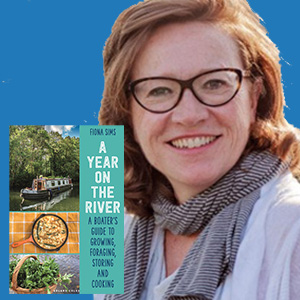
 Fiona Sims describes herself as a British 'food, drink and travel writer and editor who skips the globe in pursuit of top chefs, pioneering food producers, hot hotels, legendary winemakers, brewers and distillers'. Fortunately for us, Fiona also enjoys life at a much slower pace, not only spending much of her time on water, but also, we are told, cooking aboard. Her third book for boaters "A Year on the river" is a guide to foraging, but also an amazing cookery book...
Monthly Archives: September 2026
Fiona Sims
author of the season – autumn 26
author of the season - autumn 26
fiona sims
a year on the river

Fiona Sims is a well known author, so may already be familiar to some of our readers.
Fiona shares her time between her home in London, her second home on the Isle of Wight, and travelling around the world writing articles on food, wine and travel for various very famous and respectable publications. She describes herself as a British 'food, drink and travel writer and editor who skips the globe in pursuit of top chefs, pioneering food producers, hot hotels, legendary winemakers, brewers and distillers'.
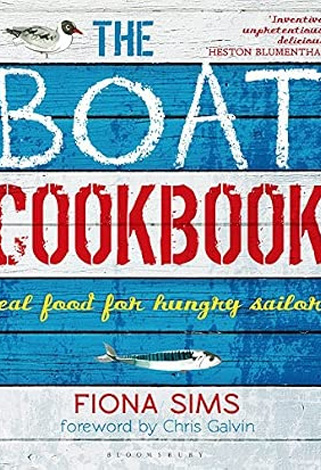
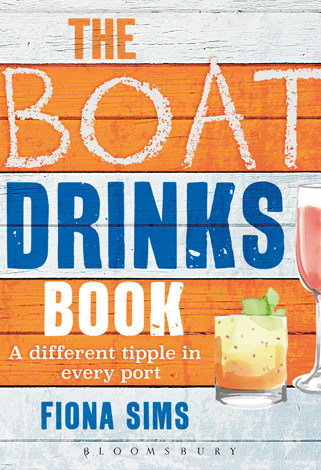
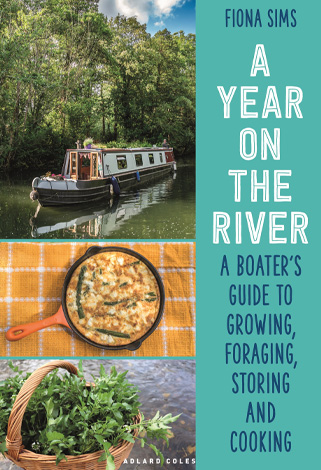
Fortunately for us, Fiona also enjoys life at a much slower pace, not only spending much of her time on water, but also, we are told, cooking aboard. She finds the time to write books and has already written two books for boaters: first, 'The Boat Cookbook', a best seller now in its second edition, and 'The Boat Drinks Book'. Her latest book, 'A Year on the River' is described as the 'absolute guide to Growing, Sourcing, Foraging, Cooking, Preserving and Pickling', but it turns out to be a lot more than that.
A Year on the River
Another delightful book from Bloomsbury, once again with the over-sized cover making it so easy to save your place. It is a good size, not too big, and packed with good quality colour photographs. This means that you are not confronted with great long pages of text, but instead everything broken down into nice sized bites.
The various sections in the book are colour co-ordinated; thus green for spring, yellow for summer, orange for autumn and blue for winter. Within each of these sections are tips as to what is in season, the author's favourite foraging items, and a thorough guide to foraging. The recipes for seasonal food then follow - and perhaps I can be forgiven for thinking they would all be recipes including foraged foods. They are not, of course, but either way they include many mouth-watering ideas. I love the way the recipes are split into 'breakfast, quick and light, bigger plates and sweet treats'. And an added bonus, at the end of each section, you will find Tipple Time - a beautifully written guide as to what to drink, then some recipes for cocktails and mocktails, and even snacks to accompany a fine beer.
Apart from the sections devoted to the seasons, there is a long section on boating life. Fiona looks at the galley, and the essential kit you would need for a small cooking space where storage is at a premium. And she suggests a few items that it may well be worthwhile to store. She gives us the basics for foraging, and goes on to river fishing; she tells you how to make pickles and preserves, and how to make British drinks such as elder-flower cordial and fruit liqueurs.
Then Fiona mentions wineries and breweries that are well worth visiting, and to be found within reach of canals or rivers. She talks about safety, and canal and river rescue. She highlights books to read about British waterways, and boating TV shows. Then there are sections on sustainable boating, boat rental, great holiday trips on canals and rivers, and waterways heritage. Finally, Fiona writes about BBQ's and picnics. I can't actually think of anything that has been left out, unless readers want to know about the grittier side of boating. But that would hardly be appropriate here!
One final thing that I forgot to mention, is that Fiona also tends to slip in useful and curious bits of information: for instance the folk lore behind the lowly Hawthorn. Whether you are a live-aboard boater, spend a lot of time on your boat, or perhaps fancy a holiday on one, you will find plenty to interest you in this beautifully presented book. It is lovely to browse through, even before you turn to the recipes for delicious meals, treats and beverages.
I have to agree with Amazon's review:
A Year on the River takes you through each season and shows you:
- how to grow your own delicious produce on your boat or at your mooring
- the beauty of towpath foraging
- how to cook fresh, easy and delicious meals when short on space
- how to sensibly store your food and reduce waste
- how to buy local and seasonally where you're moored
All of this is interspersed with over 40 easy and appealing recipes, such as wild garlic pesto, banana pancakes with foraged blackberries and roasted chalk stream trout, making the most of your new-found skills in growing, foraging, sourcing and storing. This a practical yet beautiful book, brimming with ideas, tips and practices to transform your boating lifestyle.
All in all, 'A Year on the River' is an excellent little book, and deserves a space on any boat lover's shelf. Furthermore, it would make an ideal gift for someone you know...
Fiona's books are available on Amazon, from Bloomsbury Books, or from good book stores.
floodex exhibition 2026
floodex 2026
the ultimate event for flood management professionals
Floodex returns to ExCeL London as the UK’s flood resilience community prepares for a changing climate25–26 November 2026
ExCeL London Floodex, the UK’s leading exhibition and conference for flood risk management, flood protection and resilience, returns to ExCeL London on 25–26 November 2026, bringing together flood professionals, catchment & waterways management, local authorities, infrastructure owners, engineers, consultants, contractors, manufacturers and emergency planning specialists.


As the UK faces increasing pressure from extreme rainfall, surface water flooding and the need to adapt infrastructure to a changing climate, Floodex provides a dedicated forum for the industry to examine the challenges ahead and explore practical solutions.
Connecting the flood management community Floodex brings together the organisations and professionals responsible for protecting communities, businesses and critical infrastructure from flooding.
The event will showcase the latest developments in flood prevention, flood protection, resilience, forecasting, monitoring, emergency response and climate adaptation, giving visitors the opportunity to discover new technologies, meet specialist suppliers and exchange knowledge with fellow professionals.
From property-level protection and temporary flood barriers to pumping, telemetry, modelling, warning systems and natural flood management, Floodex provides a comprehensive view of the solutions available across the flood risk management sector.
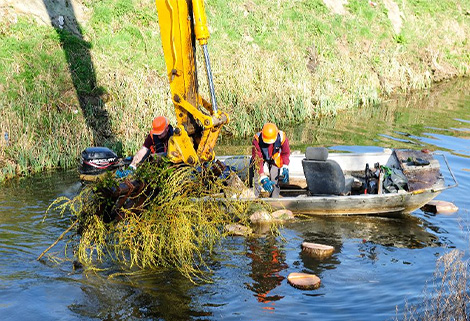
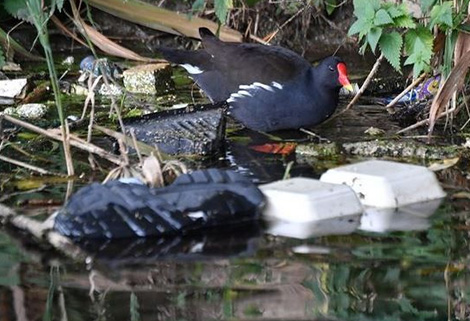
Tackling the UK’s flood risk challenge Flood risk is becoming an increasingly important consideration for communities, infrastructure owners, developers and businesses across the UK. Floodex will provide a platform for discussion around how the industry can improve resilience, respond to changing weather patterns and deliver more effective flood risk management.
The event’s programme of seminars, presentations and expert discussions will address key issues affecting the sector, including climate resilience, flood risk policy, sustainable flood management, infrastructure investment, emergency planning, property protection, forecasting and emerging technologies.
The exhibition will also provide opportunities for visitors to see innovative products and services, compare solutions and discuss their requirements directly with manufacturers and specialist providers.
Where flood professionals meet Floodex attracts professionals from across the public and private sectors, including: Local authorities and flood risk management teams Environmental and water management professionals Water companies and utilities Civil and structural engineers Consultants and contractors Infrastructure and asset owners Property and facilities managers Emergency planning and resilience professionals Developers and construction professionals Insurance and risk management specialists.
With flood risk cutting across public policy, infrastructure, development and business, Floodex provides an important opportunity for these communities to meet, share experience and develop new approaches to resilience.
Register for Floodex 2026Taking place at ExCeL London on 25–26 November 2026, Floodex will provide two days of networking, knowledge exchange, product discovery and debate focused on one of the UK’s most important environmental and infrastructure challenges.
Professionals working in flood risk management, resilience, water management, infrastructure and related sectors are encouraged to register and make Floodex 2026 a key date in their calendar.
Floodex 202625–26 November 2026ExCeL London.
For visitor registration, exhibition information, speaking opportunities and the latest event updates, visit the official Floodex website.


mooring lines 10
mooring lines
chapter 10
By late afternoon, the rain had eased, leaving the hedges dripping and the towpath smelling of wet earth. Ivy tied off neatly this time and set about coiling the spare line. Across the cut, two boats already sat moored for the night, smoke curling from their chimneys.
The nearer one was painted in wild swirls of turquoise and orange, flowers sprawling across the cabin sides as though someone had spilled a paint box and let it bloom. A man in paint-spattered overalls stood on the roof, brush in hand, hair tied back with a rag. He was adding yet another spiral to the already chaotic pattern.
“Careful there, lass,” he called, voice sing-song, slipping into a theatrical lilt. “Tie her too tight and she’ll think herself chained. Boats like freedom, just like color. See?” He jabbed his brush toward his masterpiece, drips flying.
Theo leaned on the hatch, eyebrows raised. “Looks like your boat’s been caught in a fireworks factory.”
The painter threw back his head and laughed, a high, delighted sound. “Exactly! Let the dullards stick to their dark green and cream. Me, I paint with joy. Name’s Silas. My boat’s The Painted Lady, though folk call her The Kaleidoscope.”
Ivy smiled despite herself. “She’s… unforgettable.”
“That’s the spirit! Boats are souls on water. Treat yours kindly, keep her clothed in brightness, and she’ll carry you far.”
Theo muttered something under his breath about preferring steel to psychedelia, but Silas had already returned to his brushwork, humming tunelessly.
From the other mooring came the scrape of a chair. An older man emerged, tall and stooped, his hair white as lime dust. He wore a neatly buttoned wool waistcoat; spectacles perched low on his nose. In one hand, he carried a battered leather ledger; in the other, he held a clay pipe unlit.
“You’ll forgive Silas,” the man said in a voice clipped and careful, Midlands accent softened by age. “He sees the world in color, where most of us prefer function.” He nodded politely toward Ivy and Theo. “Name’s Arthur. Retired engineer. Worked the locks and bridges up and down this cut since before he was born, or so it feels.”
Theo grinned. “So, you’re the one who keeps it all from falling to pieces?”
Arthur’s lips twitched. “Once upon a time. Now I’m just a keeper of stories.” He tapped his ledger. “Histories of the Grand Union, notes on the toll years, designs for paddle gears they’ve long since scrapped. Somebody ought to remember, don’t you think?”
Ivy felt a warmth at his words, as if the canal itself breathed through him. “I’d like to hear some of those,” she said.
“You shall, when there’s tea enough and patience.” Arthur inclined his head gravely, then shuffled back toward his cabin, pipe stem tapping against the wood.
Silas, balanced precariously on his roof, gave a flamboyant wave of his dripping brush. “And I’ll paint your portrait in the meantime! Heroes of the storm, survivors of the deluge!”
Theo rolled his eyes. Ivy laughed. The canal had given them neighbors, and though one saw the world as canvas and the other as ledger, together they made the towpath feel richer, stranger, and more alive.
alton towers – here we come!
alton towers - here we come!
the bacon butty and a broken tiller
It’s a beautiful, wonderful canal morning – not that many of the other boat-users would appreciate this as it’s only 4.00am – and we must be off within the hour! We set off precisely at 5.00am. It’s a quiet, misty, even mystical morning as the sun starts to peep through the rising mist and distant trees - and as Errwood cuts through the water, her engine humming. Bosley is slightly delayed but is only a few minutes behind.
For me, it’s one of the most enjoyable and invigorating aspects of canal cruising – as the occasional moorhen scuttles into the reeds, sensing our approach. As the low sunshine filters through the lightening sky, it feels good to be alive! The ‘spare’ skippers in the bows seem almost redundant, as one tricky bend after another is negotiated with ease, as we press on to catch up on time we lost the previous day.
We then arrive at a single lock, which Dave quickly deals with, before he races on to raise the Norton Green Lift Bridge which we glide through, before waiting to pick him up. By now I notice that some of the kids are awake, and a couple have even come around to the back galley – presumably to get breakfast started. Our next task is to navigate Long Butts Lift Bridge. I pull the bow close into the side, for Dave to hop off, run ahead and lift the bridge. We glide through as before – and wait for Dave to lower the bridge and rejoin us. We seem to have got these lift bridges sorted – but on this occasion Dave remains on the other side of the canal, trying to lower the bridge, but with little success.
He calls out to me:
“It went up alright, but I can’t lower it – it’s stuck!” which means that Dave is also stuck on the other side, and unable to get back to the boat. But he is a big, muscular guy, so I hold the boat steady to give him more time. Just then the waft of cooked bacon reaches me from the galley below. I can see that Dave is still struggling so I call out to him that I will reverse up, to let him step aboard, leaving the lift bridge ‘up’ – which Bosley (behind) can use in a few minutes time. So I put Errwood into full reverse, to go and collect Dave.


At that precise moment, I feel a tap on my leg from the galley down below – it’s my breakfast! I think it best if I gratefully receive it, rather than risking further taps – or even a yank. I stoop down as I’m handed the crispy bacon sandwich – as the boat continues to reverse. But as I turn round I see that - to my horror - Dave has managed to lower the bridge (several tons of solid steel) and has walked across it. By now Errwood is reversing fast towards the lowered steel bridge. I immediately throttle the engine forward, to slow the reverse. But too late! The boat keeps reversing, and a collision is inevitable. For a split second I think about trying to fend off the collision with an outstretched leg – but I think the better of it. It was a good call for, as a recent writer puts it:
“A boater’s instinct should be never to risk any part of themselves – hand, arm, leg – being trapped, crushed and mangled between the slow-moving but steam-hammer power of laden boats. This is really the one great danger of canals, (as) I snatched my arm back inboard.” [53a]
Dave and I both watch and wonder what is going to happen . . . . . . First, the back-fender slides under the bridge – so what’s next? THE TILLER! So as the boat continues its way under the heavy steel bridge, the bridge strikes the tiller at its base, then bends the tiller forwards. Next, with A CRACK AND A BANG the tiller shears off at its base, flies through the air, and straight into the galley with a crash!! Dave and I stare at each other in disbelief. Thankfully, no-one in the galley appears to have been hurt; also thankfully, the tiller did not fall into the canal. But I’m in a state of shock, wondering what we do now? And, as cruise leader, what do I do now?
With both boats eventually moored up, the four skippers discuss our next steps. Clearly we need the tiller welded back on to Errwood. So I will find the nearest phone-box to try to arrange that – although it’s only 6.30! Meanwhile, the others will breast up the two boats, using Bosley’s steerage, which will take the boats up to the next lock at Stockton Bridge, where a nearby main road will be useful for a welder to gain access.
Before I leave the scene, I decide to wash down my now lukewarm bacon sandwich with my now lukewarm cup of tea. The kids all think this a great adventure – not realising that their trip to Alton Towers may be in jeopardy.


At the phone box I quickly scan the Yellow Pages for ‘Welders’ and find several names. My initial conversations could have been something from Monty Python or Fawlty Towers:
Me: Hello, I’m needing a welder – urgently!
Welder: Don’t we all sir! Don’t we all!?
Me: How soon can you make it?
Welder: I don’t ‘make’ anything sir – I just weld things together that already exist!
Me: Yes, yes – but I’ve got a tiller that needs welding back on
Welder: Back on where sir?
Me: On a boat of course! What else would you weld a tiller to?
Welder: I don’t know sir. Haven’t thought about it much.
Me: Well think! Please think! When can you come and fix it?
Welder: I’m free a week on Tuesday sir – is that any good to you?
Me: Goodbye! As I slam the receiver down...
Fortunately, after several similar phone-calls, I find a welder who can come to the boat in about two hours time with the welding taking up to an hour. That’s three hours on top of what we’ve already lost. While I’m at the phone box, I do a few swift calculations and then phone the coach company, and ask them to collect us at Cheddleton, at 2.00pm not Froghall. There’s no way we will reach Froghall, but we might just make Cheddleton by then. So that’s agreed, as we wait for the welder to arrive, do his welding - and finish.
Let’s hope that’s the end of our troubles for this particular school canal cruise. Unfortunately, it wasn’t the end - it wasn't even the beginning of the end. It was just the end of the beginning of our trials that lay around the ‘next bend’ - and the bend after that . . . . . . . . . . .
Adapted from:
The Curious Incident of the Bacon Butty, a Broken Tiller and a Mid-life Crisis
By: James Adams
Published by: Quantum Dot Press - late Autumn 2026.
electric boating
electric boating
a 3 year journey
This journey started 3 years ago, but I'm going to fast-forward to last Friday. I'm travelling on my own up the M6 motorway on the way to an Electric Boat Association rally in Windermere. I'm towing DB1, a prototype boat we've built. I catch myself smiling — a really big, cheesy grin. I'm happy, very happy.
I'm Tim Knox, the director of two small marine businesses — Mothership Marine, which builds electric boats, and Torkmar, which builds systems for them. I'm also Secretary of the Electric Boat Association, which runs a calendar of rallies for owners around the country.


The rally, on Windermere, doubles as a testing day for DB1. I launch her at Ferry Nab on the Friday night ahead of a Saturday start. DB1 is joined by two others for a run to the head of the lake and back, with lunch in between. Always lunch in between. The numbers DB1 returned were hard to ignore. By the time the three boats reach the top of the lake, DB1's batteries are nearly full, having run almost entirely on power from its solar roof. Cruising at around four miles an hour, DB1 uses roughly 350 watts to motor; the other two boats, which incidentally are smaller, use at least double the power.


Soon, I'll be setting off from Lechlade with my wife and inspiration behind this boat (she hates boats). I'm trying to build one she likes. We aim to travel the entire navigable length of the River Thames to Teddington without ever plugging in. It's a big test. DB1 is a lovely-looking boat, but she runs very much against current industry thinking. She also has a lowering solar hard canopy that pops up and down in seconds. My wife hates the faff at the start and the end of a boating day!
Most electric motors on the market try to emulate combustion motors. This is a mistake. My thinking is to start with the propeller. Props are not just about thrust — they are about lift too. A well-shaped propeller acts like a wing, pulling the boat forward as well as thrusting back. A larger prop flies better but also thrusts more gently and more efficiently.


Driving a large propeller well means you need torque. I think the industry has largely forgotten this and is fixated on how fast a motor can spin. DB1 pairs an oversized propeller with a high-torque motor that turns slowly, easing the boat forward with very little wasted energy.
Solar on a boat can look ugly. DB1 has 716 watts of capacity on the roof, built into the canopy so as not to announce itself. It's attractive and very functional.
The hull shape is disruptive too. At 19 feet 6 inches long and 7 feet 4 inches across the beam, DB1 is unusually wide for her length. But her width makes her comfortable for those on board, and stable. Cunningly, this size just fits into a 20' shipping container. Doubly cunning, we can fit two in one container and export all over the world for not much money.
Some people like mountains, some like nightclubs, I like water. It calms me, makes me happy. Boats with combustion motors going fast are fun — going fast takes your mind off the noise and the stink. These boats are about getting to the destination. DB1, the boat, is the destination. Being on the Thames is a tonic; it is the destination. That said, my wife of 39 years, with good reasoning, insists we stop at some nice hotels on the river, of which there are plenty.
I'm nervous. It's a new boat, and there are lock restrictions due to water shortages. Global warming? If it is, one thing is for sure: DB1 is not to blame!
There is a range indicator on the motor display; if we are getting more power in from the sun than the motor is using, the display shows an infinity symbol. If we get to Teddington with our batteries fully charged that's infinity and maybe beyond. Because, if all goes well, I am seriously tempted by the tidal Thames.
But not my wife!
 Torkmar builds direct-drive high torque PMAC motors and complete electric systems | motor, battery, solar, and power hub | guaranteed to work together.
+44 7311 390840
sales@torkmar.com
www.torkmar.com
a boater’s life for me
the boating bard
a boater's life for me
My fuel tank is near empty
and my leisure batteries are low
The toilet cassette's brimming over
but my bladder still says 'go'
The day's light is fading quickly
I'm on a countdown clock
My solar power's dipping
and there's something round my prop
I've a dwindling kindling pile
And I'm getting short of coal
I've burnt all of the Tow Path Talks
And run out of toilet roll
I've been double dipping t-bags
Eating pot noodles for my tea
The gas is on the blink
And it's ever so draughty
I'm living on an angle
Sleeping on a tilt
There's little water in the cut
and I'm wallowing in silt
I'm a prisoner on my boat
My gang plank's fallen off
May have to use my barge pole
To vault myself across
Some may think it rough
With no hot water on demand
And patchy phone reception
No WiFi nor broadband
But the benefits trump the hardships
I'm happy and healthy
I won't swap for bricks and mortar
It's a boater's life for me
cooking on the cut – autumn 26
cooking on the cut
with Lisa Munday
autumn 2026
Hello Autumn.
After an incredible Summer, we have eased into Autumn nicely and resumed some sort of normality in the galley now that comfort food is back on the menu.
It’s surprising how much warmth the hob and cooker give off, but nothing beats a one-pot meal simmering slowly over the stove.
Those comforting, earthy Autumn scents and shades are beginning to emerge, and the hedgerows are jewelled with ripe berries, giving us the fruits for preserves and Autumn bakes.
The dewy mornings and chilly evenings bring out those comfort-food cooking vibes. We are enjoying heartier meals made with the season’s root vegetables, squashes and fruits. It’s the time of year for warming spices such as cinnamon, ginger and cloves, which all pair well with slow cooking and seasonal fruits.
The brassica family of vegetables is in season now, with cabbages and kale full of nutritional goodness, cauliflower and broccoli making great additions to soups and gratins, and sprout season is nearly here.
Seasonal Autumn food is all about warmth, richness and comfort, and I love it! Comfort food is the theme of the recipes I’m sharing, and there are more via the bio at the bottom of the page.


Carrot Ginger & Fennel Soup
1 tbsp olive oil
1 small onion, finely chopped
3 medium sized carrots, about 200g, roughly chopped
½ fennel bulb, sliced, reserve a little for garnish, or 1 tsp fennel seeds ground in a pestle and mortar 2 to 3 (depending on size)
garlic cloves, crushed
1 tsp grated fresh ginger
½ tsp each salt and pepper
1 small tbsp maple syrup or honey
600ml vegetable stock
- Fry the onion in the oil for 5 minutes until soft, add the salt and pepper, followed by the garlic, fennel and carrots.
- Fry for a few minutes more, without burning and add the ginger and stock.
- Bring to the boil and then simmer for about 15 to 20 minutes.
- Add the syrup or honey, allow to cool slightly, then blitz to a smooth consistency.
- Check the seasoning, add more if preferred and more stock for a thinner soup.
- Thinly slice the reserved fennel and fry in a little butter, or dry fry extra fennel seeds to garnish.
Roast spiced squash soup with tofu croutons
1 butternut squash, peeled and diced
1 sweet potato, peeled and cubed
2 tbsp coconut oil
50g unsalted butter
¼ tsp dried chilli flakes
½ tsp paprika
Sea salt and ground black pepper
1 onion peeled and diced
2 to 3 cloves garlic, peeled and sliced
1 litre vegetable stock
For the croutons:
1 pack tofu 4 or 5 sage leaves, finely chopped
Pinch chilli flakes
Cornflour for dusting
1 tbsp oil
- Begin by coating the diced squash and sweet potato with 1 tbsp of the oil, half the butter, the seasoning, chilli flakes and paprika.
- Roast in the oven for 20 mins.
- Meanwhile, heat a large pan and add the remaining butter and tbsp coconut oil, gently fry the onions for a few minutes to soften but not brown, add the garlic and cook for a couple more minutes.
- Add the roasted squash and sweet potato and the stock to the pan.
- Bring to the boil and then simmer for 10 minutes.
- If you prefer not to use the oven, just fry for about 5 minutes, but roasting gives a better result.
- For the tofu croutons, use strong kitchen paper or a clean cloth to squeeze out as much moisture from the tofu as possible, repeat until it’s workable into a long oblong shape, flatten and cut into squares.
- Dust each piece with the cornflour, chilli flakes and chopped sage.
- Carefully fry in the hot oil for a few minutes, turning, to crisp up the edges and serve over the soup.


The following two recipes can be cooked using a cast iron skillet, or a good deep frying pan. Either way they finish nicely in the oven and can be enjoyed with crisp greens or some crusty bread. Soda bread is really quick and easy to make when you fancy homemade bread without the waiting time for the dough to rise.
Red onion and sweet potato frittata
75ml olive oil
1 large red onion, thinly sliced
1 tsp sea salt
1 (or 2 depending on size) sweet potato, peeled and thinly sliced into discs
4 eggs, lightly beaten
½ tsp smoked paprika
½ tsp ground nutmeg
Freshly ground black pepper
- Par boil the potato slices in a pan just to take away the rawness, making sure they stay whole in the process. Drain and allow to dry thoroughly. They can be cooked with the onions, but I prefer this way as it’s quicker.
- Heat the oil in a skillet and add the onion and salt, cook gently to soften for about 5 minutes, stirring as they cook.
- Add the paprika, nutmeg and freshly ground black pepper, then the well drained potatoes.
- Distribute the onions amongst the potatoes in the pan and then pour the beaten eggs over the top.
- Continue to cook over a low hear for about 10 minutes until the frittata is cooked through.
Leek, Potato and Smokey Bacon bake
500g potatoes
2 leeks, trimmed and sliced
1 small onion
6 rashers of smoked bacon, cut into 2cm pieces
1 tbsp each oil and butter
½ tsp each sea salt and ground black pepper
½ tsp dried thyme
1 generous tsp wholegrain mustard
1 cup milk
2 eggs
1 or 2 slices brown bread, a few days old, made into rough breadcrumbs.
130g smoked cheddar cheese
- Halve or quarter the peeled potatoes, depending on size, into similar sized pieces, bring to the boil and cook until just tender. Drain well, smash to break up a little.
- Meanwhile, heat the butter and oil in a skillet and fry the onions and leeks to soften.
- Add the bacon pieces, seasoning and thyme, continue to stir round the pan to cook.
- Stir in the cooked potato.
- In a separate bowl, beat the eggs with the milk and add the mustard, breadcrumbs and cheese.
- Pour the eggy mixture over the skillet and bake in the oven for 30 to 40 minutes until bubbling underneath and crispy on top.


Thai Yellow Curry
A Thai curry would usually have lemongrass and lime leaves, but I have used curry leaves which work well. This recipe works well with white fish, or use vegetables such as cauliflower with chick peas, sweet potato or kale for a vegetarian version. By marinading first, much more depth of flavour will be created.
For the Marinade
1 tsp turmeric
1 tsp garam masala
½ tsp chilli powder
Juice 1 lime
For the Curry
2 tbsp coconut oil
1 onion, finely sliced
1 or 2 fresh Thai or finger chillis, red or green, finely sliced
3 garlic cloves, minced
2cm piece ginger, peeled and finely grated
½ tsp fenugreek seeds
½ tsp black mustard seeds
Pinch salt and pepper
1 tsp turmeric
1 tsp garam masala
1 tin full fat coconut milk
Handful cherry tomatoes, about 6 or 8, halved
Marinate the fish or vegetables in the spices and lime juice, leave for at least two hours.
-
- Using a lidded pan, heat the coconut oil and cook the onion with a pinch of salt until translucent, for about 5 minutes.
- Add the mustard and fenugreek seeds, stir round the pan for 30 seconds, then add the seasoning, turmeric, garam masala, chillis, ginger and garlic, fry for no more than 1 minute, before adding the tinned coconut and cherry tomatoes.
- Simmer for about fifteen minutes, with the lid on, add the vegetables at this stage if using, or the fish for the last five minutes.
- Serve with rice or greens and a sprinkling of fresh coriander leaves.
Chicken Chorizo and Barley Hot Pot
As the weather turns cooler, this is hearty comfort food at its best, and it can be cooked over the stove.
Chicken thighs or drumsticks, skinless and boneless, about 500g, cut into bite-sized pieces
150g chorizo, sliced into thick chunks, from a dry cured whole chorizo ring
1 tbsp olive oil
1 small red onion, finely chopped
2 carrots, diced
1 celery stick, finely chopped
1 heaped tsp smoked paprika
3 garlic cloves, crushed
½ red pepper, finely chopped
½ tsp dried thyme
¾ cup, about 140g pearl barley, rinsed well
200g potatoes, cut into large chunks
1 tsp each salt and pepper
1 tin tomatoes
500ml stock
- Using a large lidded pan or pot, heat the oil, fry the chorizo for a couple of minutes to crisp up the edges and release the oils, then lift out and keep to one side.
- Add the chicken, onion, carrots and celery and gently cook for about 5 minutes.
- Stir in the paprika, garlic, red pepper, thyme and seasoning.
- Then add the rinsed barley and stir round the pan.
- Pour in the stock, tinned tomatoes and potatoes, followed by the chorizo.
- Bring to the boil, then reduce to a simmer and continue to cook with the lid on for about half an hour to 45 minutes. Keep checking and stirring, adding more water if required, the barley will soak up the liquid and thicken the dish.
- Check the seasoning and add more salt and pepper to taste.
Enjoy with chunks of crusty bread. As the weather turns cooler, this is a great dish to cook over the stove.
Cheesy Autumn Vegetable Cobbler
I absolutely love this hearty creamy dish, cooked in the oven, bubbling underneath, with a crispy finish to the cobbler topping, it really does make a delicious one pot meal! Any vegetables can be used, whatever you have in, and the addition of butter beans gives a creamier finish. I used a large rectangular enamel dish for these quantities.
½ small onion, finely chopped
1 garlic clove,
minced Cauliflower (half or one small) cut into small florets
Greens such as green beans, kale, stripped cavelo nero, or broccoli
1 carrot, cut into chunks
1 courgette, cut into chunks
250 ml vegetable stock
200g tub cream cheese
Pinch nutmeg
Pinch salt and pepper
1 tin butter beans
A little grated cheese for sprinkling on top
For the Cobbler
225g self-raising flour
50g butter
25g walnuts, finely chopped
50g red Leicester cheese, grated
150 ml milk
1 beaten egg
Pinch salt
- Rub the butter into the flour and salt to resemble breadcrumbs, add the nuts and cheese
- Beat the egg and milk together along with the nutmeg, and stir most of it into the flour mixture to bring it together, reserving about 1 tbsp to brush over the top.
- Handle the dough lightly to bring together, cut into 8 segments using a floured knife and form into rounds, using floured hands, keep to one side.
- For ease and speed, blanch the vegetables in boiling water, drain using the water to make the stock.
- Fry the onion in a little oil, add the garlic and seasoning, stir in the stock and cream cheese.
- Place the strained vegetables in the dish and add the stock and cream cheese mixture with a small sprinkling of cheese over the top.
- Top with the 8 cobbler dumplings, brush with the reserved egg and milk.
- Bake for 25 to 30 minutes until the topping is crispy and golden.


Autumn is pie season, and I love a good fruit pie, cobbler or crumble. Adding a little ginger or cinnamon to the fruit adds an Autumn spice and if using apples I always use a little butter for more richness. I love making my custard into ginger custard, just by adding some grated stem ginger from a jar and a little bit of the syrup. Recently I bought a couple of cast iron mini pots, only measuring 12cm diameter, but perfect for small puddings or slow cooks over the stove.
Baked little Fruit and Granola Pots
These are like a cheats crumble, with no fuss, just using breakfast granola over the fruit. Depending on which type you use, it’s probably not necessary to add any sugar, that’s up to personal preferences, but a little brown sugar and cinnamon could always be sprinkled over the top for extra sweetness.
200g fruit, such as damsons, plums, apples etc.
2 tbsp dark brown sugar
1 tbsp butter
½ tsp ground ginger
¼ tsp ground cinnamon
100g granola for the topping.
These quantities can easily be doubled for a larger pot.
Combine the fruit, sugar, butter and spices and add to the pot with a splash of water. Top with the granola. Place the lid over the top and cook over the stove until the fruit is bubbling and the granola crispy. Serve with crème fraiche or custard.
Finally, the arrival of Autumn for me, in the galley, means baking and one of my favourites has to be a ginger cake. Knowing the cake improves after a day or two, it’s just impossible to resist the wait! Here’s one of my favourite recipes.
Traditional Ginger Cake
225g self-raising flour
2 tsp ground ginger
½ tsp ground cinnamon
1 tsp bicarbonate of soda
100g unsalted butter, plus extra for greasing
100g golden syrup
100g black treacle
100g light brown soft sugar
50g stem ginger, from a jar, diced.
2 medium eggs
200ml milk
100g icing sugar
2 tbsp of the syrup from the stem ginger jar.
Preheat the oven to 160 fan, gas 4.
- Grease and line a 20cm square cake tin (or similar) with baking paper.
- Blitz together the flour, ginger, cinnamon, bicarb and butter until it resembles breadcrumbs.
- Into a pan, place the syrup, treacle, sugar and diced ginger, gently heat to dissolve the sugar, then turn up the heat for another minute, stirring and remove from the heat.
- Beat the eggs and milk into the syrup mixture, then mix into the flour and butter mixture.
- Pour into the cake tin and bake for 45 minutes.
- Remove the cake from the oven and allow to cool for 10 minutes in the tin.
- Meanwhile stir the ginger syrup and 2 tbsp boiling water into the icing sugar, stir until smooth.
- Pierce the cake all over with a skewer and pour over the icing mixture. Leave to set before serving.


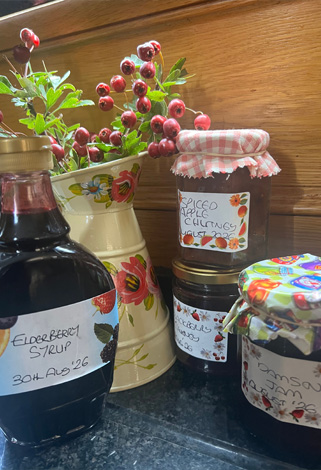
I hope you enjoy trying some of these recipes and look forward to a pleasant Autumn. Don’t forget to click the bio for more seasonal recipes and I’ll be back with more in December.
breaking bad
'breaking bad'
from ovation boats
For the past twenty-five years, boats have quietly shaped our life together, marking each chapter of our relationship with a different hull, horizon, and sense of adventure. It all began modestly, with a small Larson bow rider bought when we were first dating. She wasn’t grand or glamorous, but she was freedom.
Weekends were spent learning the rhythms of the water, figuring out terminology, weather, and each other, all while discovering that life felt better afloat. As the years passed, our confidence grew and so did the boats.
One motorboat led to another, each a little larger, a little more capable, mirroring our growing ambitions. The true highlight of this era came with the purchase of a 50-foot Prestige motor yacht. She opened the door to genuine passage-making and unforgettable journeys.
From Cornwall we crossed the Channel to France, then pushed on across the Bay of Biscay to northern Spain. Eventually, we followed the sun south to the Algarve, savouring the blend of challenge and exhilaration that long coastal passages bring.
Yet even that wasn’t enough.
Somewhere along the Portuguese coast, we realised we wanted more than Europe had to offer. We felt an irresistible pull toward the Atlantic and the dream of exploring the inter-coastal waterways of the United States.
To do that, we made a bold change, selling the motorboat and buying a sailing catamaran. In 2018, we crossed the Atlantic, an experience that tested us, thrilled us, and rewarded us in equal measure. Life slowed to wind speed, days were measured in watches, and the ocean became both adversary and companion.
Eventually, life nudged us toward calmer waters. When our dog, Banjo, became too old for ocean passages, we brought him home to the UK, settling into an apartment and promising ourselves a quieter chapter. That promise lasted only a few months.
Restlessness crept back in, and on a whim we called Ovation Boats who had a stock boat available and bought our first narrowboat in May 2023. Within a month, we realised we were completely captivated. Canal life offered us everything we cherished about a nomadic lifestyle, minus the stress of storms or rough seas.
Understanding this was now our long-term plan, we reached out to Chris at Ovation Boats to see if he was keen on crafting our ideal narrowboat. Apart from perhaps thinking we were a tad mad to order a second boat so soon, Chris was genuinely thrilled to be part of our entirely bespoke project.


We spent a few months designing and planning, as this needed to be our forever boat, so we were intensely focused on quality of life features that would ensure our new home was comfortable throughout the year. Some aspects were a bit unconventional for a traditional narrowboat builder, but we found the team at Ovation to be completely supportive of our requirements, from the underfloor heating system to the Smart Glass in the skylight, or the hybrid diesel/electric propulsion system to the Tent Box on the roof of the boat—every item on our must-have list was met with enthusiasm and a solution-oriented approach.


Over the next eight months, we made regular visits to the boatyard, refining various aspects of the design, sometimes tweaking plans here and there; it truly felt as though the boat was being constructed around us. More than that, the connection we forged with the craftsmen and women involved in the build and the insight we gained into the process has made our bond with this boat feel more tangible—I’m not sure every builder would welcome so much client interaction, but we are incredibly grateful for the relationship we’ve developed with the team at Ovation, all of whom we now consider friends.



We are small personal team of professional boatbuilders with a range of skills from apprentice to experienced.
Offering a broad spectrum of ‘Charnwood’ fully fitted steel boats from the all-electric short narrowboat ‘Charnwood Hobbit’ to the Dutch barge style ‘Charnwood Euro’.
07963 974 793
https://www.ovationboats.co.uk
well, that was a summer!
old no. 38
well, that was a summer!
Well that was a summer, wasn’t it?
Scorching temperatures, wildfires – especially just down the road here from Old Bridge number 38 in Stourbridge.
No need to go to Benidorm, just collapse on the sun lounger alongside the towpath and slap on the factor 50.
Low water levels, so moor up alongside the nearest pub and try to make the best of it.
Job’s a good one – not seen the like since 1976.
But dear reader, I bring a dire warning.
El Nino is hotting up in the Pacific and promising a winter of torrential downpours to top up the reservoirs that the water companies neglect in favour of their shareholders. (Oops! A bit political there. Sorry).
El Nino? I hear you query.
Well, let me try to explain. Say, for example, you boiled a kettle of water and chucked the lot into the turbulent waters of the Grand Union, then in all probability sometime around a week next Thursday we’d have a week’s worth of rain in 24 ½ hours down here on the Staffs and Worcs.
Same principle, only a lot bigger and wetter. El Nino is by all accounts a bit nasty.
And if a butterfly dared to flap its wings somewhere by Botterham Lock around the same time, then we’d probably have gales, hurricanes and tidal waves as well.
How do I know?
Because we’re used to disaster here in the Black Country. In 2002 for example, an almighty earthquake hit Dudley in the early hours of the morning. It measured 4.8 on the ‘slightly wobbly scale.’
How well I remember it. Well actually I don’t, it takes more than the earth moving to wake me from my fitful slumber. But it was extremely serious. I heard that someone’s chimney pot fell off in Upper Gornal.
We’ve had volcanos erupting too. Oh yes indeed. Up there at Barrow Hill next to Russell’s Hall hospital. Or the Pensnett Hilton as we call it.
Okay, it hasn’t gone off for a few million years and they reckon it’s extinct, but you can’t fool me. I know that it’s just lulling us into a false sense of security, just waiting to turn Pensnett into a latter-day Pompeii.
The Severn Bore happens quite a lot too. A tidal wave hurtling up the River Severn. It hasn’t happened yet, but someone only has to leave the lock gates open at Stourport so that it can take a quick right turn up the cut and we’ll be under water here before you can say, ‘Pass the wellies.’
So please believe me when I tell you to batten down the hatches. We’re in for a spell of inclement weather this winter. The sort of winter that will make you regret the words you uttered at the height of the heatwave, ‘Oh I wish it would cool down a bit, my 99 keeps melting all over the dog!’
Enjoy – and don’t forget your brolly.