Yearly Archives: 2023

why can’t they leave things alone?

why can't they leave things alone?

I am a bit late writing this article: my phone has stopped working; apparently it needs ISO, whatever now,  and thus is no longer supported. To add insult to injury, the word processing software I use to write with now needs a new licence.

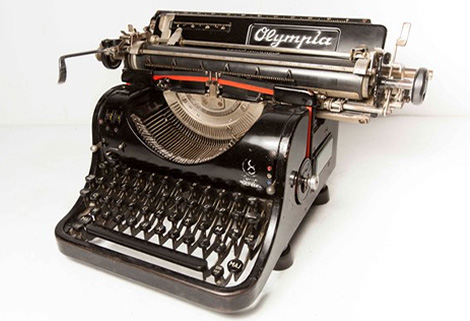
Technology is becoming more of a form of legalised piracy to extort money than to help. I don’t ever remember my trusty old Olympia typewriter needing much more than a new ribbon and a clean!!

Which brings us neatly on to the latest corporate act of vandalism from a leading gas supplier, the removal of the smaller gas bottles. Ok I know that these have always been the most expensive way of using gas but like many boats of Dawntreader's age, it is what the builders designed the gas locker around. To convert to the new larger 5 kilo propane is going to require some careful thinking and considerable expense to make a new locker, let alone have a corgi registered gas supplier come and make the necessary connections. To the point that I am now considering alternatives to gas and removing it all. After all, when I first started boating, it was paraffin lamps and wick stoves.

The first thing to do is list all things I use gas for, which is cooker, water heater and Propex heater. The next is why do I use it - the only real answer is because it's there !! and lastly what are my alternatives?

calor gas bottle boats

olympia typewriter

Firstly, the humble microwave can do a mug of coffee in under two minutes and a baked potato in 6 where as a Vaness Flavel oven takes about the same time it took to grow it. The hot water system for the shower can soon be replaced by the can of hot water method; I have a solar one I use sometimes in the cockpit, supplemented by what is basically a modern tea urn that provides enough hot water to wash up with.

So the answer seems to be 'go electric'. But this is not as easy as it sounds, as even with on shore power in the marina, supply is limited. Basically, we need to do an energy audit – how much power does a microwave, small water heater etc use and find a generator that can cope.

The plan is to use DT's old engine bay and have a lightweight built in diesel generator, complete with fireproof filters and pipe work and exhaust to outside world that can run the appliances. But not only for domestic duty – it would have to provide enough power for electric outboard charging and replace the old Suzuki - if you like a sort of hybrid power system. Thus removing the need for  yet another old dinosaur which is rapidly becoming obsolete. 5 litres of diesel is far cheaper than 5 kilos of gas and much more versatile.

Add into this a decent battery bank that can run a small invertor without causing a real headache and I think we are onto something. There are other alternatives, Kelly kettles are a must in life – I have had mine years, obviously you don’t use them inside the boat but on the towpath. Even half an old cardboard box can boil 3 litres of water in about 2 minutes – the surplus decanted into thermos flasks to use when required. A pan on top and you can have a bacon sandwich and hot water to wash up in. Spirit stoves or paraffin stoves are still available, as are baby Blake marine grade paraffin heaters, both of which are far more economical to run than gas.

What does worry me is that people will start to take risks with portable gas cartridge cookers and heaters of dubious quality and design. In the same way,  being an engineer, cheap Chinese diesel heaters scare the hell out of me. Then there are those who will run generators under canopies, or even burn candles. I have known all of these go wrong,  either gassing the occupant or burning boats down to the water line.

What I am certain of is I will not be carving up the boat trying to squeeze in a five-kilo bottle into lockers it simply won’t fit. Any more than I am upgrading my phone when I have a reasonably good laptop that does the same thing; and when that packs up it will be time for the typewriter!!

If we all turned our backs on some of these corporations and their continuous need to change things to make us buy so called newer and better, they would soon learn to leave things alone.

dinosaur

a red letter day

a red letter day

in the story of the Waterways Chaplaincy


1st January 2023 was a day that marked the transition of the Waterways Chaplaincy from being a part of Workplace Matters to becoming an independent, ecumenical charity within the Church Army family.

We have left Work place Matters (WM) with fond memories and much appreciation of the way that, in 2019, WM ‘birthed’ WWC and continued to nurture the ministry. The effectiveness of their encouragement over the years has seen WWC grow into a unique nationwide charity being Jesus’ hands and feet amongst the waterways communities.

You might say that it is a sign of success that WWC is now ready to strike out independently and grow further, but now with the support of the Church Army.

The Waterways Chaplaincy’s ministry has a more natural affinity with Church Army. Wilson Carlile, who established the Church Army in 1882, believed that God’s love is for everyone. He was passionate about his faith and wanted to share the good news of Jesus with people who would never dream of stepping foot in a church.

That continues to be the Church Army’s mission today and is why the Waterways Chaplaincy fits so well into its family of ministries.

a window on the world!

St Laurence's Church, Hungerford

Having passed on that news, I must tell you about our new church doors. St.Lawrence’s church, Hungerford, which is right next door to the towpath of the Kennet and Avon canal, was built in 1816 on the site of previous churches. It has a stout wooden outer door and, until a couple of weeks ago, ugly red baize inner doors. They have now been replaced by handsome new glass doors, manufactured in Germany, each one attractively etched with a ceremonial Cross. This means that the entrance into the church is lighter and brighter and those inside are able to look out into the churchyard with, at the moment, its carpet of snowdrops. More importantly, those outside can see what is happening inside before they venture in – or not, if the viewer is too shy to do so – perhaps next time he or she will have a change of mind?

The doors are the first step in refurbishing the back end of the church to provide a commercial kitchen, disabled toilets, and small meeting rooms that can be heated individually without heating the whole church (which actually means heating the high
roof!)

The doors and installation have been paid for by the Friends of the church following a lot of successful fund raising, and their donated £12,000 was match funded by Greenham Common Trust.

Our vicar’s wife, Alison Saunders, heads up the Kennet and Avon hub of the Waterways Chaplaincy and our vicar, Mike, is also a chaplain. The church is open all day and we would love to welcome you at any time!

a thorny rose

a thorny rose

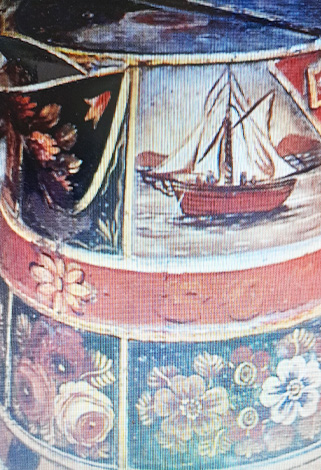
To many of the uninitiated, the canals offer a bucolic, romantic way of life that could easily be part of “the darling buds of may”, but in truth there is a brutal edge to it and there are some topics in the canal world that are almost guaranteed to cause verbal (and occasionally physical) fisticuffs, and today reader we’re going to don our tin hat and enter the trenches of roses and castles.

The most often asked question is “Where did they come from?” A question in itself that is rather wrong, as the implication is that the style we see today has been the same since the Duke of Bridgewater said “Hey I think I’ve got a great idea”.

There is a lot of popularity behind the idea, largely thanks to Rolt’s writing, that the Romany folk came to the water very early on and brought their art with them, but there is scant evidence of them joining the canals at all and in practice the painting theory doesn’t work simply by dint of the fact that there is artistic evidence of rose and castle type paintwork on boats that predates the development of the painted ‘vardo’ that everyone thinks of.

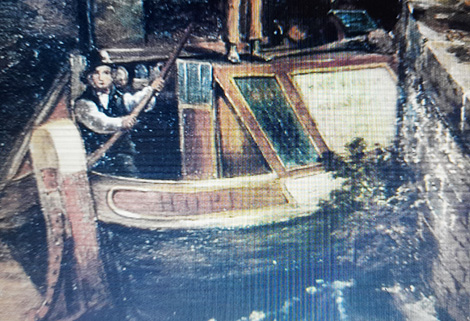
The earliest imagery we have dates to 1820, and a painting by an unknown artist. It is only just visible, but it appears the picture panel on the cabin side bears flowers. The next one is 1838 and also has a floral picture panel.

1820 painting of 'Hope' (Flowers Afloat)

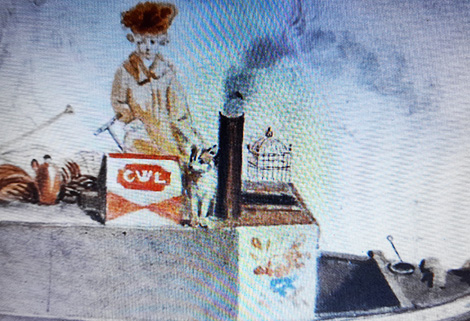
1838 watercolour (Flowers Afloat)

The first written description of artwork that can be confidently identified as roses and castles appears in 1858 and gives us the biggest lead:

“The boatman lavishes all his taste; his rude, uncultivated love for the fine arts, upon the external and internal ornaments of his floating home. His chosen colours are red, yellow and blue... the two sides of the cabin...present a couple of landscapes, in which there is a lake, a castle, a sailing boat, and a range of mountains, painted after the style of the great teaboard style of art... the brilliancy of a new two gallon watercan, shipped from a bank-side painters yard.. displayed no fewer than 6 dazzling and fanciful composition landscapes, several gaudy wreaths of flowers, and the name of its proud proprietor...running round the centre upon a background of blinding yellow.”

The crucial information here is the description of it being painted in the manner of a teaboard.

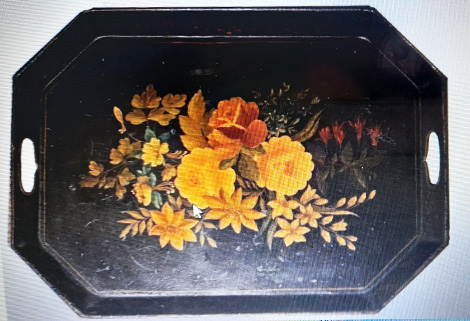
An object that households rich and poor alike had: a teaboard is just a tray intended for carrying the teapot and its accessories, and for the best part of 100 years tea trays were predominantly jappaned.

Developing just prior to the canals, jappaning is western imitation of Asian lacquer-work that started out on eye-wateringly expensive furniture and moved onto smaller household items as it became a craft suitable for young ladies of quality to indulge in. These young ladies also indulged in gilding (putting gold and silver leaf on things) and filigree (twisting wire into intricate shapes), and decoupage (sticking paper decorations to things and lacquering them into submission.)

As with all forms of fashion what the rich had, the poor wanted a piece of; by the time the canals were firmly established in the 1820s there were around 40 companies in the West Midlands mass producing japanned objects on tinplate and papier-mâché, a figure that kept rising right up until the mid 1870’s (when enamelling became trendy instead). The imagery that was most popular with jappaning was poetic landscapes and botanicals, with roses being particularly popular.

Tea tray (photo from Antiques Atlas)

Table (photo detail from Ebay)

Mary Delany is arguably a woman to blame for the craze of flower decoupage, creating a series of remarkably detailed “paper mosaiks” of flowers from tissue paper from 1772 to 1783.

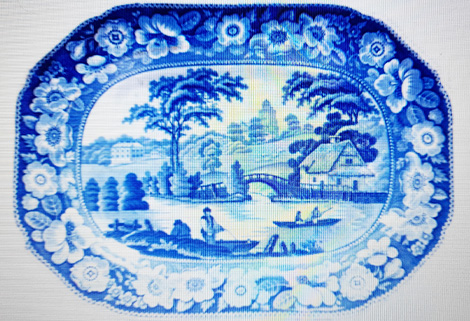
Imitators down the years, especially when mass production became key, were not as skilled. The same imagery was rammed down the consumer's throat on every surface; the advent of ‘transferware’ china allowed patterns to be printed ad infinitum and brought the boom in the ‘Willow patterns’ on pottery that the boats themselves were key in spreading round the country.

The boats themselves would have had it in their cupboards, it was everywhere. Tea could well be brought out in a blue and white tea-set covered in castle scenes and served on a tray like a florists catalogue.

Mary Delaney rose (British Museum)

Willow pattern (Palm Florida Weekly)

People often overlook the fact that it wasn’t until quite late in the Victorian era that the boaters slipped down the financial ladder, and also that women were on the boats with their menfolk quite early on - in 1819 John Hassell noted there were “generally one or two females generally attending each boat” and in 1824 the Chester Courant noted that the boatman’s “wife is on board” as general knowledge.

Boatmen could be on a continuous cycle of trips for weeks, if not months, on end, so it wouldn’t be unreasonable for the couple to want to stay together where practicable, and the economic aspect wouldn’t be unwelcome - better to pay your own crew than a stranger after all – so it’s quite probable that art came to the water via the rather boring medium of fashion trickling down the social ladder and first coming into the cabins attached to the household goods of the boatman’s family.

How did we make the leap from fancy lacquer tea tray to painted table cupboards? The real answer is we may never know. Everything was painted and there were painters everywhere, and indeed the same man might be employed painting trinket boxes in the morning and slapping the owners name on the cabin side at dinner.

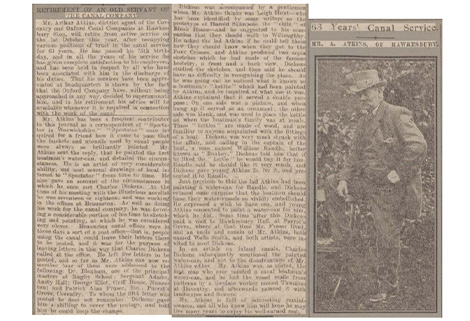
There is the odd legend of Arthur Atkins, a toll clerk for the Oxford Canal Co who claimed in the Coventry Standard in 1914, the occasion being his retirement, that he had painted the first boater's watercan and that in around 1858 he’d been at Braunston and sold Charles Dickens a boatman’s kettle (a fancy wooden trivet, plain on one side, painted on the other), the great author promptly gifting said piece to the Captain of a boat and wrote an article about it all to the great advantage of Atkins.


newspaper clipping

The story has more holes then a June bride. For a start we can see that painted cans easily predate 1858 and there is simply no record of anything like that happening with Dickens at all. There’s no trace of this article he supposedly wrote and in general his canal contact was fairly limited. It’s also highly convenient that date of the incident matches with the journey I quoted originally, the journey that was published in Charles Dickens’ magazine ‘Household Words’.

It is almost certain that young Arthur Atkins was present when the author of that journey, John Hollingshead, passed through, so it is plausible that it could have been a case of mistaken identity, but our source says the can was “newly shipped from a bankside painter” long before the boat they were travelling on arrived at Braunston.

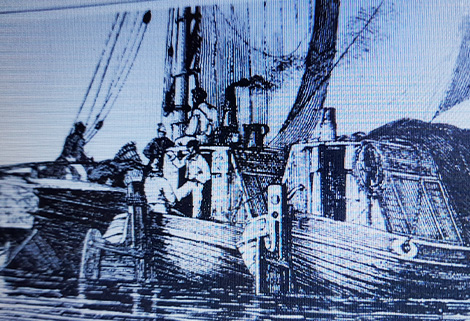
1828 engraving (Flowers Afloat)

Intriguingly however, a search through the census shows that Atkins father, also called Arthur, was a painter. At Akins' birth at Bedworth in July 1840 his father is recorded as a baker, but 6 months later in the census he’s a painter. In 1851 he shows up at Braunston as a canal clerk, but this doesn’t suit all that well because in 1861 he’s gone to Birmingham and he’s a painter again. 1871 records him as a “Writer and painter”, which suggests signwriter, 1881 “decorative painter” and 1891 hes still wielding a brush in Birmingham as a “Painter and decorator”.

Given the fluid job descriptions, there’s a distinct possibility that the Arthur Atkins, boatbuilder’s foreman, declared bankrupt in 1869 is this same mysterious painter. Could it be his paintwork his son claimed as his own?

The Coventry Standard notes how Atkins jr was a “regular correspondent” with their writer Spectator, and although many of these have weathered the years quite badly, those that are legible give off a distinct air of someone over egging the pudding. It’s quite plausible that Atkins embellished or completely made up his stories, knowing that there was no way for anyone to verify the details.

The crucial thing to bear in mind when delving into the paintwork is that the vast majority of surviving examples post-date the first world war. The war decimated the male population and left the country with a dire shortage ofyoung men from all the trades, from farriers to painters. A pet research project of mine so far suggests that 65% or more of boatyard painters were lost, and that’s not including the individuals, boatmen or otherwise, who could be classed as ‘hobby painters’.

A cursory glance through museum pieces shows the abrupt change from diverse bouquets and landscapes to the ubiquitous roses and castles, which is most likely a direct result of there being far fewer painters and therefore far fewer styles, attending the same number of clients who now had a far smaller budget as the canals being the slow descent into financial loss.

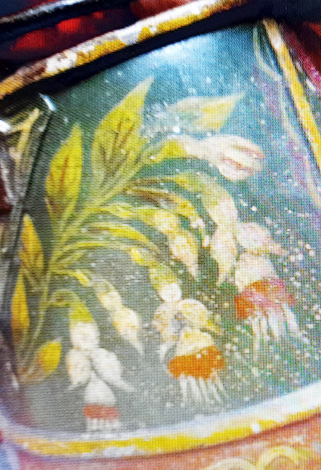
Watercan detail

Watercan detail  (Flowers Afloat)

Watercan detail  (Flowers Afloat)

By the 1930s, the aesthetic preference of the public had changed from the sleek art nouveau to the geometric art deco and more professional painters slipped away. The Grand Union Canal Carrying Co leapt onto the scene in 1930s and demonstrated that by their modern paint scheme – simple two tone blue, plain lettering and even replacing the elegant “mouse ears” on the back cabin with dull rectangles. Grand Unions attitude to paint may even have been a contributing factor in that they could never get enough crew to work their massive fleet, as the boatmen themselveswere not fans of the change and more than ever started to take up their brushes to embellish their boats themselves.

This brings us almost to the modern age. When the trade failed and the pleasure boats started to appear, objects covered in canal painting became trendy souvenirs and both boatmen and painters alike readily filled the market. New painters began to emerge, grabbing on to every opportunity to learn from those masters from “the old days” and patiently working their way along the long slow path to becoming masters in their own right.

Today, the canals are once again flush with painters at every corner and, much like it was in the beginning, there are masters and glorified finger painters, and every level of skill in-between.

Beauty is of course in the eye of the beholder, and at the end of the day I can only repeat the wisdom of the infamous Ron Hough himself: “The only person that has to like your painting is the person who’s buying it!”

erewash canal preservation rally

Over the Spring Bank Holiday 27th – 29th May 2023 the Erewash Canal Preservation & Development Association will be hosting a boat rally at the Great Northern Basin at Langley Mill. The rally is to celebrate 55 years since the formation of the association and also 50 years since the restoration of the basin, lock and surrounding area.
Read More

erewash canal 55th rally

erewash canal preservation and development association

55th anniversary rally 27 - 29 May 2023

In May 2023 the ECP&DA will be hosting a boat rally at the Great Northern Basin at Langley Mill. The rally is to celebrate 55 years since the formation of the association and also 50 years since the restoration of the basin, lock and surrounding area.

Following our formation in 1968 the association is still going strong and we now own Sandiacre Lock Cottages and the cottage at Langley Mill, which is our headquarters. We have an ex British Waterways work boat that we have restored. The boat, named Pentland enables us to carry out work along the canal. This includes lock repairs plus vegetation and litter clearance. We are currently involved in restoration work at Langley Mill with the Friends of Cromford Canal on the Beggarlee extension. This will take the Cromford canal under the A610 via two locks.

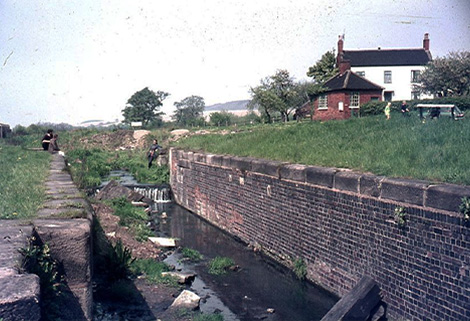
Langley Bridge lock before restoration

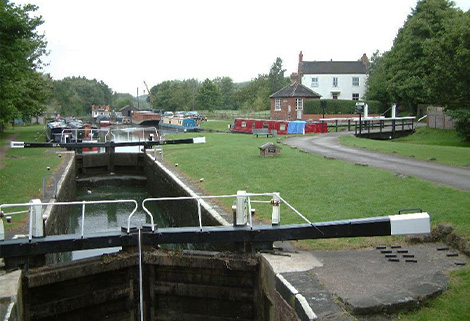
Langley Bridge Lock, Erewash Canal

The rally will include a mixture of trade, historic and private narrowboats plus trade stalls and display stands from other canal groups. Public entry to the rally is free. The rally will begin with historic narrowboats Bath and Meteor setting off from Anchor Bridge at 10:30 carrying the Long Eaton Silver Band to the opening ceremony by the lock at 11:00.

Other attractions are:

  • Food and drink, including real ale tent.
  • Musical entertainment sponsored by, PPL PRS. Buskers corner.
  • Battle of Britain Memorial Flypast (subject to availability).
  • View boat and butty Oak and Ash in Langley Mill Boatyard dry dock. The boatyard will also have a display of engines and those that are ticketed are for sale.
  • The Victorian pump house will be open with opportunities to learn about its purpose and how it works.
  • Take an informative guided walk along the restored stretch of the Cromford canal and learn about ongoing plans for the future.

If planning to come along with your boat please book in; forms are available on our website 
Further information and booking forms for rally can be found in the news and events section of our website.

update on sticky fuel situation

sticky fuel

update from river canal rescue

Last summer, River Canal Rescue highlighted the problem of sticky fuel and how this was causing an uncharacteristic peak in fuel-related component breakdowns not linked to diesel bug.

Managing director, Stephanie Horton, comments: “We first became aware of the issue when we had two identical jobs where fuel injectors were diagnosed as needing an overhaul, yet their replacements stopped working within a week, and the injection pumps were found to have failed even though the diesel was clear and bright.

Our engineers found in both cases, the injector pump racks had seized solid and the nozzles were blocked, and when replacing the plunger filter head, they found the fuel had a sticky, syrup-like substance. Alongside stuck injection pump racks, injectors and filter head plunger failures, we also had cases of fuel filters blocking with wax inside them.

Initially we suspected sugar in the fuel, but sugar stays crystalline instead of dissolving. We’re now considering it may be related to a change in fuel and fuel treatment additives. This is not contamination in the traditional sense (all the samples sent away for analysis are clear); it’s only the smell of turps that alerts us to a problem.

“Following discussions with several leading fuel analysis companies, we’re now working with a university lab to use IR spectrum analysers and range of samples/treatments to see if we can identify what is causing sticky fuel.”

Stephanie concludes: “RCR is taking these steps as cases are increasing to two-three per week, and although there are some trends and patterns developing in the more cases we see, it’s important to have scientific evidence to back-up our theories. As an industry we must work together to find a solution.”
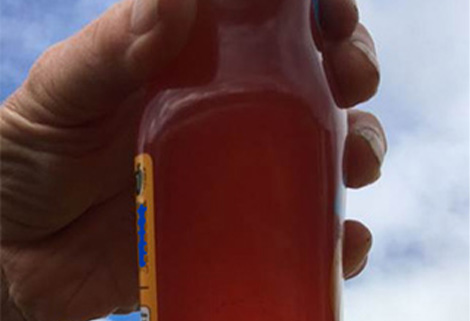
bottle full of sticky fuel

Here, two boaters share their experiences:

Unpleasant & expensive

Dear RCR,

Re the ‘sticky fuel issue’, we had a similar episode with our narrowboat nb ‘Many Meetings’ in August 2020.

Our narrowboat was launched in October 2011 and up to the incident had done 2,850 hours. We cruise in the summer and over winter, we’re at Aston Marina near Stone, Staffordshire.

In 2018, we did the Severn Estuary from Sharpness to Bristol and, in preparation for that, had the fuel polished in July. There was absolutely no water or contamination in the fuel.

In 2019, the boat was serviced by our engineer in the spring, and again filters and fuel were clean. We then went up to Lincoln and Boston via the Tidal Trent. We refuelled twice at Sawley Marina, twice at Burton Waters Marina and finally topped the tank off for the winter back at Aston Marina, when we arrived back there in October.

Due to the pandemic, the boat remained unused until 20 August 2020. Before taking the boat out, I checked the engine and fuel filter, and checked the fuel draining from the filter was clear, which it was. We over-nighted at Weston before continuing to Great Haywood on 21 August, and the engine (a Beta 43) ran fine.

On the morning of 22 August, the engine was reluctant to start and produced clouds of white smoke. Luckily, there was an Anglo Welsh hire base and their engineer said he would take a look at the boat the following morning, which he did.

The engineer checked the fuel and filters, which looked fine, and drained off some fuel, which was clear. He then removed an injector and tested it. He found the injector was blocked and so replaced all four injectors. The engine started and ran fine.

The following morning we set off, but only went a few miles south before stopping for the night. The engine ran fine.

The next morning, the engine wouldn't start. The brilliant engineer from Anglo Welsh came to find us on his day off and, after a couple of hours, he finally managed to get the engine started but it was running quite roughly. Gingerly, we made our way back to Great Haywood.

At Great Haywood, the engineer removed the injectors to check them and found they were welded shut. He put one in a vice and tried to pull the centre pin out with a pair of pliers, but it was completely jammed solid.

The fuel feed for the engine is above the bottom of the tank, so we removed the bottom drain and dumped the tank contents of 135 litres of fuel. We used the bottom drain and a powerful pump to rinse the tank and ensure that any contamination was washed out. We then put another 35 litres into the tank and dumped that to rinse the tank out.

Anglo Welsh very kindly disposed of the fuel for us. When we drained the tank, we took a sample from the very bottom of the tank, which did not look very healthy - although the rest of the fuel looked fine.

We replaced the four injectors again (those things are not cheap), drained all the fuel from the engine and filters, and ran the engine on clean fuel from a 5 gallon drum for an hour or so. We then put 100 litres of new fuel into the tank and ran it on that successfully. Subsequently, the engine started and ran fine. You can be sure that when (hopefully) some normality returns, I will take a fuel sample from the very bottom of the tank before we set out again.

It appears the contamination was settled at the bottom of the tank but the motion of the boat meant some of it got picked up into the engine. The engine ran fine and the injectors worked OK when the engine was hot, but it seems when the engine cooled down, whatever it was blocked the injectors.

Altogether an unpleasant experience and very expensive - dumping 170 litres of fuel and putting in eight new injectors. However, all credit to Anglo Welsh and their brilliant engineer.

Robin Sundt, Redhill, Surrey.

A bit of a pain

Re: contaminated fuel, I have experienced the same problem with my boat and it was a devil to get rid of and until I run it again, I have not proved it is gone. My boat is called Pyrus and is kept in the Grand Union at Blisworth, Northampton. It has a Greaves twin cylinder engine which is built in India and is a development of a Ruston Hornsby unit. Below are the chain of events I experienced:

1. August 2019. Having returned from a long trip through Shropshire, Wales and the North we returned to our mooring intending to have a rest for a few months from boating. In advance of mooring up, we filled up with diesel at Rugby Boats, near Weedon, and I added Fuel Set (as I have always done since owning the boat in 2012).

2. October 2019. We have a heritage cooker installed in the boat which runs on diesel and this packed up. On inspection, by draining the filter, the fuel came out looking like water, with a grey tinge. Not pink at all. I had not run the engine since August and did not at this time. I change the filters every year about April/May and they are always clear of any debris/water in the bowl.

The UK agent for Greaves is close to me and came down to help clear the problem. We syphoned a lot of fuel off to the point we thought it was clear and added two or three bottles of Marine 16 to treat it.

3. November 2019. The engine started and appeared to run OK. At this time the engineer visited to sort the cooker, but found contamination still present. It looked like frog spawn. Also by this time when trying to clean the fuel, the tank was below half-full.

4. January 2020. I got Tankbusters to polish the fuel. Took about 4 hours after which the fuel looked to be the correct pink colour and again more Marine 16 was added (the tank was also topped up at Blisworth marina). The cooker was sorted and that and the engine seemed to be working OK, following a test trip up the canal for a day. Shortly afterwards lock down was imposed which put a stop to any further use.

5. July 2020. I took the boat out for the weekend. At the end of the first day the engine was running a little lumpy. The next day only one cylinder was working and I struggled to get back onto my mooring. The injectors were seized so I took them to be rebuilt.

6. August 2020. Injectors back in boat - took it out for a 6 hour test. This started very well but as I was returning it started to run lumpy again. The following day I found the injector pump racks were seized and I assumed the injectors would be affected (which proved the case when I took them in to be fixed). I used diesel specialist, Colchester Fuel Injection, and I gave them a sample of diesel to test. The results were about 4% bio which is within limits.

7. September 2020. Injectors and pumps back in engine but not started. I pulled the boat to a local boat yard and had all the fuel removed and the tank cleaned out. Pulled the boat back onto the mooring where it was filled with fuel from fuel boat, Jules fuel. No additive was put in and I do not intend to use any. The cooker works, but I want to test the engine over a day trip as recommended by Colchester Fuel Injection rather than a short quick run.

All in all a bit of a pain. My engine is rather agricultural and simple and it is the first issue I have had with it ever. I thought it would run on water. Obviously not and this fuel has been a real issue. Hopefully I am over it now.

Chris Browne, Chelmsford, Essex.

sticky fuel

Last summer, River Canal Rescue highlighted the problem of sticky fuel and how this was causing an uncharacteristic peak in fuel-related component breakdowns not linked to diesel bug. Managing director, Stephanie Horton, comments: “We first became aware of the issue when we had two identical jobs where fuel injectors were diagnosed as needing an overhaul…”
Read More

abigail joy tobler

featured author of the season - winter 22 - 23

joy tobler

Abigail Joy Tobler’s love of waterways has, sadly, never found her on a canal boat. She has, however, paddled dug-out canoes on rivers in Mexico and Brazil. In England she has enjoyed many hours walking the Thames towpath near Henley whilst dog-sitting for friends over many years. She enjoyed watching the many passing canal boats navigating the locks, and always felt especially blessed when catching glimpses of a kingfisher.

She began writing poetry whilst battling severe depression and has continued during happier times. Many poems are triggered by things heard or seen, and often reflect her Christian faith. She has published 6 collections of poems plus the booklet ‘Tales from the Towpath.’

tales from the towpath

pebbles, puddles and poppies

Joy has had a very varied and adventurous life. When she was young she was a very active sports person, especially in cricket which was her great love. A change of ambition following injury saw Joy become a grammar school teacher, with her subjects being Mathematics and Religious Education. She also studied linguistics and translation.

Joy married a Swiss, and together they went to Mexico where they underwent 6 months of jungle living and survival training. This was followed by a long period in Brazil, where Joy taught literacy and Bible translation to a group of indiginous peoples.

They lived in a village along the banks of a little jungle clad island in the middle of the Amazon delta swampland. All of the houses were on stilts, without walls, and palm thatched. Joy had three sons while she was in Brazil, athough they were all born in the city as malaria (and consequent miscarriages) were rife in the villages.

After thirteen years of life on the banks of the Amazon, Joy had to leave Brazil because of her husband's ill health. Returning to the UK, Joy worked at the home office of the mission, Wycliffe Bible Translators. At some stage she developed M.E. which damped down her life for 25 years. It was at this stage that she began writing her poetry.

Eventually, Joy moved to Sheffield to be nearer her sons and their respective families. She continues to be an active church member, singing in her church choir. Some of her poems have been set to music as anthems and one as a carol.

crossbeams - abigail joy tobler

tides, teasels and teapots

Abigail Joy ToblerAbigail Joy Tobler, better known as Joy, has written several volumes of poems. Her books are available to buy from Joy herself, although there is some availability on Amazon

You may contact Joy by email:


Abigail Joy Tobler

Abigail Joy Tobler’s love of waterways has, sadly, never found her on a canal boat. She has, however, paddled dug-out canoes on rivers in Mexico and Brazil. In England she has enjoyed many hours walking the Thames towpath near Henley whilst dog-sitting for friends over many years. She enjoyed watching the many passing canal boats navigating the locks, and always felt especially blessed when catching glimpses of a kingfisher.
Read More