hydrogen – future fuel?

hydrogen

the future fuel?

Could hydrogen become the fuel of the future?

During the past 18 months we have written several articles explaining how popular electric vehicles have come to the public's attention, either through manufacturers' sales pitches or the government`s stance on climate change due to never ending environmental pressure.

One of the concepts rarely mentioned is the use of Hydrogen as a future fuel to power various machines from forklifts to cars from trains to space rockets as well as drones.

Because the UK government has now decided to ban the sales of new vehicles that use fossil fuels from 2030, a new alternative apart from electricity needs to be found.

In his speech on the planned economic recovery, the prime minister said that hydrogen technology is an area where the UK leads the world and hopes to create clean jobs for future generations.

But is the hydrogen cell revolution hype or hope?

New Glasgow hydrogen refuse truck

hydrogen refuse truck, Glasgow

The majority of vehicle manufacturers in the UK have been hurriedly trying to find a solution to producing a fuel system that will not only fall in line with the government legislation but also appeal to buying customers who are looking to them to create a safer and cleaner alternative to fossil fuels.

A while back companies looked into the fuel problems and came up with the petrol / diesel / electricity hybrid which they thought would be the answer, until the latest government demand for cutting emissions came to the fore, now they have to return to the drawing board to solve the problem once again before 2030.

Unfortunately people are still sceptical when discussing a different fuel other than the fossil fuels that they have been used to. The same problems keep arising with the charging time issue at the top of the list followed by the amount of miles that a vehicle will hold per charge. Like most new ideas an infrastructure needs to be put in place, more charging points on the road and a system where access to charging at home is easier.

Until this is done the problems and reservations will stay in the public minds, if a company comes up with a car that runs for 500 miles on a single charge, is reasonably priced and can be charged simply at home, then they will be onto a winner, until then the situation wont change.

Another problem that consumers cannot understand is the amount of space that the batteries will take up, on a conventional car, most will have a single battery, on an electric car the whole base of the car is taken up with batteries, ok you have not got a bulky engine which normally is the heaviest part of the vehicle, but you still have wheels and bearings and motors etc. Bearingtech can help by supplying all these bearings and belts helping to keep your car on the road and in working order.

Due to the ever increasing demand for cleaner and efficient fuel, the government has now passed a new ruling that will allow Glasgow to get a fleet of 19 hydrogen powered refuse trucks after a £6.3 million funding was approved. The investment will also allow the building of a green refuelling station in the city which will be the first of its kind.

Described as the UK`s next step towards reaching its net-zero ambitions, this decision comes ahead of the COP26 UN climate change summit planned for Glasgow next year.

Rachel Maclean the transport minister said that the 19 trucks will form the worlds largest fleet of hydrogen refuse vehicles and showcase how the UK is at the forefront of green transport technology.

As we continue to build on our green-print for the future post Covid 19, we know how to harness the power of transport to improve our country and encourage change.

Minister Ian Stewart said ”that the UK government was doing everything possible to help our economy recover from the pandemic and protect the environment for future generations”.

Back in the 2000`s backers of hydrogen promised a hydrogen highway which never materialised, firstly because hydrogen power needs a new infrastructure, whereas battery cars could be charged off the grid.

Secondly, high-powered batteries of that time were more advanced for usage in companies etc, where hydrogen is not, hence why hydrogen lost ground in the battle to power cars.

proton exchange membrane fuel cell - hydrogenNow that industries such as transport and heating are struggling to maintain the levels needed using conventional batteries, hydrogen has come back into the frame. A typical example of this is the company JCB who have produced a new prototype mechanical digger which would need a battery weighing five tonnes and take hours to refuel.

On the other hand, hydrogen is lighter than air and takes minutes to fill a tank. Unfortunately lorries fall into the same brackets as diggers, making the batteries as heavy as the payload.

The same problem applies to buses, the Bamford family who own JCB said that they have 80 orders for double decker buses from Wrightbus in Northern Ireland, but still have the problem of re-charging, which could be solved with the use of hydrogen and by providing hydrogen pump filing stations on motorways could solve the headaches for long distance drivers in the future.

The same network could fuel hybrid battery and hydrogen cars of the future and disperse with the need for heavier batteries and plug in vehicles.

One of the biggest fears when using hydrogen is its volatile nature, which can cause explosions in tanks which has been a concern in the past. This problem has now been addressed by the invention of lined tanks with Kevlar, which is a substance that releases small micron-isms into the tank which causes the hydrogen to be more stable if the tank is impacted taking out the shock effect and preventing any explosive reactions.

Another breakthrough in the use of hydrogen cells was the first test flight of an electric plane in the UK at Cranfield University with the outcome yet to be published.

On the other hand, Germany is racing ahead with a network of filling stations alongside a hydrogen train, making an initial investment cost of 7 billion euros in a bid to dominate the market.

As with most things, others will want to see the outcome of any present and future trials before taking the plunge themselves. The EU commission have shown a keen interest in the trials alongside the website Euroactive who supposedly floated the idea of making the Euro the currency for hydrogen trades the same way that the dollar is the recognised currency for oil.

The UK government also intends to announce a strategy before parliament closes as part of the country`s economic recovery package.

Because the UK lost out in the battery technology race with China, they do not intend to miss out on the hydrogen demonstrations after being advised by its Committee for Climate Change who suggested that trials begin over the next few months.

These trials are so important to the country`s future fuel development that trials on Britain`s first hydrogen train on regular tracks will be tested by Birmingham University over the coming weeks.

By the looks of things, hydrogen has finally made the breakthrough or so it seems, but it is not trouble free by all means, currently almost all of the hydrogen sold today in the UK is produced by splitting it from natural gas, which unfortunately is very costly and emits lots of carbon dioxide which is attributed to the heating of the planet, something that is not popular with green supporters.

The problem can be tackled by capturing the Co2 at the hydrogen production site, then burying it with carbon capture and storing it, but this will drive up the cost considerably, which defeats the object of the exercise when trying to produce cost effective fuel.

The alternative is inherently clean, but very expensive. It entails using surplus renewable electricity; a typical example is when the wind blows at night using energy that is not used to split the hydrogen from water using a fuel cell.

The process is wasteful because it involves turning electricity into gas, then back into electricity- a two step shuffle dismissed by Tesla inventor owner Elon Musk who described it as” staggeringly dumb” and has been quoted as calling them” fool cells”.

But hydrogen lovers believe the future electricity grid will produce so much cheap off peak power that we will need to find other uses for it. By doing this they hope to see the cost of fuel plummet following the example and performance of offshore wind turbines.

Recent events have favoured the advance of hydrogen after the UK issued a target of 80% carbon cuts by 2050, that left a leeway for polluting forms of fuel to take up the remaining 20% of the carbon budget.

Now its widely accepted that homes with low carbon heating systems such as heat exchangers, will need to boost them in a cold snap from another source, and that’s looking increasing like hydrogen.

Trials are already underway using blended hydrogen into natural gas at Keele University and depending on how much support they get from the government, it looks as though a technology that lost its key battle against battery cars two decades ago could still find a place in the zero carbon economy in the UK`s future fuel development programme.

Throughout the years inventions have come and gone, whether good or bad the answers always lie in the trials and results, one thing that is certain is that time will tell, we will just have to wait and see.

possession is 9/10th of the flaw

dawncraft chronicles

possession is 9/10th of the flaw

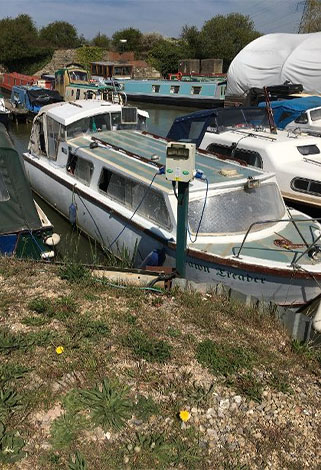
simon woollen track and traceHaving first done my tap and trace with a QR code laminated and stuck on Dawn Treader's door, I am writing this down below on a very stormy, blowy Halloween.

There is a noticeable lack of cluster flies in the cockpit - mainly because I filled the aluminium frames with expanding foam, which seems to have removed the little crevices they were trying to hibernate in. Or perhaps it's because I am having to ask a rather large resident spider if it minds if I use my own loo; ecology took over and they have been eaten. Or like a coal mine canary, died of poisonous gas!

Ok seeing as it is Halloween here is a spooky tale about a possessed Carbon Monoxide detector that seems to go off in exactly the same place on the canal - and before we start please, I am not here to sound like some BBC journalist spoon feeding you the obvious dangers or Carbon Monoxide 24 /7. We are adults.

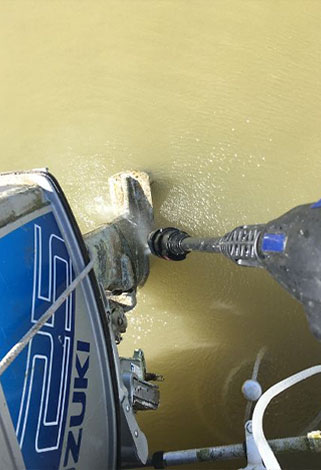
It all started when I went above and beyond on the boat safety and rather than just having one carbon monoxide detector down below because of the gas cooker, I decided to put one in the cockpit. Dawn Treader runs a 25hp two stroke engine strapped on the back and I have sat with this at idle on the mooring and the alarm hasn’t gone off. I’ve also been miles down towards Bradford on Avon and still nothing. But the moment I approach the bridge at Martinslade heading east towards the flight – it goes off -  usually just under the bridge which makes it echo even more.

My first instinct was it came from the same Chinese factory as that dodgy smoke alarm which would go off if you lit a match within 4 nautical miles of it and which couldn’t tell the difference between steam and smoke. Research showed 4 different types: a Biometric which basically changes colour if CO is present – good but not too clever if you are asleep... and an electrical type which somehow measures an electrical resistance across probes. There are two others, but seeing as its difficult to grasp how the basic electrical trickery one works we will leave that there.

The next question is how do they measure it? Basically, anything above 70 parts per Million is harmful and interestingly it’s an accumulative affect and according to my NHS wife once CO is bonded to your haemoglobin it has a half life in the human body of about 5 hours which means half goes in one hour then half of what’s left in the next and so forth. There are charts on the internet but as a rule of thumb anything after 200 parts per million would have Chris Whitty on the telephone sharpish.

Next, obviously it is the engine producing it. But do some engines produce more than others? – after all we are all standing on or near our exhausts so why isn’t the average barge helm keeling over like cluster flies? Apparently, Diesel engines produce less CO than petrol engines. Though I think this is relative so I still wouldn’t poke your nose up the exhaust. It would seem that  carburetted petrol engines are the worst offenders, mainly because they are crude and you can’t really alter the air fuel mix,  which leads to incomplete combustion and thus CO. Interestingly, modern injection type petrol engines produce 11 percent less than carburettors. Fun though the facts are, they don’t solve the mystery of why, where or when it happens.

Ok, first I have the canopy up most of the time - I have noticed an increasing number of barges with various tents on the back making life a bit more comfortable. This warmth does mean that air is sucked in from the outside; an affect that is noticeable if you undo the engine bay hatch as cold air will always want to equal out the difference in pressure. Secondly I have never known the wind blow other than straight down the canal at this point – in fact it’s so good at doing it, you can sometimes poddle along in neutral at almost the same speed which makes meeting some one at this bridge point an interesting experience.

Remembering that the CO detector is quite a clever device and measures an accumulative amount of CO, this is what I suspect is happening.

simon woollen - dawn treader's outboard holeWe are all exposed to a small amount of it when we run our engines, but generally the wind etc. takes most of it away. But the CO detector has already received a certain amount. However, at this very point in the canal I slow up for the bridge, which is on an acute angle so you can't see under it. The canal is in quite a deep cutting with high hedges both sides and steep banks with the wind directly behind me, so momentarily the exhaust gas catches up with me and briefly exceeds the level.

Surely then all cruisers would suffer the same – Dt has a slight design fault with her replaced transom – it’s a big hole to fit a big out board and it just so happens that the exhaust is midway down the opening making matters worse. I am interested to hear if anyone else has had similar problems.

So, how to cure it – my thoughts are to make a Perspex hatch. Perspex is a fantastic boat material – just make sure its clamped down tight between two boards before you cut it, after that you can easily bend it using some deft passes with a heat gun. It polishes and cleans easily with Brasso ( try some on your screen) and seeing as Boris has just announced more measures I can self-isolate in my shed doing boat projects – watch this space!

Simon Woollen

Woollensimon13@gmail.com

how to wire a narrowboat – part 3

how to wire a narrowboat - part 3

the sockets, pumps etc.

It is time to repeat the process for the sockets pumps etc., starting with the layout drawing.

Again the process is the same process as the one for the lighting drawings, a blank outline and put the pumps, USBs, 12 Volt sockets etc on to the drawing.

Outline for Power Sockets etc

First the symbols chart and an explanation of each item the USB outlets, Cigar Lighter etc are I expect apparent what is not is the Wago. They are a modern version of the old chocolate block and a lot better. When wiring things like the USBs etc they can either be wired with one cable all the way back to their own individual fuse or the supply cable can be broken where each USB etc is to go and the supply cable broken and joined to run on to the next one.

The Wago is the modern equivalent of the chocolate block connector but a 100 times better and unlike the Chocolate Block it does not damage the strands of the cables. It is also easier to fit, prepare the wire, lift the orange clip, slide the wire in, and push the orange clip back down job done. They cannot come open pushing the clip down locks them.

I have done the example drawing using them as using them as it makes big savings on cable.

So starting with the USB charging points the basic drawings looks like this:

Now using the 1 metre marks on the outline work out the cable runs length and then calculate the Volt Drop and from that the cable size, add the cable labels and you end up with a drawing like this:

The drain and water pumps:


The Drain Pump and Water Pump the negative cables are the same length as the positive

The 12V sockets – the negative cables are the same length as the positive cables.

This is divided into three circuits to keep the volt drop down to acceptable limits:

Now the Fridge circuit

Remember the general rule for fridges 1mmsq for every metre as the cable goes from the battery to the Fridge. Most fridges will start at 11V at 15A that is an average start up current so if there is a volt drop of 0.75V the fridge will start at 11.75V at the battery.

And finally the Cigar lighter circuit

Now you should have a complete set of circuits from them it is possible to calculate the amount of each type and size of cable needed the size and number of fuses and a diagram to do the wiring from and all of this can be done before the boat has been delivered with the aid of the outline plan supplied by the builder as part of their normal paperwork to clients.

featured author – winter 2020

featured author - winter 2020

bill savage

It all started after having a bit of a brain wobble.

Bill SavageFor some reason which I am yet to fathom, I signed up to complete two half-marathons, three 10K races, climb Snowdon, the Yorkshire Three Peaks then, to top it all off, climb Mount Fuji. All within the year.

They were all for good causes, but I’m not very athletic and the only running I can remember was to get to the pub before it shut. Friends and family started to distance themselves from me as I asked for more and more donations, and I realised this was something I could not back out of easily. I needed to get fit, and quick, so I joined the local gym. Blimey, it was boring. Muscular blokes preening themselves in the mirror ignited my inferiority complex and made me feel like a complete wimp. Running the local lanes wasn’t much better. Cross country was more interesting, but paths are not always easy to follow, and I’d end up getting lost.

canal boat at Hawkesbury JunctionI don’t live too far from the canal. So why hadn’t I thought about it before? It’s quiet, peaceful, no traffic, no pollution, it’s interesting and there are no preening blokes. Actually, there are preening blokes, but that’s another story (see chapter 3). The towpath soon became my regular training ground but running back and forth along the same path soon became pretty boring.

Curzon tunnelLuckily, I discovered the Warwick Ring on my doorstep. A 115 mile circular route in the Midlands, using 5 different canals, crossing 4 counties, connecting 2 cities, 7 towns and many hamlets and villages. You may have guessed it, I like a challenge. So, to make life a little more interesting, I decided to travel this circular route only clockwise, without turning back, and using public transport to get to the start and for the return journey home. This meant training sessions became much longer, often starting before dawn and always taking up the whole day, with lots of public transport (something I’m not too familiar with or very good at).

Hatton LocksWell, this opened up a whole new world to me, travelling between idyllic rural tranquillity and industrial urban grunge. Seeing the wonders of our canal system up close and personal, much of it built around 250 years ago, with no satellites or software to work out the best route, or earth-moving equipment to dig the path. Concrete wasn’t developed until the mid 1800’s and the only means of transport across the land was by horse or foot.

Lift Bridge raise for canal boatI was amazed at the sheer magnitude of this bold engineering project, built by Navvies using the simplest of tools, just pickaxe and shovel, a little gunpowder and loads of blood, sweat and tears. Travelling through my hometown, Birmingham, was like entering another world, one I didn’t recognise. It felt like I was crawling through the bowels of the city, literally seeing everything from a completely different perspective. I was awestruck.

Farmers Lock, Birmingham with canal boatAfter completing the challenges, I continue to walk the ring, completing the whole route at least once a year. The slower pace allows time for the occasional chat with interesting and quirky characters along the way and with a rich vein of history to dip into and discover. From Iron Age to Jet Age, the Gun Powder Plotters to the Peaky Blinders, with some unexpected finds.

These included one town with a disturbing connection to the Slave Trade and a very dangerous and completely bonkers ball game which has been played there every year since 1199. Birmingham and Coventry were both manufacturing giants and to tread the actual path which fed our industrial revolution is very sad at times. Contemplating the unfathomable destruction of our once proud, world beating industries, one word keeps popping into my brain. Why?

Rappers under bridge with graffitiHaving to use public transport certainly adds a new dimension to the already entertaining canalsy goings-on, transforming my once boring training sessions into unexpected adventures, sometimes a tiny bit weird, often hilarious, always eventful and inevitably informative. There is also the occasional, unfortunate mishap along the way, but nothing too serious. Yet. I posted a few of these adventures onto my Facebook page and got some great feedback. Then, a friend of mine said “… why don’t you write a book?”  And that was the seed I needed to create ‘Canal is King”.

There is a chapter dedicated to every day it took to complete the journey, starting out from Birmingham to Fazeley (near Tamworth) and finishing with Shrewley (near Warwick) back into Birmingham. And I go off-piste a couple of times, following my nose for more adventure. Discovering the amazing history scattered around the Warwick Ring is one thing, but the interesting characters and unexpected encounters, either on the canal or on public transport is what I enjoy the most. That’s why I continue to trudge any towpath, anywhere. Chatting with the people I meet and learning more about our National Treasure, the Canal Network.

You can buy a copy of Canal is King from Amazon or from Bill Savage's Etsy Shop where he also sells prints of his stunning photographs.

You can also follow Bill Savage on Facebook - don't forget to like his page!

whimbrel

the restoration of 'whimbrel'

a work of love

the background

Whimbrel as she was when Colin Ogden first bought her

About six years ago, Colin Ogden came across a small boat which had been abandoned and left to rot on the lakeside in Bowness on Windermere.

It was in a terrible condition, but Colin, with all his experience as a plumber and heating engineer and with his passion for restoration work, was undaunted. His wife, Lynda, had always wanted a small boat. So Colin bought it for her as a birthday gift.

Lynda's birthday present

Lynda, a very special lady, immediately fell in love with it.

"I always said I would buy her a little boat - she cried when I first brought her back on the trailer. She fell in love with her, she was her baby. She was always fussing around her, I taught her to steer her. She loved it."

A member of the RSPB and an avid bird watcher, Lynda named the boat after a shoreline bird known as a whimbrel.

For the following four years, Colin and Lynda worked on Whimbrel, trying to get the boat back into some sort of usable state. But sadly, before their project was finished, Lynda passed away.

in loving memory

Whimbrel in Glasson Dock

Left to cope with his grief, Colin's salvation came with the Covid Lockdown. He saw the lockdown as an opportunity to do something momentous in his wife's memory. Colin decided to completely strip down and restore Whimbrel and hopefully get the boat relaunched in time for what would have been their 21st wedding anniversary.

Whimbrel, as she was now known, was originally built in 1965 by Shepards Boat Builders in Glebe Road. Through the remainder of the sixties, at least, the boat was used as a water taxi on Lake Windermere.

The engine was a Stewart Turner engine and was much older being built in 1937.

restoration project

For the following 8 weeks, Colin spent his time stripping Whimbrel down to her bare hull and then painting and varnishing her. The Stewart Turner engine was also fully restored. Colin did all his work at Glasson Dock, and speaks very highly of the security, help and support he received there.

Colin Ogden's Whimbrel

the re-launch of whimbrel

At last, she was ready for re-launching, and the date was set. On 12th August, with a goodly crowd, Whimbrel was relaunched and dedicated to Lynda.

whimbrel re-launch

WHimbrel is re-launched

Colin says, "I have done it in her memory and the love we had for each other."

these days

Colin often cruises with Whimbrel along the upper reaches of the Lancaster Canal beyond Tewitfield. Along with Colin, Lynda was an avid campaigner for the restoration of the northern reaches of the Lancaster Canal. The couple wanted to see the reconnection of the 42 miles of the southern canal - from Preston to Tewitfield - with the Northern reaches that go into Cumbria. These were abandoned in the late 50s, and most of the canal was later filled in.

Whimbrel ready for her re-launchColin, now already well in to another restoration project, is a regular fund raiser for the RNLI. He is currently planning a mammoth fund raising event with the RNLI for next year.

He also offers himself and Whimbrel for other fund-raising events, saying if he can't sail, he will trail Whimbrel to them.

But Lynda remains at the heart of everything Colin does:

"The restoration of Whimbrel reminds me of how she loved boating and Whimbrel was very dear to her.  I will never part with her, as I promised Lynda. No amount of money will be enough."

View Lynda's video here

I would like to thank Colin Ogden for his story, and Frank Sanderson who took the time and trouble to send me details and photographs. It was Frank who first wrote the story and shared it with BBC TV, BBC Radio Cumbria, and various newspapers and magazines. They in turn covered the relaunch of Whimbrel, and helped to spread Colin & Lynda's story.

rebekah louise

Since completing the restoration of Lynda's boat 'Whimbrel', Colin has turned his efforts into the restoration of a second boat, 'Rebekah Louise'.

colin ogden's boat rebekah louiseColin is carrying out this second restoration in memory of their daughter who died when she was only three weeks old. Their daughter would now have been 20 years old.

The vessel will be moored alongside her Mum’s boat at the Aquavista marina in Glasson Dock, near Lancaster.

He explains: “As you can imagine losing our daughter was devastating for us both, it was worse for Lynda. So I have decided to renovate Rebekah Louise in her memory. Both boats will stay together.”

river avon stranded boats update

river avon boats recovered by river canal rescue

Following the failure of the Twerton sluice gates on the river Avon on Tuesday evening (15 Sept), River Canal Rescue has performed a logistical miracle, pulling teams and equipment together, at short notice, to recover 47 boats.

Managing director, Stephanie Horton, reports three boats, moored near steep banks between two weirs, have sunk and six are at risk of sinking. The remainder are stranded due to parts of the river completely drying up.

“One of our members alerted us to the situation midday Wednesday, and then the CRT took control and asked us to manage the recovery process.

Given the number of craft at risk, we pulled in engineers from around the country, re-juggled their priorities and started amassing extra equipment and getting everything in one place,” explains Stephanie.

sunken boat on river avon recovered by RCRDespite supply issues created by the Covid climate, RCR met its deadline of Thursday to source and have all equipment on site and prepared for recoveries from 6am Friday.

Additional items, to find in less than 12 hours, included: 20 bilge pumps and batteries, six Tirfor lifting and pulling machines, 100 metres of rope and 60 metres of hose.

river avon sunken boats update

RCR’s senior management team was also onsite on Thursday to assess the situation, undertake risk assessments, bring all stakeholders together and outline their next steps.

Engineers and office staff arrived at 6am Friday and by 8.30am the first sunken boat was raised.

Number two followed by 10.30 and the third, it is hoped will be raised in the afternoon.

Stephanie continues: Vessels in a perilous position are our next priority and we are confident that by Sunday, every grounded boat will be up and floating again.

The Environment Agency has agreed to cover the costs incurred by those affected by the incident.

technology breakthrough

technology breakthrough

With the world in a very precarious state at the moment due to the outbreak of the coronavirus, it is reassuring to find that apart from the medical experiments and research tests that are being conducted 24 hours a day throughout the world, that another form of vaccine / protection is being developed and is proving to be a considerable success.

Danish company UVD Robots from Odense have created a robot that can destroy microbe viruses by using an ultraviolet light. Vice president of the company Simon Ellison explained whilst demonstrating through a glass window of how the process works. “We have been growing our business at quite a huge pace, but the Covid 19 outbreak has accelerated the demand for the new robots”

Chief executive Per Juul Nielson added “ truckload`s of machines have been sent to

China especially to Wuhan where the outbreak first took place, sales in Asia and across Europe have increased dramatically since the virus spread across continents”

Mr Nielson stated that Italy on reflection had taken the main brunt of the disease along with Spain and the UK and at the moment and are in a desperate situation with the fatality rate rising on a daily basis.

Like every other country across the globe, everybody wants to try and help to curb the virus from getting worse than it already is.

UVD robots on the frontline

UVD robots on the frontline

Launched back in 2019 after an extensive 6 year trial experimental period between parent companies Blue Ocean Robotics and Odense University, the robots which cost £ 53,370 each, were designed to reduce the likelihood of hospital acquired infections which have surfaced over the past years and can be costly to treat due to the amount of care involved.

Because of the increase and fast spread of the virus throughout the world, production has significantly risen, and now takes less than one day to construct a machine.

Ultraviolet Light

So how does the robot work? Eight bulbs emit concentrated UC-C ultraviolet light that destroys bacteria, viruses and other harmful microbes by damaging its DNA or RNA, stopping it from multiplying further.

At the moment the process is damaging to humans, hence the demonstration behind a closed partition, but it is something that the companies are working on.

The process itself takes between 10-20 minutes per room, once finished there is a noticeable burning smell, something that can only be described like singed hair.

To be effective the UV needs to fall directly onto a surface, if light waves are blocked by dust or obstructions such as shadows or shaded areas, then the areas will not be treated, therefore manual cleaning is needed prior to the UV light being used.

The use of UV light is not new to the scientific field having been used for decades in air and water purification and also in various labs around the world, but by combining them with the autonomous robots they become a different thing altogether.

Professor Hans Jorn Kolmes of the University of Southern Denamrk quoted “if you apply a proper amount of ultraviolet light for an allocated period of time, you can be pretty sure that you will get rid of the organism, the type that have problematic strains that give rise to infections”.

This type of disinfection can also be applied to epidemic situations, like the current Coronavirus / Covid 19 example that we are dealing with right now.

blue ocean robots at work

blue ocean robots at work

Although there is no significant proof that the robotic light can be effective against Covid 19, the experiments show that it is successful in killing other similar viruses such as Mers and Sars which have been killed by the use of the ultraviolet light.

Associate professor Dr Lena Ciric who is an expert on molecular biology at the University College London agrees that UV disinfection robots can help fight against the disease, she added “the robots are not silver bullets, but they do provide an extra line of defence alongside any medical or chemical breakthroughs”

Because we are experiencing more and more patients being admitted to our hospitals around the world, its more important than ever to be on top of the cleaning and decontamination routines, these robots definitely work in that area.

American company Xenex have also developed a robot called “Light Strike” which has to be manually put in place, but delivers high intensity UV light rays from a U shaped bulb

The firm has seen a huge rise in orders since the onset of the virus mainly from Italy, Japan, Thailand and South Korea.

Xenex said that numerous studies show that the Light Strike is effective at reducing hospital infections and combating relevant super bugs. One Texan hospital used it in their clean up operation after an Ebola case back in 2014.

Due to the Light Strikes success, more than 500 health clinics and hospitals throughout the US and beyond have installed one into their facilities.

In California and Nebraska it is already being put to good use by sanitising hospital rooms where coronavirus patients have been receiving treatment.

Technical Swerve

China has seen an incredible swerve towards new technology to help fight the disease, with the nation having the highest spend on drones and robotic systems.

Both Japan and China have been seen for years as the forerunners where technology is concerned, one thing is for sure, they will not stop until they find the solution.

xenex light strike model

Xenex light strike model

Robots have been used in a vast range of tasks for years, mainly for disinfection, deliveries, medical devices, waste control and temperature checking, so this is not new technology as such, but a merging of mechanical and medical minds.

Research Manager Leon Xian of IDC China said “We think this is a breakthrough for the greater use of robotics, both for hospitals and in public places”

Although the robots are efficient, humans have a natural sense of caution when it comes to change of their normal routines, ultimately time will tell and now is certainly the time to do so.

Because the virus originated in China, home grown scientists and technicians have been spurred on to create and develop a type of anti-body / vaccine whether it be mechanical or medical.

One such company YouiBot of Shenzhen were already developing autonomous robots, by adapting its technology to make a disinfection device which can be moved by using wheels and castors automatically, placing them in places without the use of any manual labour.

A YouiBot spokesman said “We have been trying to do something to help, for us technically it is not as difficult as people imagine, it is just finding the right formula, like building Lego”.

We have already supplied factories, offices, airports and hospitals in Wuhan.

The machines are running for 24 hours a day, checking body temperature during the day and are killing virus spores at night.

Due to the devastating affect the Coronavirus has had on manufacturers, plants, and engineering  facilities, there has been a major problem getting parts and accessories to keep production and assembly lines moving, when a vital component is missing it slows down the production and hampers development.

Companies such as Bearingtech can help to solve these problems by supplying such parts and accessories to all major and minor establishments to help keep production moving in the right direction, which helps to keep the assembly lines and food production conveyor belts rolling.

Unfortunately most epidemics do not bring good news, when one does appear, companies including research labs, chemical companies, technical plants and inventive institutions step forward and try to solve the problems that they bring, the robotic side of technology has and will help in this situation.

YouiBot robots checking temperatures in public places daily

YouiBot robots checking temperatures in public places daily

We are at present in the midst of the worst peacetime catastrophe since World War 2, when faced with problems or conflicts the human spirit and nature is to survive and to protect what we hold dear to us, whether the threat comes from an epidemic or military force, one thing is certain we must and will stand together and share our information for the good of all others, be sensible and think before we act no matter what this disease throws at us.

There is no doubt that this virus has got far worse than anyone expected, but be assured the people of the world will not rest on their laurels and wait, we will do whatever it takes to combat and defeat this threat to mankind.

Former president of the USA Ronald Reagan once said “If World War 3 is declared then no one will turn up due to the technical advancements that we have made”

This might not be a war in the conventional mould, but everyone on the planet will turn up, take part and defeat it!

waterwatch rnli local ambassadors

waterwatch rnli local ambassadors

Amidst all the doom and gloom about Covid 19 it’s a really nice change to have something positive to announce!

merchant navy association boat clubOver the past year or so The Merchant Navy Association (MNA) and their Boat Club  have agreed an operational partnership with the RNLI whereby MNA Boat Club members have been encouraged to join forces with the  RNLI  to promote the RNLI’s Respect the Water campaign to reduce the almost 200  fatalities as a result of drowning in and around the UK every year; 70% of those drownings occur on inland waterways where the RNLI has no lifeboat stations and hence no Water Safety officer or Advisers either so the MNA Boat Club have taken the initiative in the form of launching  their new “MNA WaterWatch” scheme

MNA WaterWatch, along with the recent introduction by the RNLI of their micro-volunteering “Local Ambassadors” scheme means that all members of the MNA and  MNA  Boat Club  now have the opportunity to become Local Ambassadors for the RNLI to actively promote the Respect the Water Campaign.

Initially the RNLI Local Ambassadors initiative is focusing on promoting safety on and around the UK’s beaches where as a result of Covid 19  many of these  beaches have become crowded to a far greater extent  than is usual even at this time of year with the result that  the RNLI's Lifeguards, and the Coastguard Rescue Service’s  resources are being hugely stretched.

RNLI logoHowever the RNLI are well aware that many of the MNA’s  members live inland and are quite often situated close to our rivers, canals, lakes or the Broads and the Fens and are ideally located to act as Local Ambassadors in those areas,  so the MNA Boat Club is working with the RNLI to develop a Local Ambassadors focus aimed specifically at promoting safety on and around our inland waters.

In the meantime the MNA Boat Club is already working with various organisations to promote the Respect the Water campaign on the coast and inland waterways of  East Anglia and the new RNLI Local Ambassadors scheme, with its very simple and straightforward on-line registration process provides the ideal  vehicle for delivering water  safety messages both for those taking a holiday either at the coast or afloat on,  or  near to, our many inland waterways such as the Broads and the Fens.

Further information is available on the MNA Boat Club website and on the RNLI website  or by email from Clive Edwards

so you want to live on a narrowboat?

so you want to live on a narrowboat?

There's been a surge of interest lately in 'living small'. Tiny homes, RVs, repurposed shipping containers, all have seen innovations recently to become more liveable and practical. And it's trendy so what's not to like? Living on a boat, particularly a narrowboat, is very much in this category. However, it comes with some added issues.

working boat and butty

First, a little history; narrowboats began as working boats, delivering the goods and supplies that fuelled the Industrial Revolution in Britain in the 18th century. A single horse-drawn narrowboat could supply as much as 50 times the tonnage that a horse and cart could deliver, albeit at about the same speed.

In the early 1800s boat operators began to bring their families aboard, partly to save on rent at home and partly as 'free' crew to help with the work. Of course, living space on the boat was at the expense of profitable cargo space so the 'boatman's cabin' was tiny. Usually about eight feet long and often housing a family of five or more, it was a model of compact efficiency.

Eventually railways took over the majority of the cargo-carrying business throughout Britain. By the early 20th century commercial use of narrowboats was rapidly fading out although some small vestiges (including a few horse-drawn ones) continued into the 1960s.

As the canals themselves fell into disuse, many intrepid volunteers began to resurrect the waterways and the boats for recreational use. The 'modern' narrowboat is typically 50-70 feet long, built of steel, and has a diesel engine. Although it’s now almost all cabin (little or no deck space for cargo) it's still less than seven feet wide (hence; narrowboat) in order to utilise many of the narrow locks.

Most have also retained some of the historical compact efficiency. They have all of the usual modern amenities; central heat, refrigerator, shower, etc. However, there is a big 'but'. Even though the modern narrowboat has many 21st century conveniences, they often come with significant differences from shore-based homes. I'll go through some of them one at a time, although they are often inter-related…

Power

Since my boat has a reasonably powerful diesel engine, raw power isn't usually a problem. There are two alternators to charge a bank of four high-capacity batteries for running all the electrical (and electronic) devices on board.

boat electrical inverterAs with many things however, it's not always that simple. Lead-acid batteries (the usual car type) are quite finicky with their charging regime. They like to be kept charged up, and will break down and may fail if they're run down past about 50% of their capacity. So it's vital that close attention is paid to them. I've recently installed solar panels, which has helped immensely over the summer (not so much in the autumn and winter). They supply enough wattage that I don't have to start the engine for days on end if I'm not travelling.

Most of my equipment on board runs on 12 volts so I don't need to run the inverter to convert to 240v AC, except to charge my laptop (I'll be investing in a 12v charger this year). The inverter itself takes significant power so it reduces the efficiency of the system. I try to only run it when the engine is running (to charge my 'Hoover' for instance).

Water

filling with water on a narrowboatMy boat, like most narrowboats, has a large-capacity water tank. I can go many days or even weeks without needing to refill it, and there are numerous water points around the system so obtaining water isn't a big problem. But again, careful watch must be kept. I've only run out once, and it's a pain. In a house the supply of water is generally seen as an endless thing, not to be worried about (except in an ecological, save-the-planet sort of way). I've grown very accustomed to only running taps, including the shower, as needed. Wet down, turn tap off, shampoo and wash, turn tap on to rinse. This actually goes double for hot water. The only ways to get hot water are by running the engine (cooling water is cycled through a 'calorifier' or hot-water tank) or the central heating system that runs radiators throughout the boat and also cycles through the tank. It's well insulated so I have at least 24 hours of hot water after only a short engine run but it's definitely something that has to be thought about daily.

Waste

Now we've come to perhaps the biggest issue on narrowboats. Get two boaters together for more than 5 minutes and they'll be debating the issue of toilets. Mine is a pump-out type, with a large holding tank, but there are several others, each with their own advantages and disadvantages. I won't get into that here, google it to learn more than you would ever want to know about them and what can cause an argument on a narrowboat online forum.

I have found that I can go several weeks without needing to pump out, and almost every marina has a facility so that hasn't been a problem. I'm quite stingy with how much water I use to flush, as I am with water use in general. Again, it must be thought about and monitored, much different from living ashore.

Groceries

Lots of people, on shore, tend to do a reasonably large shop for groceries every week or two. They have a freezer for much of it, a large refrigerator, and lots of cupboard space. On a narrowboat this isn't often the case. I have a small bar fridge, with a tiny freezer section, so I really do have to be careful how much I buy at one time. Even space to store dry goods is at a premium. To complicate matters, access to a grocery store is a bit hit-and-miss. Often a selected cruising route doesn't go near a town or village for many miles (which translates to many days at 3 miles per hour). Careful planning is necessary; I've learned to keep certain things handy in case the fresh food runs out, like pasta and jars of sauce, beans, soups, etc. And, really, there are always pubs.

Fuel

This really comes under the title of Power. The diesel engine supplies not only propulsion, but also hot water and electrical power. Even the central heating radiators are diesel fired. In a house, these things are just sort of 'there'. Petrol (gas in North America) stations are everywhere for the car, hot water just comes out of the tap, and stuff works when you plug it in. So keeping an eye on the fuel level is important. Having said that, I fill with fuel nearly every time I pump out the holding tank (usually a marina will have both together) so it's not a big problem, just another thing to think about.

Laundry

This isn't really a make-or-break subject, but it is certainly much different than in most homes on land. Very few narrowboats have a washing machine on board (although more and more are installing them), and even fewer have a dryer. The power and water needs make this simply impractical. They also take up considerable valuable space on board. I have found that simply having many more pairs of socks, underwear, and t-shirts helps to solve this. The number of 'launderettes' in Britain is declining like everywhere else so some planning is involved. If I'm going near a village or town, the first thing I check for is a pub, the second is a grocery store, and the third is a launderette. Finding one has become a reason to celebrate and often I'll stay an extra day to clear up the backlog of clothes, linens, and towels that need washing. I do have a clothes drying rack and will wash things in the sink if necessary but that hasn't been much help in summers like 2019 where it seemingly rained every day after June!

Life in general

I've had several wonderful friends visit aboard during the summer of 2018, and I start each one with some instructions. Right after the locations of fire extinguishers and PFDs, first is that "There are no secrets on a narrowboat". We will all know when you go to the bathroom, whether you snore, what you like to eat and drink, and many more intimate details. But that's also part of the fun! Acquaintances become friends, and friends become family. All it takes is a good attitude.

frying pan on stoveWithin the limits of reality life can be very relaxed and carefree on the 'cut'. Where you take the boat is completely up to you (and your guests) as long as you stick to the parts with water. I have made some side trips on land as well, and with the great public transportation system in the UK, almost all of the country is within a few hours of a canal. There is a lot to see and do.

As for meals, the pub culture is alive and well so it's not always necessary to cook for oneself. However, I have found that when sitting out a rainstorm, cooking dinner is a great way to pass an afternoon. Who knew? With a bit of planning I've found that I can produce a pretty good meal, if I do say so myself. Most often in a frying pan, but I'll move on to the oven some day. I've recently discovered that I have one of those…

walking the chesterfield canal

a canal wanderer

walking the chesterfield canal

Please note the walks were done before National Lockdown on 23rd March 2020.

My Dad and I walked the Chesterfield canal over a six month period in five stages.

West Stockwith to Clarborough – 7th September 2019

Drakeholes Tunnel, Chesterfield Canal

On our maiden walk, we walked from West Stockwith, where the canal meets the River Trent, to Clarborough, a village near Retford.

We began our quest with a coffee at the Waterfront Inn then had a look at the marina and joined The Cuckoo Way to Clarborough.

It’s a beautiful stretch of the canal with the surrounding countryside and remnants of past industrial activity such as the brickworks near Gringley On the Hill.

Thirteen miles later we reached Clarborough and stopped for a drink at The Kings Arm before returning home.


Clarborough to Worksop – 9th November 2019

On the Chesterfield Canal

We drove to Retford and caught a bus to Clarborough…our plan was to walk from there to Worksop because catching a bus (as we thought at the time) back to Retford would be easier.  It wasn’t a long walk to the outskirts of Retford.  I bought a takeaway coffee and used the facilities at the canal side Bay Tree Café Bar and enjoyed the market town’s ambience.  We did notice a considerable amount of flooding around the River Idle.

After admiring the autumn colours around the town’s cemetery, we approached and ascended up the Forest Locks.

Forest Middle Top Lock, Chesterfield Canal

We stopped at the Forest Middle Top Lock for lunch.  We were hoping to stop for a drink at Ranby but it was a long walk to the pub (the canal bridge where we needed to get off was a bit of a walking distance). Instead we soldiered on passing Obserton Hall and reached the outskirts of Worksop as it was getting dark.  After 12 miles or so of walking, we had a well earned drink at The Liquorice Gardens before supposedly catching our bus back to Retford.

We learnt that due to the heavy localised flooding, our bus was cancelled! Instead we had to catch a train and it was a bit of walk up a hill to the town’s station (it was tough going after already walking so many miles).  We had to wait a bit for the train but we eventually made it to Retford for our return home.

Worksop to Norwood Tunnel (East Portal) – 23rd December 2019

On the Chesterfield Canal

We continued our adventures on the Chesterfield Canal by parking the car in Sheffield and catching the train to Worksop.  We had a quick coffee stop at the station’s café before descending down the hill towards the canal.

We picked up where we left off on our previous walk and walked via Shireoaks to the tunnel.  I remember the walk for its many locks set in stunning scenery with the canal travelling through incredible woodlands and reflecting the engineering ingenuity as far as the locks were concerned.

We meant to have stopped for a drink at the Station Pub at Kiveton Park but the pub didn’t open until 4.00pm and we couldn’t hang around till then.

We walked the remaining stretch to the tunnel entrance and continued attempting to walk overland to the other portal but couldn’t find The Cuckoo Way signs so we diverted ourselves through a country park and numerous muddy fields towards Killamarsh.

We eventually went under the motorway (M1) and walked into Woodall village and on its main road we spotted a bus stop and the bus we needed to get back to Sheffield stopped there!  With half an hour to spare we had a drink at The Travellers Rest.  A hot chocolate with cognac was well received after another tough walk especially the latter stages!  Bus bound and on our arrival at Sheffield we went home.

Chesterfield to Renishaw – 11th January 2020

Chesterfield Canal near Staveley

This was one of our first walks in the new year.  We parked the car in Chesterfield where we had breakfast and also had a little look round the town centre including its market square and of course St Mary’s and All Saints Church (which is infamous for its crooked spire).  A short walk out of town, we picked up The Cuckoo Way and crossed one of the main roads where we walked along the River Rother until reaching the canal.  It was a short walk to Tapton Lock Visitors Centre where we had a coffee and I bought some canal souvenirs including the official canal guide.

The Transpennine trail shares the same path as The Cuckoo Way.  After a few more locks we reached Hollingwood Hub where we visited the café and facilities and enjoyed coffee again with cake in its outside seating area.  There was a consultation event happening at the same time so we found out more about the canal’s restoration proposals.  Their aim is to have the canal completely restored in 2027 and I feel it’s doable as there are only a few miles now that are still yet to be restored. Afterwards, we had a look at the Staveley’s Basin where they usually have annual canal events (though the events in 2020 have sadly been cancelled due to COVID-19 though they will be reinstated in 2021 all being well).

We saw the recently restored town lock and continued our way.  The Cuckoo Way appeared to have been blocked so we pick up the Transpennine Trail to finish the remainder of our walk.  We finished our walk in Renishaw and after some confusion where we should be catching our bus back to Chesterfield; we eventually caught the bus for our drive home.

Renishaw to Norwood Tunnel (West Portal) – 7th March 2020

Disused Norwood Tunnel, Chesterfield Canal

There was one jigsaw puzzle missing for our completion of our Chesterfield Canal adventures and this was to reach Norwood Tunnel (West Portal).  We parked our car in Sheffield and got the bus to Renishaw.  On arrival we had a lovely breakfast at The Sitwell Arms and afterwards picked up The Cuckoo Way for our walk towards Killamarsh.

We briefly joined the Transpennine Trail and enjoyed a stop at its “town station” (the trail is on a disused railway and there used to be a station).  We got slightly lost in Killamarsh and ended up wandering in Rother Valley Country Park.  With the help of Google Maps we eventually rejoined the Cuckoo Way for our ascent up to Norwood Tunnel (West Portal).  We then retraced our steps back to Killamarsh and caught our bus back to Sheffield where we picked up a take away coffee for our journey home.

Final thoughts

Tapton Lock Visitors' Centre

We thoroughly enjoyed our adventures on the Chesterfield Canal.

The canal offers some of the most incredible and rustic scenery I’ve ever seen on a waterway and its set beautifully in its rural settings.

However logical planning needs to be done as the canal (apart from the Chesterfield to Renishaw stretch and of course the towns) do lack canal side facilities and also the lack of public transportation - particularly in Nottinghamshire as the Retford to Gainsborough bus (which runs along the main road near the canal) is every two hours during the day!  This was definitely something we had to be mindful about as most of our walks were between 10-13 miles.

The canal isn’t too busy so crowds aren’t an issue (especially with the current situation) whatsoever and it is a perfect waterway to explore.  The canal will for sure open up a lot more places once it’s fully restored – only a few miles between Staveley and Kiveton Park.

Further information about Chesterfield Canal Trust can be found here.

Dawn Smallwood
September 2020