walking the cheshire ring 2

a canal wanderer

walking the cheshire ring - 2

The walks were done between 2017-19. For all walkers today, and with uncertain times ahead of us, please keep safe and take care.

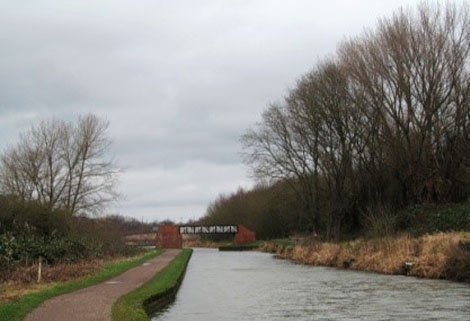
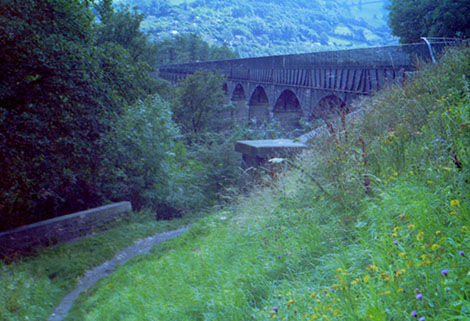
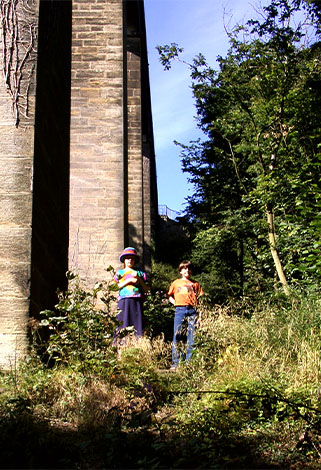
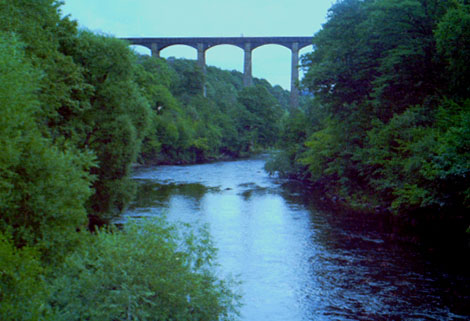
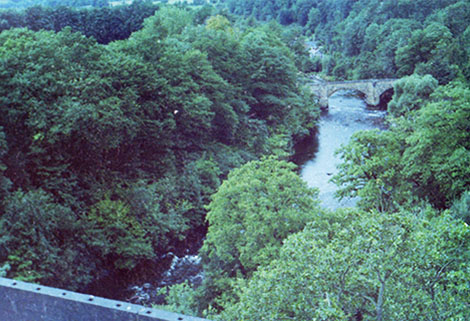
Bridgewater Canal near Thelwall

Bridgewater Canal near Thelwall

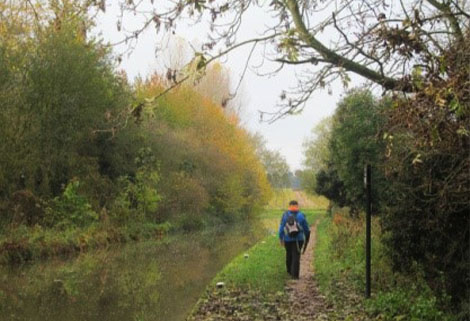
Over the past three years, I have walked on or off The Cheshire Ring with an intention of doing it either in a clockwise or anti clockwise direction starting at the Ashton Canal.  It turned out that I walked the ring in no intended order as friends and family wanted to join me.  I had opportunities to enjoy a number of return visits to the Ashton, Peak Forest and Macclesfield Canals.  We didn’t literally follow the “ring” either way due to logistics i.e. transportation and in some cases we had to park the car at a nearest town and get the bus/train to the canal.

This is the second article of my Cheshire Ring walking experience.  My experiences include multiple trips to the canals and they are consolidated into the canals’ summaries as below.

Rochdale Canal

Rochdale Canal

Lock 92, Rochdale Canal, Manchester

On the Rochdale Canal in Manchester we descended underground to Piccadilly Locks, 84 and 85.

This area was insalubrious and seedy to say the least and we passed people smoking illicit substances and we noticed needles on the towpath.

We soldiered on and continued towards Canal Street, the heart of Manchester’s Gay District, towards Lock 86.  Apart from the lovely, colourful, safe and relaxed Canal Street, it was an uneventful walk down to the final lock, 92, and beyond this lock is where the Rochdale meets with the Bridgewater Canal.

Bridgewater Canal

Bridgewater Canal near Grappenhall

Bridgewater Canal near Grappenhall

We began our adventure on the Bridgewater Canal at Castlefield, Manchester, and joined the towpath.

We saw the Ponoma locks where the boats are able to access the River Irwell and subsequently the Manchester Ship Canal.  We also passed Manchester United’s football stadium and eventually reached Waters Meeting point, not the prettiest sight on the canal.  Some walks we would have walked right towards the Leigh Branch towards Worsley and eventually Leigh via its infamous Barton Aqueduct (we walkers go across the road’s swing bridge).

On another walk we started walking to the main branch from the Trafford Centre, a large shopping centre on the Leigh Branch, passed the Kellogg’s factory, and eventually reached the Waters Meeting Point.  We walked to Altrincham via a brunch stopover at a café in Stretford and through the trendy suburb of Sale.  The Main Branch was interesting and we took the opportunity to observe the sights and sounds.  We also the crossed an aqueduct over the River Mersey: this river marks the once historic county boundary between Lancashire and Cheshire.  On arrival in Altrincham we got the bus back to the Trafford Centre.

Our subsequent walk from Altrincham to Grappenhall took us on a journey from the Greater Manchester suburbs to the countryside.  We passed the Victorian Linotype factory where the façade has been incorporated into a new housing estate (being built at the time of walking).  We passed the Dunham Massey Estate and soon after stopped for a drink at the Barn Owl Inn.  After Lymm and meeting the Trans Pennine Trail, we reached Grappenhall and got the bus back to Altrincham.

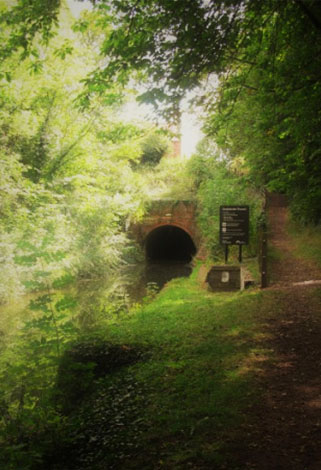
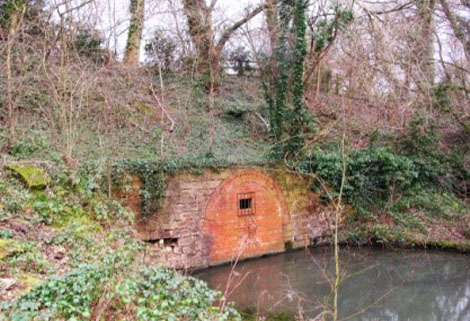
Our final walks on the Bridgewater Canal were done over a weekend and we used Warrington as a base to access the canal by public transport.  We picked up our walk from Grappenhall and continued on towards Stockton Health, a popular suburb of Warrington and near the Manchester Ship Canal.  We stopped there for a drink at The London Bridge Inn.  We had glorious weather throughout which made our walk through the Cheshire countryside a pleasant one.  I stopped for an ice cream at Moore’s village shop and we walked the remainder of the canal to Preston Brook Tunnel.  There we explored the tunnel’s portal and walked to East Runcorn for our bus back to Warrington.  We also explored the Runcorn Branch of the canal on another day and it is such a nice stretch especially walking through the Norton woodlands.

Trent & Mersey Canal

Trent & Mersey Canal

Trent & Mersey Canal

Our first walk on the Trent and Mersey Canal walking adventure was from Middlewich to Kidsgrove.  It was a tough 13 miles or so walk as it was a very hot day.

We parked in Crewe and caught the bus to Middlewich and we ascended up the canal via its locks and I briefly checked out the Wardle Canal, one of the shortest canals on the network and now incorporated in the Shropshire Union Canal’s Middlewich Branch.

The beginning of our walk isn’t the prettiest with evidence of industrial activity connected with the production of salt.  We continued onto the Sandbach area and reached Wheelock where we stopped for a drink.

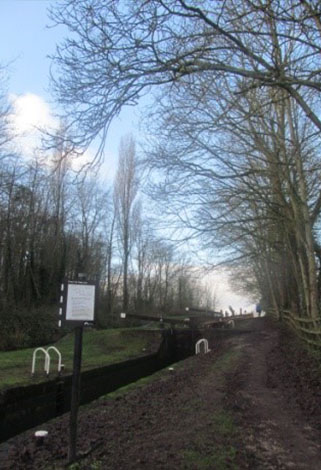
From Wheelock the canals begin to become more rural and interesting, particularly with its double locks as we were descending.  We went under the busy M62 motorway at Hassal Green and up Heartbreak Hill.  After a long exhausting walk we reached Kidsgrove – where James Brindley, the famous canal engineer is buried.  Before catching the train back to Crewe, we had a look round the Northern Portal of the Harecastle Tunnel.

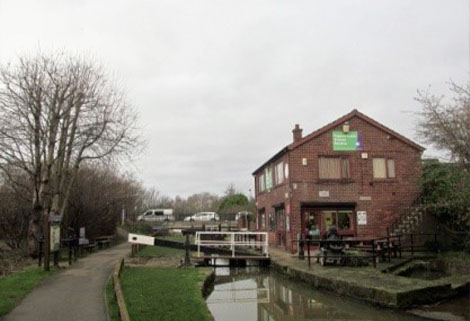
Our penultimate walk was from Anderton to Middlewich and we caught a bus from Northwich, where we parked the car, to Anderton.  On arrival and before we started the walk, we had a coffee stop at the Anderton Boat Visitors Centre’s Café.  We were hoping to visit the Salt Barge Pub in Marston but it was closed as we arrived a little early.  Instead went to the Lion Salt Works Museum.  There my Dad had a look round the museum while I indulged in a Cheshire Cream tea.

After an enjoyable visit there we continued our way towards the industrial landscape of Northwich’s outskirts.  Resulting from the salt mining industry and its subsidence we passed numerous flashes (lakes) en route to Middlewich and along the River Dane and the Dane Valley Way.  We eventually reached Middlewich Big Lock and had a drink at the Bridge Lock Pub.  It was nice to watch the boating activity down below from the balcony.  It was a short walk to the bus stop for our bus back to Northwich.  We had a little look round Northwich, a charming town centre by the River Weaver and with black and white Tudor style buildings on its high streets.

Our final walk was a circular one from Anderton and back via the River Weaver and the canal.  We turned left on the canal after a pit stop for coffee at the visitors centre’s café and reached Soote Hill Bridge where we walked towards Saltersford Lock.  There we met a friendly dog and we had a play with it.  We continued on to Little Leigh where we had a drink at The Leigh Arms, besides the Action Swing Bridge.  The black and white swing bridges on the navigation fit nicely with the landscape.  We even saw a ferry boat in operation on the navigation with day trippers on board.

We did the final stretch to Dutton Locks and walked the Delanmore way to rejoin the Trent and Mersey Canal.  We did the short walk to the stop lock and the Preston Brook Tunnel at Dutton.  We then retraced our steps towards Saltersford and Barnton Tunnels where we walked over the tops.  We eventually reached Anderton where we joined the car for the journey home.

We have now completed walking the Cheshire Ring Towing Path.  We saw and experienced a lot of interesting sights and things over approximately 100 miles of walking.  It’s a popular cruising ring but also it’s a popular walk which we were glad to do.  I look forward to sharing another walking experience on another canal in the not too distant future.

rescue of river soar narrowboat

rcr to rescue narrowboat on river soar

River Canal Rescue will be raising the capsized narrowboat at Barrow, on the River Soar, on Wednesday 25 March. Torrential rain and surging water caused the boat to break its moorings, sending it down river to bridge 30 where it became wedged.

rcr boat rescue at Barrow on SoarThe vessel was left in a precarious position, with the bow in the air and stern in the water, see-sawing on the barrier.  A refloat could not be undertaken until flood waters receded, however as levels quickly went down, the barriers gave way, resulting in the vessel capsizing and becoming trapped between the bridge pillars and the barrier pole.

This multi-agency rescue will also involve Essex Boatyard and Crouch Recovery. RCR managing director Stephanie Horton explains: “The best way to undertake this recovery without the vessel overturning and sinking in the river is to use divers, airbags and plant machinery. We’ll inflate the airbags, right the boat and then pull it forward away from the bridge with airbags on it. We’ll then pump it out, make it secure and tow it to a safe location – Pillings Lock.”

From here, the boat will be lifted onto a transporter and taken to a local yard for storage and assessment.

RCR narrowboat at barrow on soarGiven the extreme weight of the boat, RCR is using four winches with a total of 20-ton capacity to pull it away from the bridge. Stephanie continues: “This ‘pulling power’ will be attached to plant machinery and we’re removing a fence in the field opposite to get access to the location without causing too much damage to the meadow.”

In order to prepare the rigging, Essex Boatyard practised on a narrowboat that was capsized at the same angle as the stricken vessel.

River Canal Rescue will be onsite from Monday 23 March, preparing equipment, strapping the boat and managing health & safety issues.

Narrowboat Rescue on 25th March

photos by Mike Brown

rigging

soar narrowboat rescue

air bags attached to stricken narrowboat

fixing the tow

start of haul

MNA becomes volunteer ambassador for RNLI

MNA becomes volunteer ambassador for RNLI

Clive Edwards tells MNA members how they can become ambassadors for the RNLI

Merchant Navy Association (MNA) Boat Club become RNLI Ambassadors to promote the RNLI’s Respect the Water Campaign on the UK’s inland waterways

merchant navy association boat clubOn behalf of the MNA Boat Club I’m delighted to announce the publication of the leaflet (transcribed below) outlining the partnership  between the MNA Boat Club and the Royal National Lifeboat Institution (RNLI) to promote the RNLI’s “Respect the Water” campaign to reduce the number of drownings around the coast and especially on our inland waterways.

I am delighted that the hugely respected RNLI has recognised the experience, skill and knowledge of MNA members by choosing to work with the MNA Boat Club.  The RNLI has now extended the opportunity to all members of the MNA with an invitation for them to play a part as “Ambassadors”  in promoting the RNLI’s “Respect the Water” campaign aimed at significantly reducing the 150 plus fatalities each year as a result of drowning.

“I am delighted to be working alongside the MNA with this initiative. We have a variety of ways of promoting our safety messages, but nothing beats a face to face conversation with a knowledgeable person. MNA members acting as RNLI Volunteer Ambassadors will be able to pass on their experience and knowledge to others in order to save more lives around our coasts and waterways.”  Steve Instance, RNLI Community Safety Partner.

This initiative has now been endorsed by Sir Robin Knox-Johnston who says “I am really pleased to see the Merchant Navy Association (MNA) Boat Club join forces with the RNLI to reach inland waterway users with safety messaging, helping to raise awareness of the Respect the Water campaign. MNA Boat Club members are former professional seafarers with a wealth of maritime experience and expertise so they are perfectly placed to support the RNLI’s prevention work in non-coastal waters. As a former Merchant Seaman and a Vice President of the RNLI, it’s great to see these two organisations working together to reduce accidental drowning in the UK.Sir Robin Knox-Johnston CBE RD

For further information please contact:

Katie Beney, RNLI National Community Safety Partner, Email  or Clive Edwards, MNA Boat Club Commodore Email  

Why is the MNA supporting the RNLI?

RNLI flag

The RNLI’s mission is to reduce accidental drowning by 50% by 2024; around 150 lives are still lost at the coast every year. Through a combination of communication, products and face-to-face interaction, the RNLI’s Community Safety Team is driving behavioural change in and around the water. These interventions are delivered at a local level by some 500 Community Safety Volunteers across the UK and Ireland.

Most of these volunteers are based in coastal communities, close to RNLI lifeboat stations and lifeguarded beaches.

However, two in three accidental drowning fatalities take place at inland waterways.

The RNLI is collaborating with the MNA to reach these inland communities and coastal areas where they currently don’t have representation and/ or require additional support.

Working in conjunction with the MNA’s Boat Club members and SeaVue Surveillance Scheme will enable the RNLI to reach wider audiences with safety messaging and signpost water users to additional resources and support available. In doing so, the MNA will play a valuable role in helping the RNLI reduce accidental drownings by 2024.

I am really pleased to see the Merchant Navy Association Boat Club join forces with the RNLI to reach inland waterway users with safety messaging, helping to raise awareness of the Respect the Water campaign. MNA Boat Club members are former professional seafarers with a wealth of maritime experience and expertise so they are perfectly placed to support the RNLI’s prevention work in non-coastal waters. As a former Merchant Seaman and a Vice President of the RNLI, it’s great to see these two organisations working together to reduce accidental drowning in the UK.” Sir Robin Knox-Johnston CBE RD #PreventingDrowningTogether

The role

merchant navy association ensign

The RNLI is asking MNA Volunteer Ambassadors to promote safe practice on inland waterways and around the coast by communicating guidance to boat owners, watersports enthusiasts, marina operators, boat-hire companies, waterside pubs/restaurants and walkers. Using your maritime skills, knowledge and experience, you will be essential ambassadors for the RNLI’s safety messaging and Respect the Water campaign. This could be through passing conversation with fellow water users, discussing the latest means of calling for help and encouraging lifejacket use to distributing leaflets and posters to operators and venues.

Prior to getting out and about, the RNLI will discuss your locality with you to ensure there is no crossover with other volunteer networks.

Please note: there is no requirement to deliver safety presentations; should an individual/organisation require further advice, an RNLI Community Safety Volunteer will be available to deliver Advice Onboard sessions, Lifejacket Clinics etc.

See THE RNLI – WHAT WE CAN DO FOR YOU

Time commitment

As much or as little as you can offer

RNLI Respect the Water campaign

RNLI Respect the Water Campaign

Respect the Water (RTW) is the RNLI’s national drowning prevention campaign. RTW is aimed at promoting safety advice to all who visit the coast and inland waterways, from walkers to commercial fishermen. RTW aims to show those most at risk the potential dangers of water, to encourage them to reconsider their actions, and adopt safer behaviour. Since 2017, it has focused on asking the public to fight their instincts and remember two memorable skills:

  • floating which could save lives from drowning;
  • and to call 999 or 112 and ask for the Coastguard.

The 2019 campaign launched on 30 May and ran through to the end of August with radio,  cinema and print advertising and social media content.

Support and resources available


On agreeing to be an MNA Volunteer Ambassador you will receive a pack with further guidance, key safety messages and printed materials (leaflets and posters) to distribute in your agreed areas. You will also be sent a tally sheet to record conversations/ interventions to enable the RNLI to monitor reach and impact. Additional resources can be requested at any time.

The links below provide additional information and downloadable resources.

www.respectthewater.com
public facing campaign website with practical advice on how to float with stories of survivors who have followed the advice

www.rnli.org/rtwresources
here you will find all the resources you need to support the national RTW campaign and advice on key ‘at risk’ activities (angling, boating, walking, kayaking, scuba diving, commercial fishing and walking) plus ‘How To’ videos on fitting, checking and maintaining your life jacket.

www.rnli.org/safety
essential safety advice so you can make the most of your time on the water

www.rnli.org/safety/what-we-can-do-for-you
additional safety advice provided by RNLI Community Safety Volunteers

MNA contact

For further information on the MNA Boat Club and its collaboration with the RNLI, please contact Clive Edwards: Email

RNLI contact

RNLI logo

If you are interested in becoming an MNA Volunteer Ambassador, please contact Katie Beney in the first instance: Email

If you are based near a RNLI Lifeboat Station, Katie will put you in touch with the relevant  contact at the station. If not, she will remain your point of contact and be able to provide  assistance and resources to support your role.

Should you be interested in becoming a RNLI Community Safety Volunteer, working alongside your local RNLI Lifeboat Station, Katie will be able to make the relevant introductions.

Clive EdwardsCLive Edwards, Commodore MNA Boat CLub:  email

aftermath of the storms

aftermath of the storms

recent storms prompt 50+ major rescue call-outs for RCR

Since the beginning of the year, storms Brendan, Ciara, Dennis and Jorge have battered the UK, causing problems for boat owners across the inland waterway network. During this time - from 1 January to 3 March - River Canal Rescue carried out 52 major rescues (categorised as submerged, partially sunken or grounded craft).

From their bases in Chester, London, Manchester, Nottingham, Oxford and Stafford, RCR’s team of four rescue specialists and 12 supporting engineers worked flat-out, attending an average of around six rescues a week; all complex cases involving hands-on crews and head office support staff who monitored water levels, managed logistics and communication, and liaised with third-parties/stakeholders (often trying to pair up stricken boats with unaware owners).

Unprecedented rises in river/canal levels and sudden water surges across the country separated boats from their moorings, pushing them to new locations, often on towpaths and in fields, or wedging them against pontoons and other craft. Boats unable to cope with the downpours were soon reported as submerged.

A high number of calls were from boats on the rivers: Aire, Cam, Soar, Trent, Witham and Yare, and from vessels on the Aire & Calder, Calder & Hebble, Huddersfield Broad and Rochdale canals.

RCR reports that while some vessels were easily moved, others were trapped, unable to refloat until water levels receded or indeed rose again, and there are those posing more of a challenge.

Rescue co-ordinator, Tushka Horton, comments: “From the calls coming in, you could quickly identify the path of every storm and the destruction each left in its wake. Not every case was or is a simple boat raising; we sometimes had to use divers to help with the rescue or deploy a drone to find the vessel. Some could not be accessed with vehicles, others needed plant machinery to lift them which means liaison with third-parties such as the Canal & River Trust, landowners and the highways agency, and there were a few where we had to track down the owners and secure permission to attempt a rescue.”

Managing director, Stephanie Horton, continues: “These past few months have certainly been testing for boat owners and our staff alike, but we endeavour to act as quickly as we can to secure boats in trouble. I’m sure we haven’t seen the last of these storms this year and we will continue to work with everyone to ensure they keep their vessels as safe as possible during these difficult times.”

Case Studies

Pillings Lock, River Soar

February - a houseboat at Pillings Lock on the river Soar. Moored next to a pontoon, the water levels rose so quickly the boat couldn’t adjust itself on its pilings in time. Water poured through the doors, causing it to list at a right angle and wedge itself on the pontoon. Despite attempts from a five-man team, the houseboat was too unstable to pump-out. A telehandler and tractor were used to brace the houseboat so further pumping out could be done.

Houseboat at Pillings lock courtesy BBC

houseboat rescue Pillings Lock

River Trent

February – a 57ft narrowboat pushed onto river Trent towpath. A three man-team used ropes and scaffolding poles to manoeuvre the boat back into water.

Grounded narrowboat on river Trent

River Soar

February – a narrowboat on the river Soar, left stranded on the barriers by bridge 30 at Barrow. Surging water caused it to break its moorings, sending it down river to bridge 30 where it became wedged. The liveaboard was woken when the boat hit the bridge and he had to be rescued from the boat.

The vessel was left in a precarious position, with the bow in the air and stern in the water, see-sawing on the barrier. Until flood waters receded, it was decided that a refloat could not be undertaken. Unfortunately, as the waters receded the barriers gave way, resulting in the vessel capsizing and becoming trapped between the bridge pillars and the barrier pole. Due to weight restrictions on Barrow bridge and the condition of the ground, the rescue is not going to be straightforward.

Leicester council and the tenant of the field opposite have agreed to access for heavy pulling equipment and divers are all in place. The rescue is now dependent on river levels, weather and authorisation from the Canal & River Trust.

RCR narrowboat at barrow on soar

rcr boat rescue at Barrow on Soar

Rochdale Canal

February – wide beam on Rochdale canal. water levels High water levels pushed boat onto tow path. The river rose so fast the boat floated onto the towpath and when levels receded, the boat was stranded. Rescue involved a three-man team, tirfors, rope, scaffold poles and a pump-out.

Widebeam grounded on Rochdale Canal

Hebdon Bridge, Rochdale Canal

February – narrowboat at Hebdon Bridge ended up wedged between CRT working boat and bank of Rochdale canal. The rescue team had to wait for levels to lower (in between the storms) and with pumps, manpower, tirfors, ropes and their experience, released the vessel.

rcr rescue boat at Hebden Bridge

the view from the boat broker’s desk

the view from the boat broker's desk

With a new decade starting the Aqueduct Marina team at Church Minshull in Cheshire began to discuss the changing way people view, buy and sell boats through the brokerage.

Aqueduct Brokerage and Sales Manager Ian and team look at the evolution of the boat brokerage.

Read More

heavy cable crimping

heavy cable crimping

Oh dear what have I taken on, promised to do an article on crimping cable and ended up with 49 photos some duplicates so let's see how it goes.

Let's start with what is needed

heavy crimps

1. left to right: Heat gun for heatshrink; Crimper; Heat shrink insulation; Cable in this case 95mmsq; Termination 95mmsq with a 10mm hole; Vaper; Tea; Sharp knife.

I suppose the next item should be the termination. All terminations that we use on boats should be tinned copper and the size of the cable it will fitted to and the size of the hole should be impressed on the spade of the termination.

To make our lives easier it is better to buy ones where the cable entrance is slightly belled – that makes it easier to insert the cable. The hole for the cable is a close but loose fit.

2. termination

At the spade end of the tube is a hole the hole is useful as it allows you to see if strands are fully filling the barrel and the ends of the stands should be very visible but we will get to that later.

3. hole in the termination

Now we need to prepare the cable end to go into the termination, The easiest way I find is to put the cable along side of the termination so that its end is level with the centre of the hole and I mark where I am going to cut the insulation back to with my thumb nail.

crimps 4

4. measuring the insulation to be removed

5. position knife for cut

6. cutting insulation

heavy cable crimping

7. showing the insulation breaking away on the final 1/2mm

Then using a very sharp knife, gently but firmly cut around the cable – being careful
not to damage the copper strands under the insulation. Then bend the cable at the cut and the insulation should break through the last 1/2mm or so to the copper.

heavy cable crimping

8. bare end ready for insertion

You end up with the bare strands. Gently and with minimum pressure, coax any strands that have come out of place back into position by using fore finger and thumb. Starting at the insulation, rotating your finger and thumb round the strands, going in the direction the strands lie, and smooth any out of position back into the body of the strands. The object is not to screw the strands tightly together just coax the strays back into position.

Now insert the strands into the termination, rotating the termination normally in the direction the strands lay in the cable can assist this.

heavy cable crimping

9. termination on

Now we come back to the hole I mention in the end of the barrel that the cable goes into. The strands should be right up to it and easily seen. Looking into the hole the strands are a couple of millimetres back, so we need to lengthen the bare strands by taking of about 2mm more off the insulation. Again sharp knife and gently remove about 2mm of the insulation.

heavy cable crimping

10. showing strands further back than
they should be

heavy cable crimping

11. taking off an extra 2mm or so

Put the termination back on and pushing the cable into the termination it should look something like this:

heavy cable crimping

12. strands about where they should be

heavy cable crimping

13. termination in the crimper for the first crimp

Now comes the actual crimping, make sure the crimper has the correct moulds in. Put the cable into the termination and partially close the crimper so termination can just slide in. Position the termination so that it is set in the crimper so that the first crimp will be just behind the hole in the termination. While pushing the cable firmly into the termination, crimp the termination to the cable. Remove from the crimper when completed and it should look like this picture on right.

heavy cable crimping

14. after first crimp

Now reinsert the termination so that it will put a second crimp immediately the cable side of the first crimp.

heavy cable crimping

15. in crimper for second crimp

Then with this size of termination repeat with a third crimp. How many crimps a termination will take depends on the width of the mould and the length of the termination. It is particularly important with cables that will carry heavy currents, that as much of the termination as possible is crimped to give the greatest good contact area for the current flow. Now get hold of the termination and pull as hard as you can. If it stays put, all is OK.

heavy cable crimping

16. completed third crimp

All crimps should be insulated, please do not use insulation tape, it does not look good and gradually comes off. The best I have found is heat shrink tubing. Cut a piece double the distance from the back edge of the spade to the insulation slide it over the terminal. On sea boats where salt air is a problem a blob of silicon sealant to fill the hole and keep the sea air out before heat shrinking is a good idea.

heavy cable crimping

17. putting heat shrink onto the cable

Slide it on so that the outside edge is just behind the back edge of the spade of the termination.

heavy cable crimping

18. heat shrink on the cable end just behind the back edge of the spade

Heat the heat shrink with a hot air gun starting at the termination end – remembering to rotate the cable – moving along as the tubing shrinks.

heavy cable crimping

19. hot air gun shrinks tubing

heavy cable crimping

20. completed crimp

© Graham Mills 2020

so good, it went in the book

so good, it went in the book

Michal Nye

The 9 year old me looking a little shifty...

Going back to the summer of 1965, when I was just nine years old, it was time for our second waterways holiday on a boat hired from T. W. Allen and sons of Molesey.   This time it had been decided, in discussions that I was not privy to, that my maternal grandmother would come with us.

A bigger boat was needed so we plumped for a wooden one that T. W. Allen had christened River Rose. The boat dated back to the mid to late fifties and was typical low to midrange fare.

We had a chemical toilet (not for the faint hearted) and sinks that were converted (due to a change in regulations) so that they no longer discharged into the river. This conversion was in the form of a bucket under the plughole with the pipe to the external discharge simply chopped short!

After a very short time Dad had decided that the thing was both underpowered and ungainly but we were happy to go, crab fashion, as Mum put it, along at just below the 7 knot speed limit, tying up at Runnymede for our first night.   When it rained, we discovered that it leaked rather copiously and, worse than that, when dad pumped the bilges, he discovered that the leaks were not wholly confined to the superstructure.   We weren’t sinking though, so we pushed on.   We were going to enjoy ourselves even if it killed us!

River rose with the canopy down

River Rose with the canopy down

It was the second day afloat that a vantage point on the back-cabin top became something of an issue with my elder brother claiming ownership because he found it first.   John’s extra two years in the world were something of a major factor to the nine-year-old me but I still protested the claim - getting the threat of a foot in the face if I tried climbing the short ladder from the cockpit to the vantage point.

Mum eventually intervened in the territorial battle before it turned into open warfare with the proclamation that we had an hour each or we were both banned.   With the issue settled, John and I more or less lost interest and disappeared into the front cabin to make paper cut-outs and play board games.   For the most part we got on fairly well and I remember us decorating the boat with the collection of chopped up scrap paper for Mum and Dad’s 12th wedding anniversary.   There were even two snakes made (by me) out of string as part of the decorations with a caption “Bromrikong and Sallikong wish you a happy anniversary.”

The midpoint and destination of Thames holidays was always Lechlade (though some people would do a turnaround at Oxford and it was at Osney lock that we discovered the reason for the leaky superstructure.

“They turned that around pretty quick,” the jovial lock keeper said.

It transpired that the cockpit cover was too low for the famous Osney bridge and had to be lowered, a simple process that the keeper was happy to demonstrate.   Shame that the previous hirers ignored his advice and help, saying that they would sort it.   They did this by heading at the centre of the bridge at whatever speed the craft could muster, smashing the windscreen and various other bits of the cockpit canopy to bits.   End of their holiday!   In less than a week, Allen’s had fixed it all up and dispatched us to enjoy our holiday, leaks and all.   Again, the Lock keeper was more than helpful, handing dad half a tin of old varnish and telling him to plaster it on from the outside around anywhere that leaked.

“I’ll tell old man Allen, so you won’t lose any deposit,” he smiled as we headed on (canopy down) to the bridge.

Michael Nye, his mother & brother net fishing in Lechlade

Mum John and me fishing for tiddlers at Lechlade

A couple more days and in brilliant weather, we tied up at the meadow below Halfpenny Bridge in Lechlade.

I still have a soft spot for the place, though I haven’t been there for over 30 years.

The meadow was massive, with plenty of space for John, me and some of the other holidaying kids to run around and play football or whatever other games we concocted.  This was that stuff that a childhood summer was made from with blue skies and seemingly endless blisteringly hot weather.   Then I was not so cynical as to be aware that it would eventually end in a thunderstorm and yet more leaks.

Something that was not subject to the weather was the treat that was dinner at the café that bore the name of A. Smith, run by two very kind old gentlemen.   The food was basic good cooking and the atmosphere was the genuine version of timeless.

A.Smith Cafe in Lechlade

A Smith Lechlade

I had been looking forward to going there again for the whole year and was not disappointed when we sat down for our meal.   Part of this eagerness to revisit the place was the conundrum of the framed print of a seemingly random group of letters.

“YCWCYTFTB” it said, and I was determined to find out what it meant… So I asked one of the kindly gentlemen.

“Your curiosity will cost you thruppence for the blind,” he chuckled.

I’d been had!   But his delivery of the words made me laugh so much that I willingly coughed up half the price of a “Matchbox” toy car for the local blind charity.

Two memories of the holiday stuck so much that, when I wrote my second book, “Here we Go!” I included a visit to the café by my two heroes (Jim and Amanda) at a pivotal point in their relationship.   I changed its location and menu a little, but if you remember A. Smith, you will spot the origin of the café instantly.   River Rose also appears, in somewhat altered form as the basis “Clearwater Sky.”

Interestingly, whilst A. Smith’s café is long gone, I am pretty sure that the “River Rose” has survived in private ownership.   ©2019 Michael Nye.   www.michaelnyewriter.com

the miners of crick

tales from the old cut 4

the miners of crick

The little village of Crick is these days best known for the annual Crick Boat Show, thousands of pounds worth of canal related paraphernalia is showcased in an attempt to get visitors to mortgage a kidney and buy some of it. The show is, these days, all about the modern boat, and while the visitors may comment on how picturesque the location is, rarely does the history of it cross their minds.

Crick Tunnel engraving showing date of completionA casual walk down the towpath from the show-ground will lead you to the mighty tunnel portal, where if you stand on the water’s edge and face the tunnel, you will find a small, worn brick inscribed with a date.

On that date, with great pomp and circumstance, a boat loaded with the great and good was legged through, the tunnel declared officially open and everyone clapped themselves on the back for completing such a momentous task.

Of course, the people in the boat that day hadn't lifted more than a pen in actually getting the tunnel built, and most history books that a visitor to the boat show can pick up, only speak of those fancy suited gentlemen.

I, however, prefer the grubbier story of the tunnel, the one full of blood, sweat, tears and a lot of sex.

We'll bypass the boring paper-trail and begin our story in 1810. The village was a busy little place, sat comfortably on a trade route between Oxford and Leicester, and the travellers it tempted supported a selection of forges and inns. The village was still hanging onto its cottage crafts in the weavers, spinners, shoemakers and saddlers, and it was forward thinking enough to have a couple of day schools, an apothecary and  a doctor. It of course had the usual butchers and bakers, and obviously a good selection of farmers and a lot of labourers.

Crick tunnel entrance

There were masons at the stone pits and at least 2 brickyards quietly churning out building materials, and in 1810 it is our brickyards that open up our story by signing up to produce 2 million bricks for the princely sum of 1 & ½ farthings per brick, or 32 shillings per thousand.

Within a year, the busy little village was bustling more than usual. There doesn't appear to be a full list of who was employed, so it is impossible to say how many men were professional canal builders and how many were local labourers ready for a change of career, but we know that 350 men were employed and were making rapid progress.

There was a minor blip late in 1811 when the labourers had nearly finished a deep cutting at one end of the new tunnel, when someone with a theodolite and some sense, dug test bores for said tunnel and found it dangerously unsuitable.

A few frantic meetings later, and a new site was chosen on the other side of the village and work restarted with all haste.

Haste is perhaps the operative word here. The new site had less shifting sand, but it did have streams. By late 1813, the tunnel itself was well past the halfway mark, but at least one man had died at shaft 10 (stories differ as to whether he fell down it or whether something fell down it and landed on him), and a few others suffered “some maiming” from roof falls. This was on top of the usual range of accidents, with at least one man being run over by a full wheelbarrow that slipped back on him; humorous this might sound at first, remember that these were timber monstrosities shod with iron and loaded as heavily as possible.

You may have noticed that so far, I have carefully avoided using that dreadful term: “navvies.” We must remember that there had been no real concept of tunnel building prior to the canals arriving. If you were digging tunnels you were generally a miner, and it is this logic that accounts for our first glimpse of the real men behind the tunnel each being recorded in the parish register as “miner.”

Meet William Morse, his wife Mary, and their baby son, John.

registration of John Morse, son of William & Mary Morse

We don't know where our miners lived; if we take the sister site at Husbands Bosworth as a guide, we can assume that somewhere near to the site would have been a couple of long wooden dormitory huts capable of housing a couple of hundred men. They were being quite well paid (contrary to the mental image one might get when one thinks of the canal builders), so it is likely that some of the men, perhaps the married ones, would have rented rooms in the village.

They certainly would have descended on the village after the day was done in search of sustenance, and it is likely that it was during one of these sorties into the village that Hugh Nail first spotted Ann Blakemore.

Hugh seems to have been born on the outskirts of Liverpool and joined the canal gangs aged around 14, then made his way around the country, digging as he went. We can speculate that he arrives on the scene fairly early in the proceedings, as by the time he goes to the Rector in January of 1813 asking for the banns to be called, he's considered “of the parish.”

marriage certificate of Hugh Nail & Anne Blakemore1813

Hugh and Ann leave the church hand in hand watched by Ann's family and, chief among Hugh's fellow miners, his best friend Joseph Wilson.

Perhaps it was this romance that introduced Joseph to Ann's sister Sarah. Indeed, perhaps it's in an advanced state of alcoholic refreshment following the wedding that Joseph and Sarah became more intimately acquainted.

The following year, Hugh, Ann, Joseph and Sarah make their way back to the church where the resigned Rector baptised William and Mary respectively.

It may surprise you to learn that Sarah and Joseph stay together and produce a son the following year.

Sex before marriage didn't carry quite the same badge of shame for people of the regency era, especially the “country folk” who were frankly far more understanding of the mechanics and didn't bat an eyelid at a woman walking up the aisle with a big belly. Illegitimate children were frowned upon but once they'd arrived no one really bothered about them provided they were cared for without posing an expense on the parish.

In fact, Crick appears more tolerant than most as the Rector doesn't bat an eyelid when George Crowder and James Schofield leave the tunnel for a walk out with Esther and Sarah Vaus and produce babies John and James, or when William Harrison downs his shovel to dally with Hannah Gent and produces another baby John.

Indeed, the only time we see anything that could be taken as disapproval is when the Rector notes in 1811: Nov 12th. I privately baptised Mary, daughter of James and Ann Morris. The father (a brickmaker) having absconded and the mother with the infant being about to undertake a long journey.

Perhaps James had been overwhelmed by the amount of bricks the new tunnel had demanded.

We can't avoid the potential that some sex work was taking place at this time, but there is no evidence to suggest that the babies were the receipt from a miner’s night-out.

Considering how many men were working on the tunnel and the reputation that they gain later in the Victorian period, it is refreshing to see that out of 16 children baptised, only 4 are born fully out of wedlock, and a fifth whose parents had the banns called, but they don't appear to actually manage to get up the aisle. Percentage wise, the miners are veritable gentlemen against the rest of the village.

There are many more stories of these forgotten men waiting to be uncovered, and I hope to find the rest of their names for a start.

It seems likely that it's thanks to these men that Crick gained the story that it had a treacle mine, but I like the fact better - that these men mined for a canal and found it.

Tunnel Miner Rollcall:

William Morse, Mark Flint, George Crowder, Edward Corby, James Cope, William Cox, Richard Hodges, John Betty, Joseph Wilson, Hugh Nail, William Harrison, John Jones, James Schofield, George Hillyard

featured author – Kitty Irvine (spring 2020)

featured author - spring 2020

Kitty Irvine

I was born and grew up in the north of England. From an early age, my parents were heavily involved in Scouting, so I spent many weekends and school holidays camping and sailing. My family holidays were spent in the north west of Scotland. I suppose this is where I get my love of wildlife and countryside.

Read More

an embarrassing problem

dawncraft chronicles

an embarrassing problem...

It's dark , the worst days of winter and not very inspiring but I have a personal problem that needs addressing . I have Polleniardus – and its not the kind of complaint that you can get the one-off. It's cluster flies, masses of them.

Read More