
So Chrissymus is coming - perhaps.
Hope you’re locking forward to it (sorry, terrible pun, things only go downhill from here folks).
Apologies again, I’ve been away for all of this awful year so far - it has been, as Her Madge may have it, my own personal ‘annus horriblius.’
But I’m back now - who groaned? There’s no need!
It hasn’t all been bad of course, if it had been I’d probably be floating face down in the murky waters of the Staffs and Worcs by now.
 Back in February I won the ‘Best Comedy’ award for my short stage play at The Worcestershire Theatre Festival.
In September I got a T.V. writing credit for a one liner (strangely the worst one I’ve ever written) for The Treason Show and I’m now on the regular script writing team for that. So shout ‘Hurrah’ and hang out the bunting.
But enough of that. If you’ll indulge me I’d like to have a rant.
Oh no, not again, I hear you cry. But I’m sure many of you canal users will agree on the current plague which is uniting boaters, fishermen and us dog walkers alike.
Let me explain it like this.
 I was walking the dogs, Blue and Milly, down the towpath toward bridge number 38. It was coming to that weird sort of half-light between afternoon and dusk and we were happily trotting along - well the dogs were, I was shuffling about as usual - when a ghostly spectre appeared out of the mist (it wasn’t actually misty, but I’m trying to create an atmosphere, o.k?) A vision of Darth Vader appeared from under the arch and began to charge toward us at an alarming rate of knots. He was easily seven feet tall, dressed entirely in black, topped with a helmet with tinted visor. And - get this - he glided. Yes, that’s right, he glided - moving neither arms nor legs.
Blue, my border collie who normally chases anything that moves faster than an arthritic snail, stood and watched open muzzled as he sped - yes, sped - past, at easily 20mph (I’m not sure what that works out to in kilograms per year, or whatever it is these days).
Even Milly, concentrating intently on sniffing and peeing on every single blade of grass stopped to stare.
I meanwhile was urgently trying to prevent an unplanned bowel movement as stories of Spring Heeled Jack - a local legend, many people claim to have seen the Devil around these parts, mostly around chucking out time from the pub - echoed around what I apologetically call my brain. Indeed, if I’d have spotted a scythe strapped to the onrushing apparition I would have sworn that my time was up.
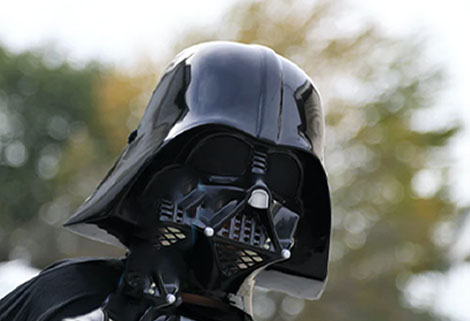 As he drew level briefly, by now he was moving at just below subsonic speed, I saw that it was only some chap, in full motorcycle regalia, stood on - honestly, I kid you not - stood on a single motorised wheel about 2 feet (I’m not sure what that works out to in tonnes per hectare, or whatever it is these days) in diameter. Two footrests extended out from either side of the axle on which he balanced like a trick cyclist at the circus. I assume that he controlled the speed by leaning forward or back as they do on one of those Segway thingy’s you can hire out on your holibobs in Benidorm, but it was hard to tell as we were buffeted around in his wake amid a swirl of fallen autumn leaves, towpath dust and small dead mammals, slaughtered on his passage through the countryside.
I never knew such things existed. Which brings me to my point. There are a proliferation of similar modes of transport hurtling along our usually peaceful walkways at such a rate that there is barely time to fling yourself into the relative prickly safety of a Hawthorn bush to avoid being flattened like some unfortunate piece of roadkill. And they all want the same thing - the whole towpath. Not part of it. All. Space invaders indeed.
I’ve seen electric mountain bikes (did you know that you can get them ‘chipped’ so that they can go faster than the speed they were designed for, just in case you wanted to attempt to break the land speed record?) I’ve seen electric scooters, motorised mini-bikes and even the odd quad bike hurtling along with scant regard for life or limb of the casual passer-by, not to mention the fragile carbon fibre fishing regalia scattered along the towpath like hurdles. Live aboard boaters hardly dare step from the stern for fear of being mown down in a frenzy of Lycra clad mechanisation and are forever washing the dust from their windows.
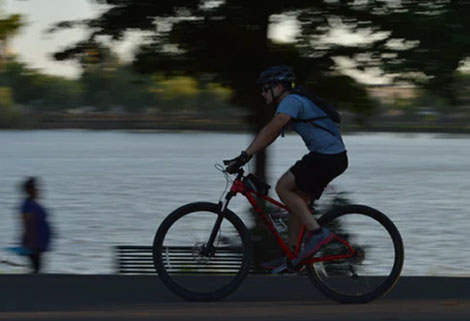
And then there are the normal bikers, the ones that actually pedal under their own power, choosing to get their exercise the old fashioned way, rather than relying on a 150 horsepower battery (I’m not sure what that works out to in metres per parsec or whatever it is these days) to get their 5 a day workout, sitting (or standing) there, doing bugger all and wondering how come they’re not getting any fitter. The normal biker is the real exercise freak. Don’t get me wrong 92.875% (I did a survey) are alright. They’ll slow down and stop if necessary, particularly if confronted by Blue, who does rather follow his instincts and try to herd them up like wayward sheep. The rest though don’t bother as they try to beat their personal best in what I’m sure they consider to be a time trial challenge. Indeed they can get quite fractious as Blue, frustrated that they won’t behave and be penned like normal sheep, now attempts to control them by removing whatever appendage he can hang on to. Many an interesting discussion has ensued.
Take for instance the rather posh lady I encountered the other day. I saw her coming and politely (I thought) asked her to stop so that I could grab hold of my canine enforcer. Did she stop? What do you think? I dived for his collar but sadly missed and watched him bouncing alongside as she rode on, him encouraging her to do what was right. Eventually she complied and as I gathered up my furry assistant she uttered the following observation, ‘Could you please kindly tell your dog that that really wasn’t rather pleasant.’
I was perhaps less than tactful with my reply, ‘Well if you’d @#**# stopped like I @#**ing well asked, perhaps he wouldn’t have @**#ing well done that would he? You **#@* *&£# old bat.’
I’ve seen her several times since. She stops as soon as she spots us, waits for me and Blue to gain a modicum of self-restraint and mutters an embarrassed, ‘thank you,’ as she carries on her merry way.
And who do I blame for this proliferation of mechanised mayhem. Well Boris of course has previous with his Boris bikes when he was Mayor of the Smoke and for encouraging us to get fit in his ‘golden age of cycling’ during lockdown v1.0. A friend of mine has a cycle shop and couldn’t keep up with demand, so it’s not all doom and gloom for the high street.
 But the real culprit I’m afraid is Andy Street, Mayor of the West Midlands. He’s a champion of old style technology like trams, trains and of course bikes. I’m sure he’d like us all to become latter day Edwardians and am expecting him to launch an initiative soon to eschew our en-suite bathrooms in favour of building outdoor privy’s and wiping our bums on torn up squares from The Sun.
He recently announced, at a photo opportunity of which he is so fond, that the region would be unveiling a ‘new’ system of cycle paths. Much of it appeared to be along existing towpaths, therefore encouraging every would be Tour de France competitor and giving them free rein to hurtle along our pathways to their hearts content and at minimum cost to the West Midlands Authority, now relieved of their responsibility to build dedicated routes for the use of our two (and one) wheeled friends.
Personally Andy old chum, I think you’re on a loser there. The days are getting wetter, colder and the nights are drawing in. I’m expecting a glut of barely used bicycles, both manual and powered, to start appearing on EBay (other social media auction sites are available) any time soon as the novelty wears off and whatever vaccine kicks in to relieve us of the effort of exercising, giving us the chance to return to the relative safety of our cars. The government of course has announced that in ten years time we will all be driving eco-friendly models. I’m sure that Andy, progressive moderniser that he is, would prefer that we were all in Model T Fords.
Rant over, have a good Christmas everyone - if they’ll let us. Perhaps they’ll show Star Wars on t.v. again. And take care on the towpath - you never know when Darth Vader might bump into you.
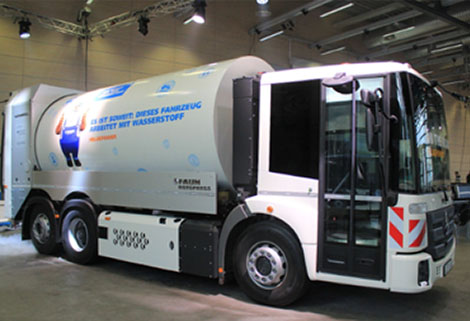
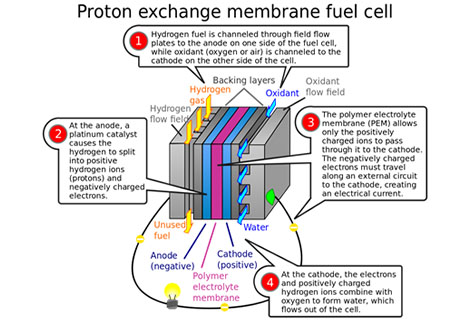 Now that industries such as transport and heating are struggling to maintain the levels needed using conventional batteries, hydrogen has come back into the frame. A typical example of this is the company JCB who have produced a new prototype mechanical digger which would need a battery weighing five tonnes and take hours to refuel.
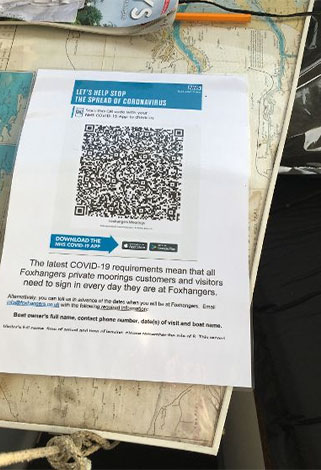 Having first done my tap and trace with a QR code laminated and stuck on Dawn Treader's door, I am writing this down below on a very stormy, blowy Halloween.
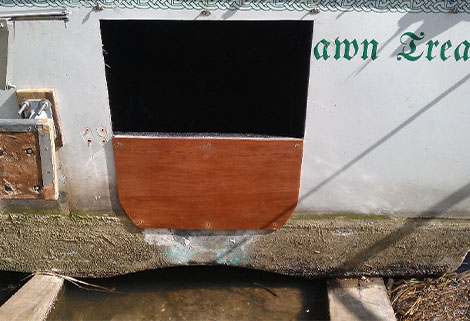 We are all exposed to a small amount of it when we run our engines, but generally the wind etc. takes most of it away. But the CO detector has already received a certain amount. However, at this very point in the canal I slow up for the bridge, which is on an acute angle so you can't see under it. The canal is in quite a deep cutting with high hedges both sides and steep banks with the wind directly behind me, so momentarily the exhaust gas catches up with me and briefly exceeds the level.
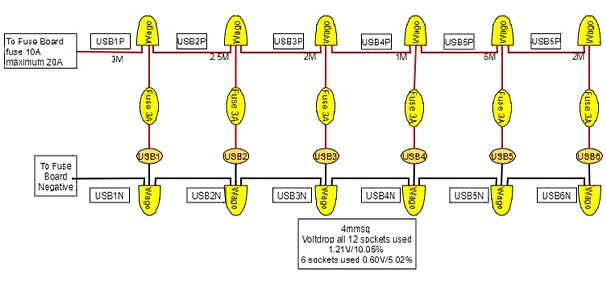
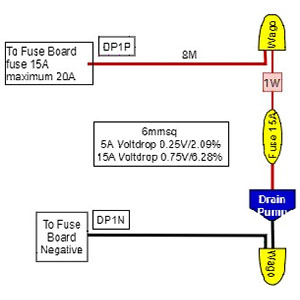
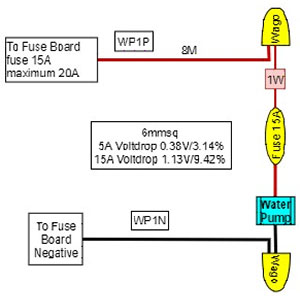
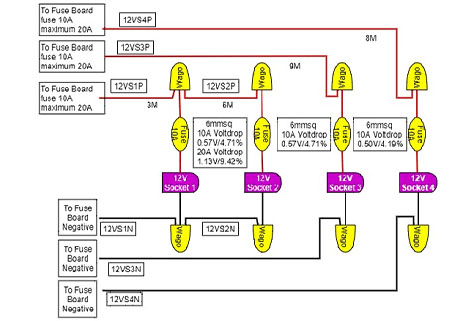
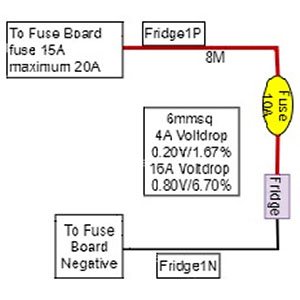
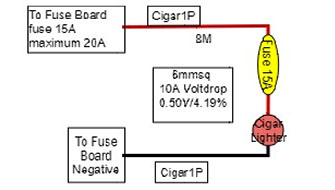
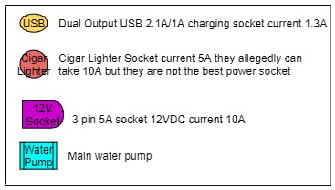 First the symbols chart and an explanation of each item the USB outlets, Cigar Lighter etc are I expect apparent what is not is the Wago. They are a modern version of the old chocolate block and a lot better. When wiring things like the USBs etc they can either be wired with one cable all the way back to their own individual fuse or the supply cable can be broken where each USB etc is to go and the supply cable broken and joined to run on to the next one.
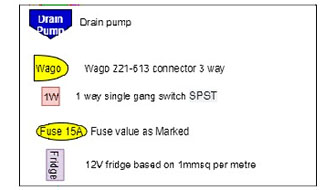 The Wago is the modern equivalent of the chocolate block connector but a 100 times better and unlike the Chocolate Block it does not damage the strands of the cables. It is also easier to fit, prepare the wire, lift the orange clip, slide the wire in, and push the orange clip back down job done. They cannot come open pushing the clip down locks them.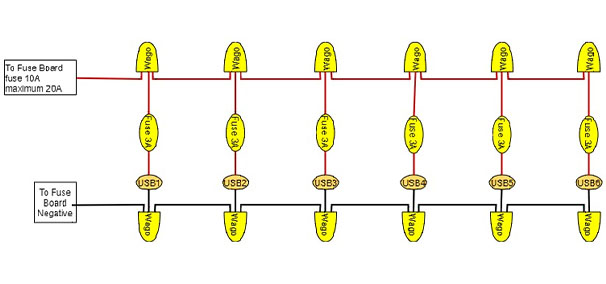
 For some reason which I am yet to fathom, I signed up to complete two half-marathons, three 10K races, climb Snowdon, the Yorkshire Three Peaks then, to top it all off, climb Mount Fuji. All within the year.
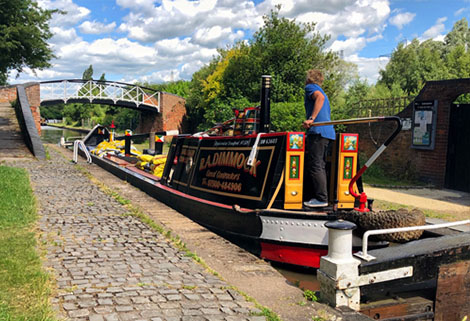 I don’t live too far from the canal. So why hadn’t I thought about it before? It’s quiet, peaceful, no traffic, no pollution, it’s interesting and there are no preening blokes. Actually, there are preening blokes, but that’s another story (see chapter 3). The towpath soon became my regular training ground but running back and forth along the same path soon became pretty boring.
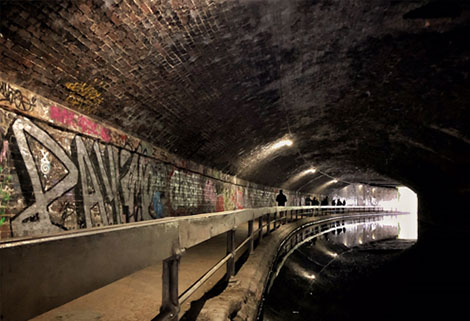 Luckily, I discovered the Warwick Ring on my doorstep. A 115 mile circular route in the Midlands, using 5 different canals, crossing 4 counties, connecting 2 cities, 7 towns and many hamlets and villages. You may have guessed it, I like a challenge. So, to make life a little more interesting, I decided to travel this circular route only clockwise, without turning back, and using public transport to get to the start and for the return journey home. This meant training sessions became much longer, often starting before dawn and always taking up the whole day, with lots of public transport (something I’m not too familiar with or very good at).
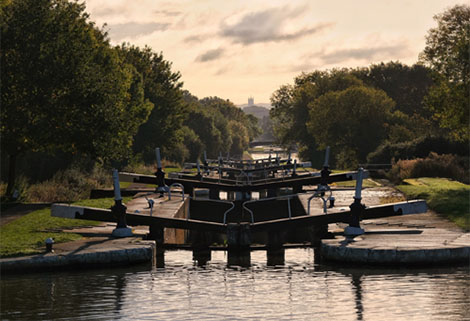 Well, this opened up a whole new world to me, travelling between idyllic rural tranquillity and industrial urban grunge. Seeing the wonders of our canal system up close and personal, much of it built around 250 years ago, with no satellites or software to work out the best route, or earth-moving equipment to dig the path. Concrete wasn’t developed until the mid 1800’s and the only means of transport across the land was by horse or foot.
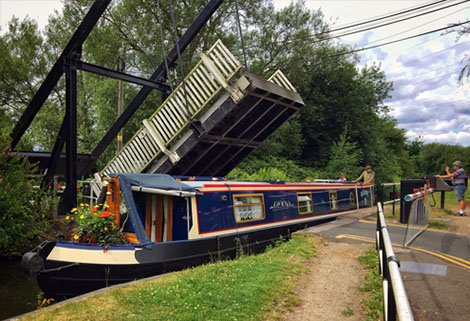 I was amazed at the sheer magnitude of this bold engineering project, built by Navvies using the simplest of tools, just pickaxe and shovel, a little gunpowder and loads of blood, sweat and tears. Travelling through my hometown, Birmingham, was like entering another world, one I didn’t recognise. It felt like I was crawling through the bowels of the city, literally seeing everything from a completely different perspective. I was awestruck.
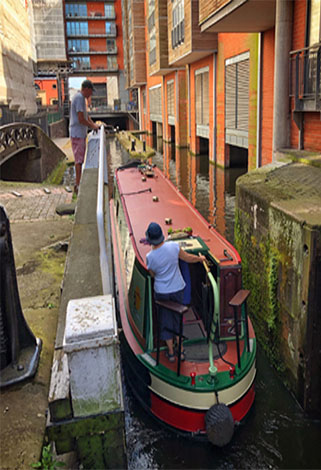 After completing the challenges, I continue to walk the ring, completing the whole route at least once a year. The slower pace allows time for the occasional chat with interesting and quirky characters along the way and with a rich vein of history to dip into and discover. From Iron Age to Jet Age, the Gun Powder Plotters to the Peaky Blinders, with some unexpected finds.
 Having to use public transport certainly adds a new dimension to the already entertaining canalsy goings-on, transforming my once boring training sessions into unexpected adventures, sometimes a tiny bit weird, often hilarious, always eventful and inevitably informative. There is also the occasional, unfortunate mishap along the way, but nothing too serious. Yet. I posted a few of these adventures onto my Facebook page and got some great feedback. Then, a friend of mine said “… why don’t you write a book?” And that was the seed I needed to create ‘Canal is King”.
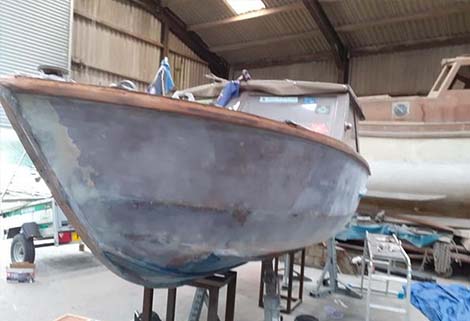
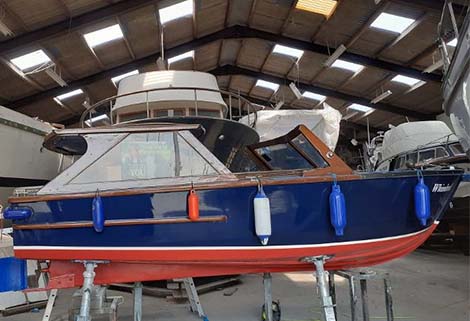
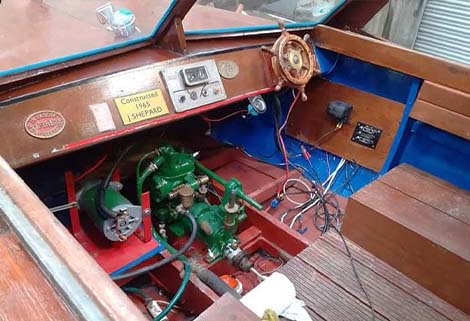
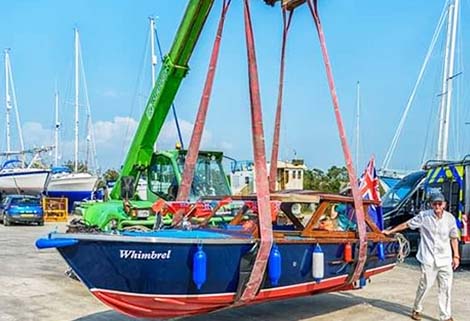

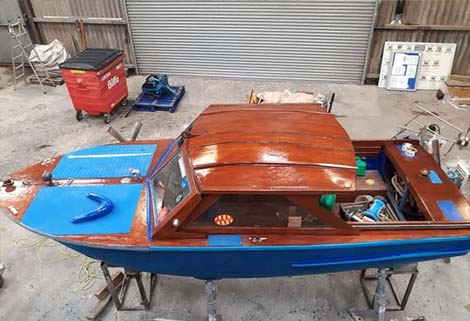 Colin, now already well in to another restoration project, is a regular fund raiser for the RNLI. He is currently planning a mammoth fund raising event with the RNLI for next year.
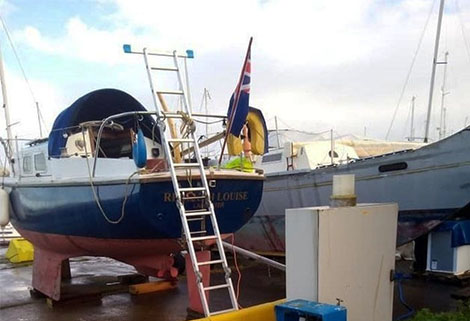 Colin is carrying out this second restoration in memory of their daughter who died when she was only three weeks old. Their daughter would now have been 20 years old.
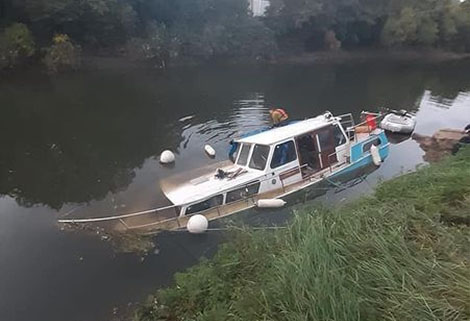 Following the failure of the Twerton sluice gates on the river Avon on Tuesday evening (15 Sept), River Canal Rescue has performed a logistical miracle, pulling teams and equipment together, at short notice, to recover 47 boats.
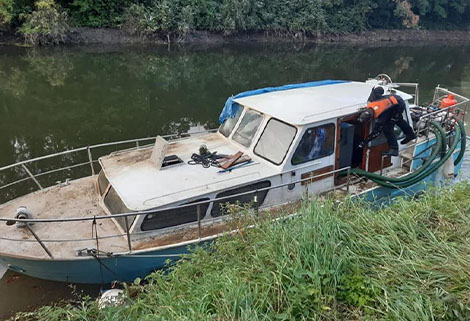 Despite supply issues created by the Covid climate, RCR met its deadline of Thursday to source and have all equipment on site and prepared for recoveries from 6am Friday.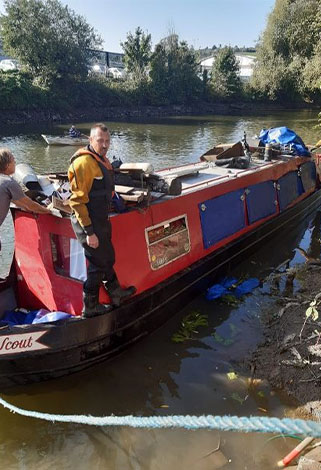

 Over the past year or so The Merchant Navy Association (MNA) and their Boat Club have agreed an operational partnership with the RNLI whereby MNA Boat Club members have been encouraged to join forces with the RNLI to promote the RNLI’s Respect the Water campaign to reduce the almost 200 fatalities as a result of drowning in and around the UK every year; 70% of those drownings occur on inland waterways where the RNLI has no lifeboat stations and hence no Water Safety officer or Advisers either so the MNA Boat Club have taken the initiative in the form of launching their new “MNA WaterWatch” scheme
 MNA WaterWatch, along with the recent introduction by the RNLI of their micro-volunteering “Local Ambassadors” scheme means that all members of the MNA and MNA Boat Club now have the opportunity to become Local Ambassadors for the RNLI to actively promote the Respect the Water Campaign.
 However the RNLI are well aware that many of the MNA’s members live inland and are quite often situated close to our rivers, canals, lakes or the Broads and the Fens and are ideally located to act as Local Ambassadors in those areas, so the MNA Boat Club is working with the RNLI to develop a Local Ambassadors focus aimed specifically at promoting safety on and around our inland waters.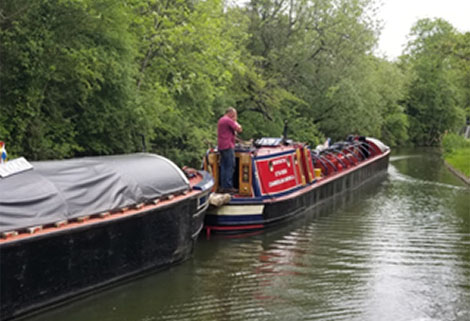
 In the early 1800s boat operators began to bring their families aboard, partly to save on rent at home and partly as 'free' crew to help with the work. Of course, living space on the boat was at the expense of profitable cargo space so the 'boatman's cabin' was tiny. Usually about eight feet long and often housing a family of five or more, it was a model of compact efficiency.
 Most have also retained some of the historical compact efficiency. They have all of the usual modern amenities; central heat, refrigerator, shower, etc. However, there is a big 'but'. Even though the modern narrowboat has many 21st century conveniences, they often come with significant differences from shore-based homes. I'll go through some of them one at a time, although they are often inter-related…
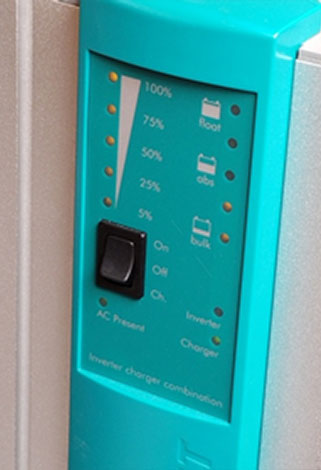 As with many things however, it's not always that simple. Lead-acid batteries (the usual car type) are quite finicky with their charging regime. They like to be kept charged up, and will break down and may fail if they're run down past about 50% of their capacity. So it's vital that close attention is paid to them. I've recently installed solar panels, which has helped immensely over the summer (not so much in the autumn and winter). They supply enough wattage that I don't have to start the engine for days on end if I'm not travelling.
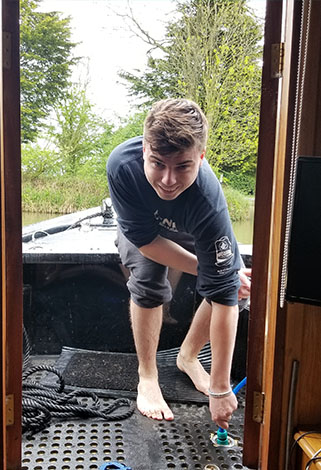 My boat, like most narrowboats, has a large-capacity water tank. I can go many days or even weeks without needing to refill it, and there are numerous water points around the system so obtaining water isn't a big problem. But again, careful watch must be kept. I've only run out once, and it's a pain. In a house the supply of water is generally seen as an endless thing, not to be worried about (except in an ecological, save-the-planet sort of way). I've grown very accustomed to only running taps, including the shower, as needed. Wet down, turn tap off, shampoo and wash, turn tap on to rinse. This actually goes double for hot water. The only ways to get hot water are by running the engine (cooling water is cycled through a 'calorifier' or hot-water tank) or the central heating system that runs radiators throughout the boat and also cycles through the tank. It's well insulated so I have at least 24 hours of hot water after only a short engine run but it's definitely something that has to be thought about daily.
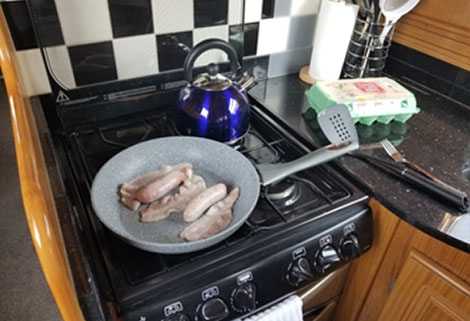 Within the limits of reality life can be very relaxed and carefree on the 'cut'. Where you take the boat is completely up to you (and your guests) as long as you stick to the parts with water. I have made some side trips on land as well, and with the great public transportation system in the UK, almost all of the country is within a few hours of a canal. There is a lot to see and do.