
art deco
on to the thames
There was one problem that we needed to overcome before we could cruise the Thames: we needed a licence from the Environment Agency, the government department responsible for policing the non-tidal Thames. The problem was that once we had submitted the application on line, the licence would be posted out to us, but our postal address was back in Sheffield, one hundred and fifty miles away. I called them and explained our dilemma and surprisingly, for a government department, they were extremely helpful and said they would send the licence to the lock keeper at Teddington, marked for the attention of Art Deco and we could pick it up as we passed through.
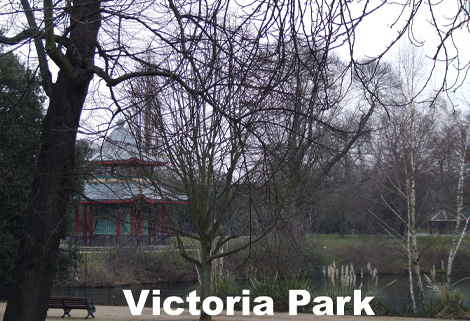
With that little problem sorted we headed down the Lea navigation, re-tracing the journey we had made over a year ago on our way to Roydon and on towards the Olympic park, an area we were fond of and had come to know well. Around Hackney Wick, just before Old Ford lock, a turn to the right would take us on to the Hertford Union Canal, (known as Ducketts) and past Victoria park to its end at the junction with the Regents canal. There is a cast iron foot bridge over the canal at the junction and the canal narrows considerably, making the turn to the right extremely difficult. For a craft the size of Art Deco it’s impossible to make it in one go and requires a lot of forward and reverse to get her round. The Regents Canal has its challenges, as we know from our previous journey, but fore warned is fore armed and this time we were prepared for the Islington and Maida tunnels.
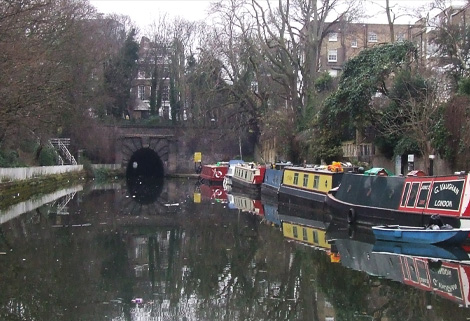
Safely through the two obstacles, we arrive in the wonderful Little Venice, where surprise, surprise, we find a mooring spot, so we take advantage of our good luck and spend a couple of nights there as previously we’ve never been able to get a mooring. We can’t linger too long though as our CRT licence expires at the end of the month so it’s onwards and upwards, as they say. We have a long stretch now before we meet the Grand Union canal around Hayes where we turn to the left and head towards Brentford, our entry point on to the river Thames. We are entering into unchartered territory now as we have not cruised this stretch of canal before, so it should make the journey more interesting.
According to the Nicolson Guide we have the Hanwell flight of six locks to negotiate and as we approach the first one someone begins to open the gates for us. It’s getting late in the day and we had planned to wait until the morning before we tackled them so I shout to him and he ceases his task and walks over and helps us moor up. He’s a CRT volunteer and we offer him a coffee, which he gladly accepts, but I have an ulterior motive, a little local knowledge I think is always handy. His advice is invaluable and he explains that due to repeated vandalism the lock is usually manned all the time and is locked when they leave at 4pm. He advises us to get into Brentford as early as possible because although there are good visitor moorings near the town centre they do fill up quickly. He tells us that the volunteers will be back at 10am in the morning which seems a good time to start as there are still three more locks after these six before we reach Brentford.
We are ready for the off when two CRT volunteers arrive at the lock around 10am and one of them asks if we are going down the whole flight. When I tell him that’s our plan he replies, oh good, we like an early workout first thing in the morning and we don’t know if he’s telling the truth or simply being ironic. Due credit to them though, they get on their bikes and proceed to work the locks as we travel down the flight and what we thought would be a very tough morning turns out to be very pleasant one.
We pass a place called Three Bridges, a rare intersection of canal, road and railway with the three bridges stacked on top of one another like children’s building blocks. At lock 94 the volunteer explains that the large building on the canal side used to be a lunatic asylum. Back in the day that was the name given to what we now call a secure hospital. He points out an unusual feature, a series of purpose built holes in the wall where the firemen put their hose, included because the inmates were constantly setting fire to the building! There’s even a bricked up portico leading from the canal for goods and inmates to be delivered directly into the facility. Ealing hospital has taken over the site but the section near the canal is still a secure unit and boasts it’s own farm, brewery and bakery.
The volunteers leave us at the bottom of the flight and we thank them for helping us negotiate the flight, leaving us with just three more locks to go before we reach Brentford. The next lock, Osterley, needs a BW key to open two of the four paddles and I didn’t realise so I had to go and find it and after we are through I keep hold of it, needless to say at the next lock Clitheroe’s, it’s not required. Never mind. We finally make it into Brentford dock and on first sight, it doesn’t look as though there are any free moorings, but a guy on a moored boat shouts over to us and directs us to a fourteen day leisure mooring, complete with a water point near by. What a day it turned out too be! The gods must have been smiling down on us, not only did we have help with the Hanwell locks but we’ve filled up with water and managed to get a fourteen day mooring in Brentford marina. It’s the little things in life that count!
Once we are moored we take a walk around the marina and agree that it’s very similar to Limehouse Basin, both are small tranquil havens amongst the hustle and bustle of a modern city. We come upon the marina office and chat to the lock keeper about the Thames and our passage on to it. We only need to book a time slot twenty four hours in advance, he tells us and as we still have two weeks left on our CRT licence we can relax and spend a few days here. Kew Gardens are just a short walk away, across the river so we will certainly spend a day there and from Brentford rail station we can get a train direct to Waterloo and spend some time in central London.
We meet the guy who pointed out the mooring as we are returning to Art Deco and he invites us on to his boat for a coffee, he has something unusual to show us he says, how can we refuse an invitation like that? We descend the rear steps into the main cabin and immediately see why he was so keen for us to come aboard, for dominating the space is a piano, now that’s something you don’t see every day on a canal boat! Ok his boat is a ‘mini wide beam craft at ten foot wide and the piano is an upright one, but even so it’s still surprising. He’s a northern lad from Manchester and has lived on his boat for the last ten years and moves every fourteen days to keep within the CRT regulations. He knows the area like the back of his hand and we spend a pleasant few hours with him as he passes on his knowledge. He knows the best local pubs too and we agree to meet him tomorrow lunch time for a few pints. Back on Art Deco, enjoying a glass of wine in the evening, we reflect on the day and how lucky we’ve been and hope that it’s a portent of what’s to come in the future.
We did take advantage of the full fourteen day mooring and enjoyed exploring the local area and discovered two museums in Brentford, the Musical Museum and the London Museum of Water and Steam. Guess which one we visited? It’s no contest, steam wins every time for me. We visited central London a couple of times and enjoyed a day exploring Kew Gardens too, so we certainly got our money's worth out of the mooring. We thoroughly enjoyed our time in the marina but it was time to move on, the river Thames was calling!
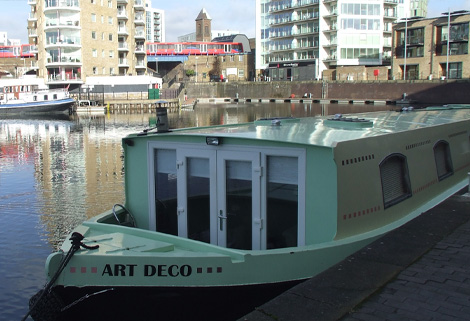
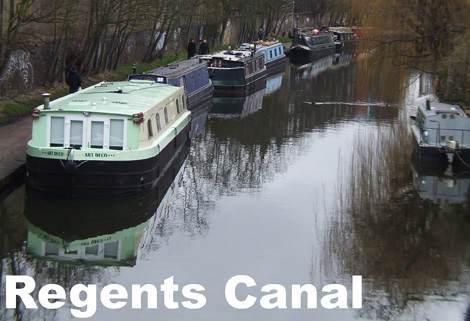
It was a bright and sunny spring day when we left the comfort of the marina and made the short cruise down to the Thames lock reaching it at 10.20, over an hour early but there was already a narrow boat waiting. Chatting, as we waited, we learn that the couple live in Berkhamsted and are planning to cruise up to Oxford. They have two boats but they haven’t taken this one on the Thames before and are a little apprehensive because it’s so low in the water. Looking at it, I think that I’d be uneasy too. They tell us they have seen our boat in Berkhamsted. We seem to be very memorable: everyone it seems remembers Art Deco, a case of once seen, never forgotten. They tell us that getting diesel on the Thames can be a problem because many of the marinas are gated and not open to the general public. There is a small marina at Reading which they use, just below Caversham lock with easy access from the river and I make a mental note. We were due to leave the lock at 11.30 but we don’t leave until 11.45am, apparently due to the tide, which seems like a lame excuse to me as tides can be predicted years in advance. Another narrowboat has joined us and they go into the lock before us and sit alongside our new friends and we follow them in. The lock is massive and our little convoy looks lost in the vast space but all goes well and we are cruising the Thames by midday.
The wide expanse of the river spreads out before us and looks quite daunting after the confined waters of the canal, but the going is easy and we are helped along by the incoming tide. We have cruised on rivers before, the Lea and Stort but they are little more than drains compared with the tidal Thames. When you think about the tide you associate it with the sea but the coast is miles away, yet the tide still has an effect on the river at this point. We are actually travelling up river, going against the natural flow but it doesn’t feel like that because the incoming tide is more powerful than the natural flow and in fact overcomes it and pushes us along. It’s also the sheer width of the river that’s the problem for me, I’m not use to being so far from dry land! But it’s strange how quickly you adjust to the different conditions and surroundings and soon our anxiety turns to enjoyment as we settle in.
We pass Kew Gardens and Syon House, the seat of the Duke of Northumberland and I have read that this stretch of river, between Kew and Hampton Court is called The Arcadian Thames because of its unique landscape, richly ornamented buildings and designed parkland. We cruise under Twickenham bridge and we are looking out for Richmond lock but we don’t need to use it because it’s only used at low water. Richmond lives up to its name, definitely top end real estate here and this is the theme of our cruise and you would expect no more from the most important river in the country. We have been cruising the river for a little over an hour when we see Teddington lock in the distance, the tidal lock. Once through the lock we are on the non-tidal section, the lock acting as a barrier to the ebb and flow of the tide. We have been following the two narrow boats that we shared Brentford lock with and enter Teddington lock in the same formation, the two narrow boats side by side and Art Deco behind them. They take off up river when the lock gates open but the keeper calls out, I’ve been expecting you, but your licence hasn’t turned up yet. Moor up at the end of the pontoon on the visitor moorings, he tells me and when you're ready come and see me and we’ll sort you out.
When we’re securely tied up I walk down to the lock and find the keeper in the hut, filling out paper work. He tells me it normally costs £8.50 a night to moor at the lock and it’s limited to no more than three nights but because we are waiting on the Environment Agency he will waver the fee until our licence arrives, which is a great deal for us, as we are in no rush to move on.
The mooring is across from the long and dramatic weir that stretches down to the bridge leading to Teddington town centre, and it is here that the flow of the River Thames is monitored and that can be up to 15,000 million gallons per day in times of flood. Teddington lock is the lowest and largest on the non-tidal Thames and is well known as the place where the river changes colour, signifying it’s the highest point to which the tide flows. Before the lock was built in 1810 the tide flowed eleven miles further upstream, as far as Staines before its effect was lost. The spring sunshine, it seems, had woken the good people of Teddington from their winter hibernation and the towpath is quite busy, it’s amazing how a little bit of sun cheers everyone up.
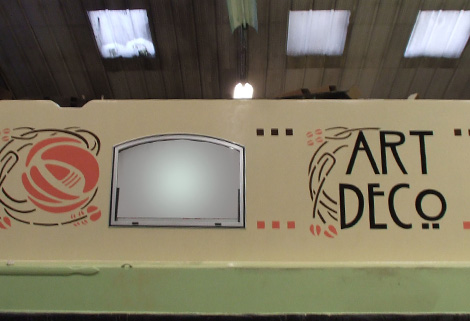
Quite a few people stop and talk, interested in the pros and cons of life aboard a boat, so I am intrigued when one gentleman doesn’t ask the usual questions but says; I like what you’ve done with the graphics, nodding to the logo on the side of the boat; it’s a modern take on the roses and castles that adorn traditional canal boats, he says. I’m shocked, he’s the first person to mention the graphics, so I ask him to explain his thinking, wondering if he really understands. Well, he says the stylised Mackintosh rose represents the roses and the squares represent the battlements of a castle… roses and castles. He’s right and I’m so pleased that someone has finally noticed it, but my euphoria is short lived when he says; The design's not Art Deco though, it’s more in the style of the Arts and Crafts movement, and walks away without further comment.
We take a stroll into Teddington and are pleased to see that the high street is similar to the ones in the towns and villages we visited on our trip up the Grand Union, holding the corporates at bay and keeping their independent shops, something that cannot be said for our Northern towns. After a pleasant stroll we return to the boat and spend a lazy afternoon on board because tomorrow we start phase two of TLC on Art Deco, we are going to polish the roof. We cleaned and polished most of the boat while we were in Brentford but didn’t get round to the roof. This short statement doesn’t convey the hard work that it entails and after three and a half hours on our hands and knees we are both knackered! We are now waiting for it to rain, the satisfaction of a job well done is to see the rain drops standing proud of the paintwork.
While we are working the lock keeper comes by and says our licence has arrived so I walk back with him and pick up the paperwork. He says that we can stay for three more nights if we like but we would have to pay £8.50 per night. We want to visit Strawberry Hill House which is nearby so I pay him for two more nights and we will make the visit tomorrow.
Strawberry Hill House was built in the early 18th century by Horatio Walpole, 4th Earl of Orford who was an English Whig politician, writer, historian and antiquarian. The house itself is a large and quirky Gothic mansion and is filled with Walpole’s eccentric collection of gothic items and a décor that can best be described as gloomy. It’s set in 46 acres of land and when we visited there was an exhibition of strange human/animal shaped sculptures and they looked perfectly at home in the landscape of this eccentric place. We enjoyed the visit and spent a full day there looking round the house and exploring the vast gardens.
It was time to move on though, we had been moored at Teddington for five days and the power in batteries was down to 55%. I had been advised not to let the charge fall below 50% so we were in need of a long cruise to get them back up to scratch and we were desperate to start our adventure on the Thames. We had a website designed and ready to go live but we thought we should hold fire and familiarise ourselves with our new surroundings and get to know the river a little better before we started taking on any guests.
