waterloo and the water

tales of the old cut

waterloo and the water

I would guess that pretty much everyone is familiar with the battle of Waterloo in 1815, if only as a name synonymous with something this country practically made a sport of in the past - fighting the French.

This battle was the culmination of more than 22 years of on-off fighting, and although all of it had taken place overseas, the ramifications on the home front had been (and would remain) significant; more specifically for our interests, it directly affected the canals and some of it played out here on the wharf at Preston Brook.

The story starts some 30 years before the great bloodbath of Waterloo, in 1780 with the birth of a baby boy named John Pennington.

Birth registry for John Pennington

The Pennington family were fairly typical and reasonably well off; Thomas was farming while his wife, Jane, produced a child every couple of years. The building of the canal and the wharf had improved the local economy and they seem to have had the foresight to realise that the canal was going to be a steady employer for a respectable man, and so made sure their sons had a decent education.

This was a turbulent time for the country, with Britain at war with both America and France, and the country was starting to feel the pinch of funding constant warfare overseas and with the rapidly changing landscape as the industrial revolution started to pick up. We don’t yet know for certain what happened, but in around 1786 Thomas lost his land. Although the local records now record him simply as a labourer, we can be almost certain that it is him that is the ‘Peninton’ working on the wharf as an early porter.

John was apprenticed (possibly to his uncle in nearby Bartington) and learned the trade of smithing, while his brother William went on to be a farm hand, and Thomas went to be a book keeper.

What happens next we may never know the real answer behind. We can conjecture that he was friends with Joseph Bennett, another Preston Brook boy whose father had worked with John’s both on the land and at the wharf (indeed John’s sister Mary had been baptised on the same day as Joseph’s brother William), and Joseph, who had joined up in a few years earlier, had told him how great it was in the army. Or perhaps John got caught out with the King’s shilling at the bottom of a beer mug. Whatever the trigger, on the 27th March 1809, John joined the British army at Manchester and joined the ranks of men in the 16th Light Dragoons, a cavalry regiment.

John was a grown man when he joined the army, but Thomas Cookson was a lad of about 18 when he joined the same regiment. As can be seen in Jane Austen’s books; soldiers at this time, with their their smart uniforms and air of adventure about them, had a great deal of sex appeal. Work was becoming a little thin on the ground for unskilled labourers, and food was in short supply too. Thomas, a poor labourer’s son from Frodsham, probably didn’t need much persuading to join the army.

Examination of injured soldiers - Thomas Cookson

We don’t know for certain how much they knew of each other, but we know that at the Battle of Waterloo itself Private John Pennington was in the Centre Squadron, F Troop under the command of Captain King, and Private Thomas Cookson was in the Left Squadron, A Troop, under Captain Tomkinson.

The gory details of the battle of Waterloo are easily available online for those who wish to be put off their dinner, so I won’t go into them here. For our story here, what is important is that our players came out the other side of it alive, and with all their appendages mostly intact.

Joseph Bennett was forcibly discharged in February 1819 when his regiment disbanded and no one else would take him as he was ‘lame’ on his left foot after it had been crushed. His next move appears to have been to come back to the area and take up as a boatman. We have a description of him: 5’5, with light brown hair, grey eyes, a round face, a ‘sallow’ complexion and a noticeable limp.

John Pennington stayed with the regiment for another 17 years after the battle, until he was forcibly discharged due to a rather unpleasant inguinal hernia. His movements are difficult to track but it seems he comes back and spends some time with his brother before vanishing off the radar.

Thomas Cookson was the first one to leave the army, and he too comes back to Cheshire a changed man. How he meets her we don’t yet know, but he meets Mary Millington, a canal labourer’s daughter in Moore. Mary is a woman with something of a past herself, with a teenaged son born out of wedlock, but they marry and move to Frodsham just in time for the birth of the first of their 2 sons.

Frodsham didn’t suit the family all that well and, perhaps thanks to a few words in the right place from his former comrade, Thomas gets a job at the wharf as a porter.

The wharf at Preston Brook was a busy, hard working place but, probably due to the large proportion of the workforce being firm Methodists, disabilities were worked around.

Thomas’s hearing grew progressively worse as the years went by until he was almost completely deaf, but he was a competent lip reader so the wharf just kept him where no one could sneak up on him. Even as a frail man of nearly 80 they found him light work to do, coiling ropes and sweeping floors. Interestingly, in 1871 he has Thomas Bennett and his family lodging in his house. It’s not for certain yet but it’s quite plausible that this is the nephew of Joseph Bennett.

With this small selection of veterans sat in such a busy corner of the waterways, it’s no stretch of the imagination to suggest that it was here our final character in the story emerges.

John Hopwood was baptised at about a week old in Wrenbury, appropriately enough on April 1st, and, like many boaters, he’s rather illusive as far as paperwork is concerned. Before 1857, the only probably glimpse we have of him is when he gets accused of stealing someone’s trousers in 1839.

Census - John Hopwood

We know that he was an intermittent boater working between London and Manchester on the fly boats, with regular stops off at Preston Brook. In 1857 he was a widower with a 5 year old daughter. Somehow, he catches the eye of a young lady nearly 20 years his junior and that’s when it seems that the stories start.

It probably started innocently enough by John telling his new sweetheart he had been a soldier, rather than a trouser thief, but in 1861 Hopwood was working for the Shropshire Union co on “General Havelock” and was insisting to everyone he was a decade older then he actually was so he could back up his claim that he wasn’t just a soldier, but he was also a Waterloo veteran.

newspaper cutting 1899

A decade later and he’s now on “Pacific”, and moored up at Grindley Brook. His daughter from his first marriage, Elizabeth, had married James Wildey the previous year (the Wildey family would later go on to be written about by ‘Questor’ for the Wolverhampton Express and Star) and it was around then that Hopwood started insisting that he had beaten Deaf Burke, the bare knuckle boxer, and that was how he’d got his broken nose.

In 1881 he’s master of “Dudley” and he’s now telling everyone he was born in Bengal and he’d also spent a few years travelling around with the circus before he came to the boats.

Something happens in the next few years that makes the Shropshire Union Co ask him to give their boat back, and by 1891 his youngest son is working in the Ifton colliery at St Martins to support him and his parents. This son, also called John, must have been having a hard time putting up with his father’s tall tales, not least of all with the none-existent army pension, and on one occasion went out, got blind drunk, refused to leave the pub and ended up being arrested and fined 10 shillings.

Unfortunately for Hopwood, his son died that year and left him with only his wife to support them by doing washing. She then died in 1895, and Hopwood took himself off to the workhouse and carried on embellishing his life story.

Hopwood died in 1900 having convinced everyone, including himself, that he was 101. There were doubters though, with one man noting that it was “people like (Hopwood) that convinced the world of the bargee’s habitual condition of lying”!

exploring the pocklington canal

a canal wanderer

exploring the pocklington canal

Pocklington Canal

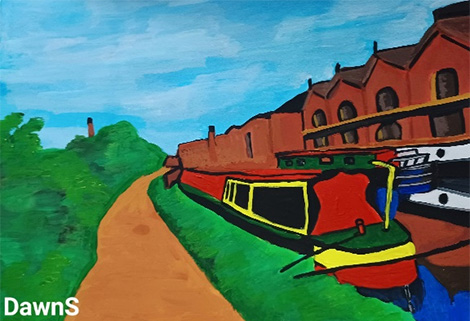
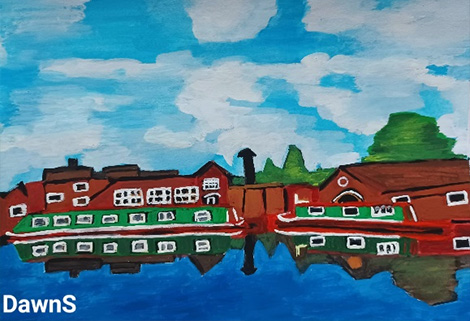
Pocklington Canal – Multimedia: Exposure photography, collage and acrylic by Dawn S Art

A broad canal in the North Of England which connects Pocklington, a market town in East Yorkshire, to the River Derwent. The canal is currently being restored and so far, 7 miles, from the river to Bielby Arm. The canal is designated as a Site of Special Scientific Interest with its site, attracting biodiversity with its rare aquatic plants and a wide variety of dragonflies and damsels.

Pocklington Canal

Canal Head, near Pocklington in East Yorkshire

Last year, my Dad and I walked part of the canal, most of the stretch yet to be restored, from Pocklington Canal Head, outskirts of the town, to the Melbourne Arm. It is good to see some of the locks restored and see the remaining ones that are planned. It was a pleasant walk being surrounded by the Yorkshire Wolds countryside and seeing swans on the canal. We walked approximately 6 miles as we walked back from Melbourne Arm to the Canal Head.

Pocklington Canal

Pocklington Canal

Worth noting is the Bielby Arm, which is a nature reserve and worth checking out. We do plan to walk from Melbourne Arm to the River Derwent in due course. It isn’t a busy canal with regards to boaters and walkers so if you’re for quiet spaces and beautiful countryside, this is the canal.

Pocklington Canal

End of the Navigable part of the canal

We also enjoyed a drink in Melbourne at its village pub, The Melbourne Arms. Though more restaurant orientated, the pub is a pleasant place to go and just have a drink. A pleasant afternoon exploring this not as well explored canal.

Pocklington Canal

Pocklington Canal – Multimedia: Exposure photography, collage and acrylic by Dawn S Art

Pocklington Canal

Pocklington Canal

cooking on the cut – autumn 23

cooking on the cut

with Lisa Munday

autumn 2023

This Autumn is all about enjoying a late and welcomed Indian Summer, with warm watery sunshine days and so much beauty as the leaves start to turn and the air is filled with those earthy smells as the fields are ploughed. The dry conditions have been perfect for gathering the fruits and berries of the hedgerows. Jams and chutneys are a big thing for me at this time of year and this year I have made more chutneys than jams, along with pickles and compotes. The biggest tip I can give you if you intend making preserves and chutneys is to get ahead and save those jars throughout the year.

The hint of cinnamon and warm winter spices also comes into play at this time of year, along with a return of one pot meals, the harvest festival pumpkin and squash along with those sweet treats, parkin, pies and crumbles.

So, celebrating the bounty of Autumn before those October mists start to roll in and the days shorten, I can share a few of my favourite seasonal recipes.

HOME MADE PICKLES
Try pickling; more or less anything goes. My general rule for pickling is 3,2,1 which is three parts white or cider vinegar, 2 parts water, 1 part sugar. Gently boil the liquids and sugar, then pour over your ingredients before jarring. Typical ingredients for pickling are cucumber, radish, peppers, cabbage, onions, spring onions, carrots. Add herbs, mustard seeds or spices such as cumin or fennel seeds for flavour. Store in the fridge and use within a few weeks. These homemade pickles tossed through a salad make the humble lettuce leaf much more interesting, or are the perfect partner to cold meats, quiche and cheese.

BLACKBERRIES
When picking make sure they “pop” off the branch, avoid soggy fruit, the centre stem as you pluck the berry should be green and not grey or brown, leave the soft ones for the birds.

blackberries growing

blackberries

BERRY AND APPLE YORKSHIRE PUDDINGS
A Sweet and fruity twist on the classic Yorkshire Pudding
60g unsalted butter
65g light soft brown sugar
1 egg
60g ground almonds
1 tbsp plain flour
2 tbsp apple sauce, homemade if possible
250g mix of mostly blackberries, add strawberries, blueberries and raspberries if you have them
6 ready baked Yorkshire puddings
1 tsp caster sugar
6 tbsp crème fraiche
Icing sugar to finish
Preheat the oven to 180 fan. Cream together the butter and 60g of the brown sugar until pale and fluffy, whisk in the egg and beat in the almonds and flour until well combined. Stir in the apple sauce and 100g of the fruit. Put the Yorkshires on a baking tray and spoon in the filling, top with 50g of the remaining fruit and bake in the oven for 25 mins.
Meanwhile put the remaining fruits and the remaining brown sugar in a pan along with the caster sugar and 1 tbsp water. Place over a medium heat for 2 to 3 minutes to make a sauce.
Serve each pudding with a spoonful of crème fraiche and a drizzle of the sauce, finished with a dusting of icing sugar.

apple and blackberry Yorkshire puddings

ROSEHIP SYRUP
Gather a few handfuls of rosehips and a handful of hawthorn berries and place in a pan, cover to 2cm above with water and bring to the boil. Lower the heat and simmer for 15 minutes, then allow to cool. Strain slowly and patiently through a muslin (or strong kitchen roll) carefully squeezing out excess juice. Add equal amounts of sugar to the liquid, i.e., 100ml liquid to 100g sugar or honey, and reheat slowly. Once the sugar has dissolved pour the syrup into a sterilised jar or bottle to store for up to four months.
Use served over porridge or yoghurt in a morning, as a cordial with cold water or hot toddy with cider. Can also be taken neat off a teaspoon for winter chills. Apparently, rosehips are a great source of anti-inflammatory vitamins which can help relieve the symptoms of arthritis!

rosehips growing

MULLED HEDGEROW CIDER
1 litre apple cider
2 bay leaves
2 sprigs rosemary
50ml rosehip syrup
A few hawthorn or rosehip berries to garnish
Pour the cider into a pan and add the bay and rosemary, heat for 10 mins until warmed through. Take the pan off the heat and add the rosehip syrup. Pour into heatproof glasses or mugs and drop a few berries in to serve.

BLACKBERRY CHUTNEY
This is quick and easy to make and once left to mature for a couple of weeks makes a perfect accompaniment to meats, cheeses, sandwiches etc.
300g blackberries
1 red onion, finely chopped
1 apple peeled, cored and finely chopped
Pinch ground cinnamon
¼ tsp chilli flakes
½ tsp dried ginger or finely grated fresh
½ orange zest
100g sugar
100ml red wine vinegar

Cook everything apart from the vinegar and sugar until softened for about 15-20 mins. Add the vinegar and sugar, allow the sugar to dissolve and then boil before lowering the heat to simmer for 20 minutes. You know the chutney has reached the consistency when you can drag a spoon across the base of the pan and it leaves a clean trail. Ladle into sterilised jars and leave a couple of week before using.

One of my favourites is “Cheesy Chutney Toast”
Gently toast the thick sliced bread and then spread a layer of chutney over one side. Mix grated cheese with a dash of Worcestershire sauce, ¼ tsp English mustard and a pinch of cayenne pepper, sprinkle over the chutney and grill for a few minutes until melted and oozy!

Homemade chutneys and jams will store for a year when unopened in a cool dark place. Once opened they should be kept in the fridge and used within a month.

CABBAGE
Autumn also marks the start of cabbage season and I view this vegetable as a “superfood” providing many health benefits and versatility in the kitchen. From a vegetable alone to using in soups, stir fries, salads and casseroles, it’s always been a staple for me. Cooked in stock and finished with black pepper and butter makes it special, or sauteed in butter with a little lemon juice and fresh herbs, add a few chilli flakes for a kick or a dash of cider vinegar, garlic and smoked paprika give it a Spanish flavour, Indian spices and coconut milk or soy sauce, sesame and honey for an Asian twist.

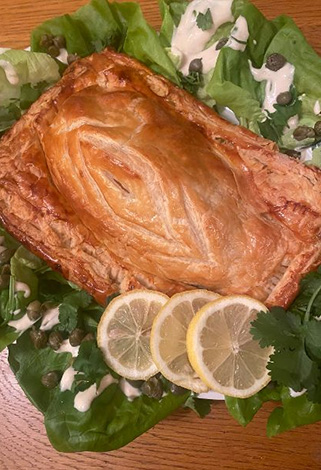
One pot meals are always a favourite when cooking on board. I’m a big pastry lover, but if you want convenience then shop bought puff pastry makes a change. Use a flameproof casserole dish or a skillet for oven to table serving.

CHICKEN, GREENS AND MUSHROOM POT PIE
300g chicken, cut into small chunks
250g mushrooms, sliced
1 large onion, finely chopped
2 garlic cloves, crushed
The leaves from 3 thyme sprigs, or 1 tsp dried herbs
300ml chicken stock
100g crème fraiche
1 tbsp wholegrain mustard
100g kale or the dark leaves of savoy cabbage
2 tsp cornflour
375g pack puff pastry
Egg to glaze

Use a shallow casserole bowl or deep skillet. Heat ½ tbsp oil over a gently heat and add the onion, cook for a few minutes until soft and add the thyme and garlic, then add the chicken and turn up the heat frying until golden and part cooked. Add the mushrooms and remaining oil. Add the stock, crème fraiche, mustard and greens and a generous amount of salt and fresh ground black pepper. Mix the cornflour with 1 tbsp of cold water and add to the pot, stirring well to thicken while over a low heat. Remove from the heat and cover with the rolled out puff pastry, pressing well round the sides to seal. Cut a slit in the centre to let the steam escape and then glaze with beaten egg. Bake for about 30 mins in a 180 fan, gas 6 oven. You’ll know it’s ready when the pastry is puffed up and golden brown.
A veggie version of the can easily be made by substituting the chicken for butternut squash or sweet potato.

pie

CABBAGE, BEANS AND FISH
Cabbage, white beans and fish also make a tasty one pot meal. Use a similar method to start off with onion, bacon, carrots, garlic and herbs. Add the shredded cabbage (savoy is best) and pour in about 4 tbsp white wine and ½ pint stock. Season well and simmer gently until almost cooked then stir in a tin of white beans such as flagelot or cannellini.
Dust the white fish of your choice with seasoned flour and pan fry, skin side down first for about 4 mins then flip over for a minute and place skin side up on top of the cabbage pot, lid on and finish on a very low simmer to steam the fish through until cooked.

cabbage greens and fish


BACON, POTATO AND ONION BAKE

5 rashers of British bacon, rind removed and roughly diced.
750g potatoes, peeled and thinly sliced
1 -2 onions (depending on size) thinly sliced
3 garlic cloves, thinly sliced
2 tsp mixed herbs
1 litre vegetable or chicken stock
1 – 2 slices (depending on size) wholemeal bread made into breadcrumbs
Savoy cabbage, finely shredded and steamed or boiled to serve.

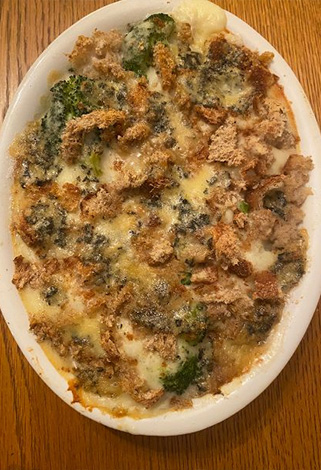
Preheat the oven to 180 fan. Gently fry the bacon in 2 tbsp olive oil until starts to crisp. Meanwhile bring the stock to the boil in a large pan and add the potatoes, onion and garlic, push down to submerge, lid on, simmer for 5 mins. Drain reserving the stock. Layer the potatoes and onion in a shallow casserole dish adding the bacon bits, 1 tsp of the herbs and fresh ground black pepper to each layer as you go. Pour over about 300ml of the reserved stock. Mix the breadcrumbs with the remaining herbs and 1 tbsp olive oil and scatter over the top. Cover loosely with foil and bake in the oven for 40 mins, removing the foil halfway through cooking to crisp up the topping.
Serve with the tender savoy cabbage.

KERALAN VEGETABLES

Finally, most of us have a love of curries. We have done a bit of travelling in India over the years and the last trip was Kerala. We first got the idea of visiting this Southern part of India after visiting a wonderful Keralan restaurant when we were moored in Newark on the river Trent. Here’s a Keralan recipe which is more of a stew than a curry!

1 tbsp oil
Spice ingredients
2 star anise
2 cloves
2 bay leaf
1” piece of cinnamon stick
1” piece of fresh ginger
8 – 10 curry leaves (available in dried spices in the supermarkets)
2 small green chillies

Vegetable ingredients
2 shallots or 1 small onion
1/2 carrot
1/2 cauliflower
2 – 3 green beans
Small handful green peas
2 cans thick coconut milk
½ tsp fresh black pepper
Pinch salt to taste

Chop all the vegetables and blanch in boiling water. Keep in cold water until ready to add to the pan.
Heat the oil in a heavy pan and all the spice ingredients and onion until soft and golden, take care not to burn the spices. Drain the vegetables and add to the pan along with the salt and pepper. Add the coconut milk and mix everything together. Cover and cook on a very low simmer with the lid on, or in the oven for about ten minutes.

keralan vegetables

I hope you’ve enjoyed reading my Autumn article, please feel free to email me if you have any questions or take a look at my “canal cuisine” page on Facebook. In the meantime we are working together to bring you more recipes through CanalsOnline Magazine.

return to the scene of the design

return to the scene of the design

architects review old proposals for canal improvements beneath the Westway Flyover

The smooth underbelly of the Westway Highway swings wide over the Grand Union Canal at Westbourne Park, creating a ceiling for the towpath and ½ a dozen canal boats moored below.

For architect Matt Hopkins, it's a sight to behold whenever he cruises into Paddington on his 70’narrowboat. But the breath-taking infrastructure has a troubled history; its construction in 1971 displaced over 3000 North Kensington families. Resulting controversy helped produce much more extensive neighbourhood engagement ahead of similar developments today.

In the half century since, the City of Westminster has responded to the Westway’s intrusion with a number of measures: A sports complex at Shepherd's Bush. Offices and shops at Portobello Road. But at Westbourne Park — where a football pitch length piece of land could support an all-weather market, musical performance, or whatever else the public wants — time stands still.

Why a place with such potential remains a destination for rough sleepers, scofflaw dog walkers, and occasional boaters refitting their interiors is a question I hoped to answer at a discussion Hopkins recently led featuring architects reviewing old proposals to re-imagine the space.

The discussion was part of a weekend program called "Building Dialogues" ̈the latest in a history of interventions for this persistently challenging spot. Besides an architectural discussion there was music, educational workshops and a visioning exercise for boaters and borough representatives. All to demonstrate the variety of programmes the space lends itself to, and which were last seen there during a month-long 2019 London Festival of Architecture installation.

I had been a participant in that, loaning my boat and its full length stage to the team who contributed the winning entry, the ̈Co-Mooring ̈, which for 30,000 pounds attempted to unite land and water, encouraging more and better interaction between boaters and visitors to the canal. Its lofty ideas collided with reality, however, when cyclists objected to its sinuous boardwalk and local hoodlums asked for money to not burn it down.

With more continuity, these might have been valuable learning experiences, except the final stakeholders ́ discussion atop Molly Anna was interrupted, and — with Covid around the corner — never resumed.

westway flyover

¨This place STILL needs love.¨ Architect Sophie Nguyen first drew attention to the canalside opportunities of the Westway with her 2017 LFA project.

Westway Flyover

A 2019 London Festival of Architecture competition produced the ¨ co-Mooring¨ to encourage more interaction with people on the canal.

Four years later we reviewed the list of 49 companies who had submitted proposals for the 2019 competition. Architectural firms KMBH, Sisters & Tiger, Merritt Houmoeller and Make:Good all had received £500 to further develop concepts to temporarily transform the space. Though none were ultimately selected, all wanted to publicly review their old plans and discuss what might still happen.

The architects sat on chairs sandwiched between a vendor selling samosa chaat and an upright piano wheeled in for the occasion. They joked about their professional lot...submissions for design competitions that never pay the bills...but to which they repeatedly succumb, stubbornly believing that the right mix of ingredients can turn urban blight into community gold.

Asia Grzybowska from Sisters and Tiger had driven the furthest, 5 hours from Cornwall, to discuss why no such alchemy had happened here. In a sterile space animated by graffiti but not a blade of grass she related the story of a garbage strewn median in Oakland, California, and how a surreptitiously installed ceramic Buddha had sparked a metamorphosis. People brought flowers. It became a shrine. Crime fell by 80%.

With sympathetic City of Westminster leaders showing renewed interest in canalside opportunities, could something similar happen here? Community-led, in lieu of major investment?

What user groups could be induced to adopt this space? What changes would inspire a similar transformation as Vietnamese pilgrims had brought to an unloved highway median in Oakland?

Ladbroke Grove’s musical community could play a role, suggested Ben Crockett and Jezmond Farran, musicians who waited to perform on the event ́s floating stage. Local legends Hawkwind, the first space rock band, had played there in the early 70s, demonstrating the enduring appeal of the place, the only covered — and therefore weatherproof — stretch of canal in London.

westway flyover

¨Building Dialogues¨ was funded by the Westway Trust to revive interest in the site.

westway flyover

Boaters, residents and representatives from the City of Westminster share their visions.

Fifty years later, what stymies a design that will transform this space? So that vendors can sell goods, boaters can responsibly dispose of rubbish, cyclists can fix their bikes and no one gets run over?

The chief impediment — the architects concluded — is the site's ́complicated ownership. Each team had had to speculate on what various entities would approve: the Highway Department which owns the overpass, the Canal and River Trust which owns the towpath, Great Western Studios which owns a sliver of land and the City of Westminster which owns the rest.

“The Borough,” Hopkins said on behalf of everyone, “is the only entity that will be here in 300 years. They need to convene the other stakeholders and see what modifications are allowable.”

  • Would the highway department allow public artwork and lighting on the underside of the Westway?
  • Would property owners allow a storage facility for items needed for pop-up events to encourage further use of the site? tables and chairs? bins and bin bags? work benches for boaters and cyclists to do repairs?
  • Would the bus facility allow lowering of the retaining wall and removal of barbed wire as elsewhere along the retaining wall? Opening up views and allowing light to penetrate?
  • Would CRT create a bookable mooring(s) for roving traders to sell items and act as caretakers? Could a uniform ground treatment be installed, to reduce conflict between users and allow for greater flexibility of use?

Hopkins cited the Royal Parks for demonstrating how a uniform surface and appropriate signage can induce cyclists to give way to crowds and during events.

With those questions answered architects could produce a final design to heal a historic wound and with it, perhaps, create a new paradigm for local government, CRT and private entities to collaboratively wring utility for canalside locations across London.

canals on the decline

dawncraft chronicles

canals on the decline

We live in a canal side cottage, or rather we did in 1805 when the Somerset Coal Canal was opened. The canal actually ran so close that they piled the earth up against the cottage, so the kitchen appears to be 3-foot underground. Indeed, the neighbours still have the bridge in the garden and the loading bay for the earth mill. An evening's walk to the pub in Combe Hay passes bridges well cut with gritty ropes, and deserted locks complete with gates that haven’t seen a barge since 1898. It was then that the canal was replaced by the Camerton Branch Railway – which ran almost through the bottom of the garden and was immortalised by the 1950s film the Titfield Thunderbolt (about a group of railway enthusiast who wanted to save their line).

This sort of leads us neatly into this article as I have just read Sou'wester, the Inland Waterways Magazine and this has got me thinking.

The work being carried out and dedication to the cause should be applauded and recognised: parts of the old Coal Canal in Timsbury and Paulton now have water in them for the first time in over 120 years. Add this to work on Wilts and Berks, various canals in Gloucester etc., and it could be true to say that there are as many canal projects on the go now as there were during the  canal mania (the period of intense canal building in England and Wales between the 1790s and 1810s). One cannot but think the future of our network is a foregone conclusion considering the benefits to wildlife and to humans with walking, cycling and water pursuits. Plus the re-instatement of a simpler slow pace of life.

However, my concern is history will repeat itself.

The Somerset Coal Canal is a good point: it was extremely profitable in its day, making money for the company and more importantly for its share holders,  by moving a commodity that was becoming essential for the industrial revolution - coal. The canal was shut down and business converted to rail, because you could move more coal quickly and easily and thus make even more money. Until, eventually, 50 years after it was built, that too closed down because they mined out. The Bath council made good use of the canal's bed by filling it with the town's rubbish- which promptly caught fire and burnt for years !!! but is still a good source of old railings, glass bottles - you name it (even most of the toilet block from the old Somerset and Dorset railway station)!

Combe Hay, Bath derelict lock

Dundas - Coal Canal near Bath

So here’s the rub in the same magazine DEFRA have cut the grant to CRT by £12.6m a year. to quote the magazine, that means that means:

  • Being unable to do winter maintenance on 586 miles of waterway.
  • Being unable to operate maintain and repair 156 miles of waterway.
  • 50 0/0 of the spend on reservoirs will be unfunded (one assumes these are to feed the canals with water?)

Add into this a recent BBC article on the Regent Canal boat dwellers, which I felt was skewed to highlight the fact that most residential canal boaters burn fossil fuel – the very thing the canals were built to transport - as well as running their diesel engines for hours in the winter to make and store a minimal amount of electricity compared to the energy used to make it – all rather bluntly pointed out in the article.

We are all struggling financially, none of us can really sustain an increase in licence fees, along with fuel costs etc. We have tightened our belts to the last hole and there’s worse: we have no time. Many of the people who are near retirement, or have already retired, are now raising grandchildren to keep their own children working to pay the endless bills. The skills required to maintain and restore a canal are dwindling, "retired stone masons , blacksmiths, brickies..." Soon the only skill any one can offer will be  "management or IT".

If we are going to save our way of life, we all need to start thinking up better arguments than environmental / green and social benefits and concentrate on the only thing government ministers ever understand. They are, I suppose, the equivalent of the old shareholders £ Sterling, and their 20% cut on any revenues raised. Today we have grown weary of the deadline headline. Ten years to save the planet, etc and gluing yourself to a canal could be problematic. However, I am concerned that history will repeat itself and the slow painful decline of our precious waterways will become evident by the end of my time.

should we stay or should we go?

should we stay or should we go...

Our travels this year so far have been anything but straightforward with the amount of different issues we've had with every canal we've been on.

We've had restrictions due to low water levels, broken locks and bridges on the Macclesfield, Trent and Mersey and the Peak Forest canals so far.

We're currently 'stuck' on the Peak Forest Canal because of a broken lift bridge, although we did have the opportunity to leave the canal on an assisted passage before CRT closed the bridge a few weeks ago.

We chose to make the decision to stay between Bugsworth Basin and the broken bridge (24) because there's just so much to do in the area and we love the town of New Mills.

Edale

map of the Peak Forest Canal

There are 2 train lines running through New Mills giving us access to Sheffield, Manchester, Buxton and the Peak District and as we're keen walkers, we're happy to be able to walk in so many beautiful places.

We've been to Edale, Hathersage and Grindleford to walk in the surrounding areas and visited the East Lancashire Railway via Manchester and Bury.

New Mills is a great little town with a real community and there are fabulous cafés and pubs everywhere.

New Mills

Edale

It seems perverse to choose to stay in one place whilst living on a narrow boat, but being able to fully immerse ourselves in the area feels very special and it really will be a struggle to leave when the bridge is finally mended....let's hope it's not too soon, we've still got walks to do!

NB Grace at Bugsworth Basin

Cracked Edge, with Karen and Rob

washing day

the boating bard

washing day

I've been feeling wishy washy
On this narrow boat of mine
I'm an uneasy Widow Twanky
Cast in a personal pantomime

I have urgent laundry needs
The basket is very full,
But the weather's not looking too favourable
The skies are grey and dull

You can almost guarantee it
As the machine begins to drain
There'll be a few preliminary spots
Followed closely by biblical rain

washing hanging up to dry

There are hazards of drying inside
There'll be moisture in the air
But I need to get my washing on
Because I'm short of underwear

There'll be a lot of condensation
On windows, blinds and bungs
Misting up my plastic cratch covers
And settling on my lungs

With dripping knickers and socks
and damp clothing in my face
Every available surface gets used
But there's really not the space

I've a couple of collapsible airers
And folding spider creations
And radiators that I won't turn on
Not keen on steamy inhalations

Towels are a drying nightmare
They don't vaporise as they should
In Winter I put them by the fire
But then they stink of coal and wood

Drying bedding is most unwieldy
Ghostly sheets hang upon the doors
Pillow cases drape like wet bunting
And I can't cope with all the vapours

I could book for a service wash
If I can find a launderette
But I don't air my washing in public
Preferring my soils to stay private

rags to rich things

rags to rich things

Part of the joy of owning a canal boat is having a floating second home. It is here that you can really go to town with decor.

This is the space to get in touch with your inner eccentric.

A canal boat can be as unique as you are.

Bright colours, everything painted, not so much retro as nineteenth century, capturing the essence of the original boat traders.

Crafts are back as YouTube means that skills are easy to learn and the growth of knit and natter style crafting groups makes it easy to pick more experienced brains (and hands) for tips and advice.

Rag work is great. Charity shops are overflowing with fabric. Coffee shops sell (or even give away) hessian sacks. Rag rugs are easy to make, machine washable, apt for a canal boat and add that little touch of you, your own work, your own style, to your floating home.

With a little forethought you can co-ordinate fabric in patchwork and rugs. Scatter cushions are a good project as they are small enough to complete in a month of evenings.

Beginning a large project like a quilt is best left until you really do have the time to get to the end.

Rugs grow quickly and can be made in an hour here and an hour there.

Bunting is very in at the moment. It’s easy to make and adds a great touch to your boat. Just make a triangle pattern from any old paper. A4 is an ideal size to cut down. An afternoon with a sewing machine is ample to make enough bunting for a boat. After all, the whole point of messing about on a canal is to have fun. Bunting says party. This is what you chose your boat for isn’t it?

If you are interested in making your own rag rugs you may like to check out my YouTube video by clicking on the link below.

The disadvantage is that your friends will soon be asking you to make a rug for them too.

Rag work can also be addictive. You’ll soon find yourself trawling charity shops for interesting fabric. It’s great fun.

grounding advice from rcr

grounding advice from rcr

River Canal Rescue says a recent callout on the river Severn, where a vessel became grounded upstream after taking the wrong turn at a junction, underlines the importance of knowing what to do if a boat becomes stuck. And with low water levels, sand bank and silt build-ups, debris and weed-filled waterways increasing the risk of grounding, RCR managing director, Stephanie Horton, offers the following advice:

Grounding can occur anywhere if you stray from the middle of the water course, cut a corner to take the shortest route or fail to check water levels before setting off. It’s therefore really important to find out, where possible, the protocols and what’s happening in the area you plan to navigate. Situations will develop all the time, so be aware of the risks around you and be cautious while cruising.

If you run aground, put on a life jacket and put your boat in reverse to see if you can move away from the obstruction. If this doesn’t work, walk around the vessel testing the surrounding water depth with a boat pole. This will pinpoint where the water’s shallower and where the problem is. On rivers you can usually see it - rocks or gravel for example - as the water’s clearer.

narrowboat grounded

If the front of the boat’s grounded, move some of the ballast that may be holding it down. The water tank is always at the front of a narrowboat so turn on the taps to empty it and move heavy items such as gas bottles, the anchor and any chains to the rear – this will give the boat more buoyancy at the front and potentially lift it a vital few inches which may be all it needs to clear itself. Half a ton of water can create a six inch difference. If it does clear, put the boat in reverse.

If the boat’s grounded on one side, it’s a similar scenario; move anything that’s weighing it down in this area to the opposite side. Do this in cautious stages - if you over-balance, the vessel will list and it could end up taking on water.

If there are people onboard, position yourself at the helm and ask the remainder to rock the boat gently; the momentum may move it. If the rear of the boat’s aground and the propeller’s lifted (which is a rare scenario), you’ll probably need a tow.

While it’s tempting to ask a passing boater for a tow, this should only be undertaken by an experienced boater. We’ve had cases where the person towing the vessel has got into trouble and we’ve ended up rescuing two boats. Also, anyone on a hire boat will invalidate their insurance if they try to tow you, so it’s better not to put them in that position in the first place.

If you‘re able to free your vessel, check it thoroughly at the first possible opportunity – particularly the hull – as this could have been damaged.

During the peak season, RCR regularly gives phone assistance to people who have become stuck, and although many callers are then able to move their boats, around 40% require support from a rescue team.

living on a boat

living on a boat

that's too darned small to live on

a tale from Amanda's perspective...

When you’re young and you run away from all that you know, you don’t really get time to think of anything much that is practical. You just go, often to be picked up by concerned and somewhat annoyed family members a few hours later. When I embarked on my waterways adventure I really was at least practical enough to get as many home comforts aboard as I could but I never thought about spring turning to summer and thence to autumn and colder weather.

Much as I love her, Mayfly is just fifteen feet and six inches long, made of rather thin wood, has no heating and very little space. Way back when I was a stroppy teenager though, this was my chosen home as we set off to prove that you could carry cargo (ours being a box of wristwatches) and to sort the situation that made me take the seemingly desperate measure of effectively stowing away on a boat belonging to someone I hardly knew. My parents were, out of necessity, in Spain so there wasn’t anybody around to repossess me as we set off on what a lot of people would see as a fool’s errand.

wintry shot of canal

moored boats

The weather was kind to us at first but time does move on and the almost imperceptible signs of a turn towards the autumnal started encroaching. Colder mornings, shorter nights, rain and drizzle making just about everything damp. Even my socks went mouldy one day, which could have put me off the lifestyle but didn’t. What I was becoming aware of was the fact that this part of the adventure was finite. I still loved where I was though and kept coming up with seemingly daft ideas, one of which was to keep the cabin warm at night with hot bricks in an old deed box. It worked a bit and we felt like we’d beaten the weather as we watched the leaves turn brown and then fall all over the place.

This may be very picturesque to the photographer or calendar maker but when you are trying to work a lock whilst walking on a surface that feels like it’s been treated with the best quality axle grease, the romance can fade a little. Actually, after the third time you land on your backside whilst working your way up a flight of narrow locks, I can assure you that it fades quite a lot! There’s always a but though and I remember so well the feeling of triumph over adversity as we sailed out of the top lock. We were both well plastered with mud and it was drizzling but it was another obstacle that I’d traversed without any injury, except to my pride!

Frost was a new thing which, when added to the leaves, made life really treacherous but we still plodded on with out little boat and its polished black outboard. If anything, the weather brought out a sort of house proudness that neither of us knew we had. Yes, of course, we were two youngsters travelling around in rather less regulated times, on waterways that the government would have loved to have filled in. We often travelled all day, or days even, without seeing another boat on the move or even a human being.

moored boats on canal

lonely canal

Mayfly could have been filthy and smelly but she wasn’t. Every bit that was made of brass was burnished until it was so bright it could have been mistaken for gold, the woodwork buffed up with the beeswax polish that I liberated from what had been my home before I was evicted by people that wrongly thought it was theirs. Finally that shiny black outboard was shone up with some very good car wax that we bought during the summer when our funds were in a bit better shape. If I felt any remorse for running away, or lack of enthusiasm for the next day, all I had to do was take a look at this beautiful little varnished clinker cabin cruiser that was little more than a day boat and I felt that all would be well.

We were clueless back then, even to the point of not being sure if the strip of water we were moving along was a canal, a remaindered waterway or (heaven forbid) a cruiseway! We achieved things almost by accident but still we progressed. To say that it changed my life would be understatement. It pretty much blew everything I knew clean out of the water. We were not supposed to be where we were and certainly doomed to failure according to pretty much all prevailing opinion. The fact is that we were both alive, well fed, mostly warm, and progressing. I was aware that the progression would eventually lead to us having to return to what was my home and face the music but that wasn’t for the moment we lived in. We were facing up to the ever worsening weather as well as the tasks we’d set ourselves and we appeared to be slowly winning.

Of course now I’m a lot older, and Mayfly is sitting as beautiful as ever on the water whilst the leaves slowly begin to match her beautifully varnished hull and cabin. I can’t help thinking how absolutely stupid I must have been to even think of setting off on a voyage with a stranger over half a century ago when I was still of school age. Back then though there was an atmosphere that anybody could do anything and big changes were afoot, so I went without a second thought. My reflective mood was set off by a radio program about diaries from various celebrities’ school years and what advice they’d give themselves from today’s standpoint if they could. What would I say to my young self if I was suddenly plonked back over fifty years
to that first day. My answer is nothing at all. I’d do the same again in a shot and I blooming well know it!