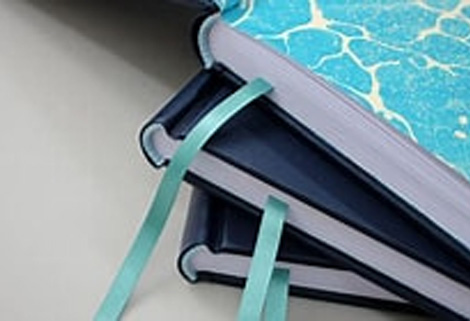
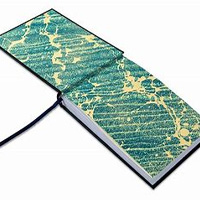
handmade British log books for canal boats
by William Bruton, English Logbook Company
A hidden way through the country
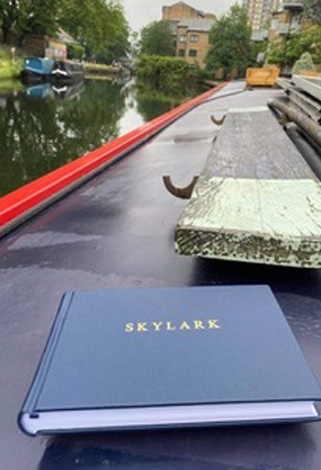
Discovering the UK canal system on a friend’s canal boat was rather like the search to find the craftspeople I needed to make the logbook I wanted to buy. Through canal cruising, within days, I became aware of an arterial system that opened parts of my country I would otherwise never have seen.
The transition from rural countryside to the underbelly of a city like Manchester is gradual, and that is part of the pleasure. You do not arrive with a bang. You slide in under bridges, past back gardens, railway arches, old warehouses and lock cottages, until the city has revealed itself from an angle few people know. Step onto the towpath and you feel you have come in through the side door.
That is what I enjoy about travelling this way. The canal does not present the polished front of a place. It shows you how it joins up. You see the seams. A village, a stretch of industry, a basin, a row of terraces, a pub garden, a church tower: all of it connected by water. The pace helps too. At canal speed, detail has time to register. A good mooring, an awkward lock, a useful chandlery, a stretch worth returning to. The journey is built from small things, and that is exactly why it stays with you.


Finding the people to make the books
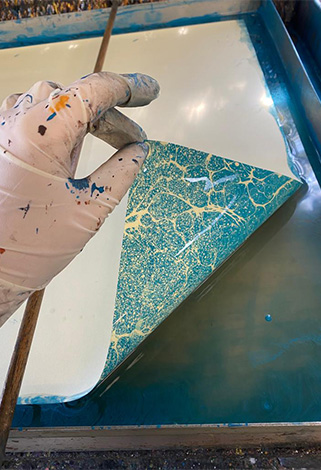
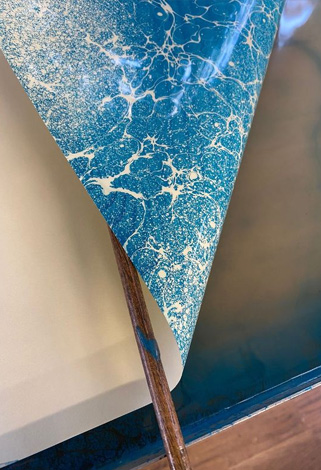
Searching for craftspeople to make my books, I found trades largely hidden from view still very much alive in corners of the country. Brought together, they made what I had imagined possible. Bookbinding, printing and paper marbling are old skills that complement each other, and I found them not in some abstract idea of British craft, but in real workshops, with real people, still doing the job properly.
I had decided to start making books whilst sailing in the Mediterranean, but it was returning home that made it possible. I wanted a logbook that suited the way I actually used a boat and could not quite find one. There were plenty around, but none felt right. Some were too generic, some too flimsy, some seemed to understand the form without understanding much about life on the water.
What I found, once I started looking, was another hidden network running through the country. Not canals this time, but skilled trades. Quiet, specialist work that is easy to miss unless you go looking for it. That felt important. If the book was going to be useful, durable and worth keeping, it ought to come out of that world. English Logbooks grew from that idea: bring together the right people, make the thing properly, and produce something that earns its place aboard.


More than a maintenance record
When we were asked to make a canal book, I quickly learned that it is the richness of life on the canals that makes it worth writing down. Like many of our sailing customers, canal boat owners want a useful record of maintenance, but the best logbooks become more than that. They become a scrapbook of life well lived afloat.
There is plenty of practical value in keeping one. Engine hours, fuel, pump-outs, battery changes, blacking dates, odd faults and jobs done all deserve one place to live. Most people think they will remember this sort of thing. Most do not, or not clearly enough when it matters later.
But that is only half the point. The better entries are often the less official ones. Great pubs. Friends made. New stretches of water discovered. A difficult day. A perfect mooring. Failures candidly recorded to be laughed at later. Tom Cunliffe, who designed our yacht logbooks, has long understood this. A logbook should be a technical record, yes, but also a record of the life around the boat.
That feels particularly true on the canals. Inland cruising is full of detail, and much of its pleasure lies in the accumulation of it. A good logbook gives that detail somewhere to stay. Over time it becomes not just a record of where the boat went, but of the life that gathered around it.
William Bruton says "I’m a yachting journalist by trade and I started the English Logbook Company whilst working as a yacht skipper in the Mediterranean. I couldn’t find a logbook that felt of a suitable quality to use on board — something properly made, practical, and worth keeping — so I set out to make one myself.
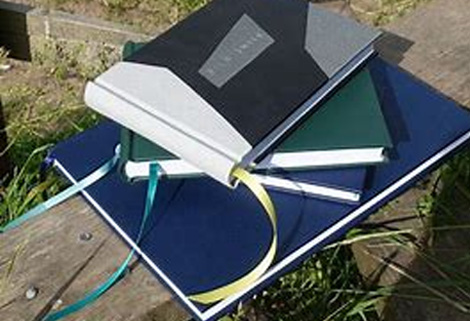
That grew into a small company making hand-bound logbooks for life on the water, all completely handmade and finished with hand-marbled paper.
Having spent more time on the inland waterways as well, I then created our Odyssey Inland Waterways Logbook, made specifically for canal boat and river users.
The books are designed to be genuinely useful on board, but also to feel special enough to give as a gift. They work particularly well for occasions like a new canal boat being launched for the first time — for example, a new Braidbar boat — where the owner wants something personal and lasting to mark the beginning of that boat’s life.
