domestic water tank maintenance

domestic water tank maintenance

With more cruising downtime, this is the perfect time of year to undertake maintenance tasks. One area requiring attention is the domestic water tank, so here, River Canal Rescue advises on the different types of tanks and how to purify them.

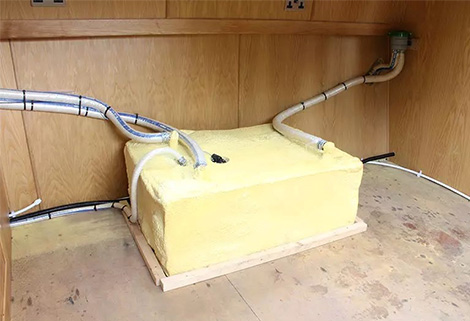
Typically constructed of three types of material; plastic, stainless steel or mild steel, each water tank has differing maintenance requirements and associated risks.

The highest risk material is mild steel - it reacts with oxygen to produce rust which drastically depreciates the water, creating an environment for bacteria to develop. While the bacteria is not known to be dangerous, if a bacterial infection takes hold, it can give the water a foul smell and taste. When inspecting the tank, the bacterial infection will look like slime attached to the sides.

Plastic tanks offer greater protection from bacterial infection however, dependent on material and age, they will start to release toxins into the water when they begin to break down so it’s important to replace plastic tanks in accordance with their shelf life.

They’re also more likely to absorb or hold any chemicals added to purify the water. For example, the chemical in purifying tablets used to flush the system may remain in the water for a year or so and while these toxins are not dangerous, a chemical smell and taste will persist.
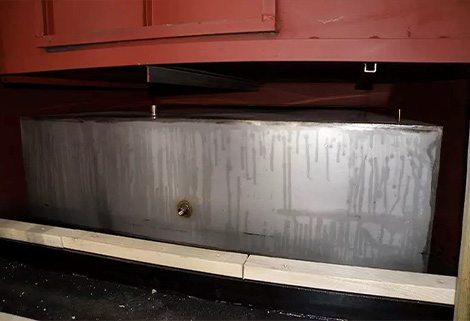
The lowest risk material is stainless steel – this offers protection from rusting and bacterial infection and as it doesn’t retain toxins, it avoids persistent foul smells and tastes.

domestic water tank

domestic water tanks - steel

Domestic water tank maintenance differs by material.

Stainless steel tanks require a purification cycle of at least once a year. To do this, add a purifying tablet to a FULL water tank and leave to activate for the advised time period. Once purification has occurred, turn all the taps on and drain the system as much as possible. This will ensure purification flows through the system. Next, refill and flush the tank twice more to evacuate any residual chemical within the system (with the taps on and a running hose pipe in the tank).

Mild steel tanks require the same purification cycle as a stainless-steel tank but they also need deep cleaning every three to five years. This entails removing the inspection cover and power washing the inside. Do not sand down or rub the rust off - rust is not dangerous and the power washer will remove any loose rust and debris build up. Do not paint the inside of the tank (unless specialist paint is used) as this will leach toxins into the water.

Plastic tanks also require a yearly purification cycle, but instead of using chemicals, they should be cleaned out manually using hot water. If the tank is inaccessible a hot water flush will suffice. If a chemical is the only method available, regularly flush the system with fresh water. Furthermore, do not allow water to stand in the tank for long periods of time as this increases the build-up of toxins in the water.

Finally, filtration is advisable for any domestic water tank. A filter will remove any debris or sediment, drastically improving the water quality and consistency, and there are also filters that can remove toxins. Filtration however, does not replace the need for tank maintenance and if this is neglected, water will be foul smelling/tasting water even if filters are installed.
RCR has more boat maintenance tips on its website.

royal exchange kinver

the royal exchange

kinver

Although the Royal Exchange in Kinver can't really be classed as a canal side pub, you will find it's well worth the walk from the visitor moorings. There are different routes, including a well trodden path from Hyde Lock, and a steady uphill climb from the moorings at Whittington Horse Bridge. Walking from Kinver Lock through the village takes about 15 minutes but it's also a good excuse for taking in what else the village has to offer. Whichever way you go, you are bound to receive a warm welcome at the Royal Exchange.

Local villagers would say that, in the last year or so, the Royal Exchange has changed almost beyond recognition. This has to be entirely due to the enthusiasm, experience and sheer hard work of the current landlady, Debbie Burns and her partner Ben Hardcastle. So much so, that in July this year, Debbie received the coveted first prize in the pub chains The Sports Incentive Scheme, beating all other Marstons pubs nationwide, earning herself the grand prize of £500. Debbie and Ben also came second in the Best Kept Frontage in Kinver.

royal exchange

royal exchange - beerfest

background

Debbie and Ben both hale from the North, and both are well experienced in the pub trade. Debbie is a fully qualified and experienced beautician, and Ben is a stone mason by trade, although he seems to be able to turn his hand to anything. And Debbie is always brim-full of projects for him to undertake!

One of the highlights in Debbie's career was when she ran both pub and beautician's practice in Cornwall. Plus she has run a bar out in Spain. At one time she travelled widely in France and Spain and when she returned, she decided to re-enter the pub trade, asking the breweries for a hotel. She got her hotel almost immediately, and with it, she found herself overseeing a total of 26 pubs.

A major turning point in Debbie's career followed. A serious accident resulted in her breaking her back in three places. A long convalescence resulted, during which Debbie had to learn to walk all over again. She had to abandon the high powered position she had held, and spent a few good months in hospital and then recuperating abroad.

Since getting together, Debbie and Ben have had pubs in various parts of the country including Bishop Auckland and Stourbridge. They managed to enjoy a few months touring in Europe and then eventually took over the Royal Exchange in July 2022.

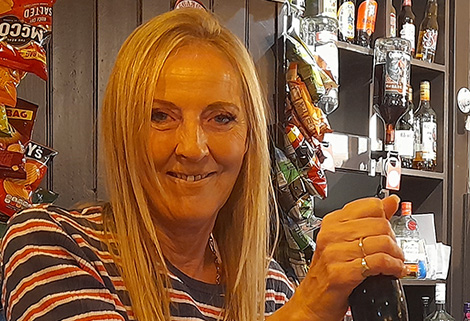
Debbie - a landlady who likes to pull her own pints

ben, landlord at the royal exchange, Kinver

the pub

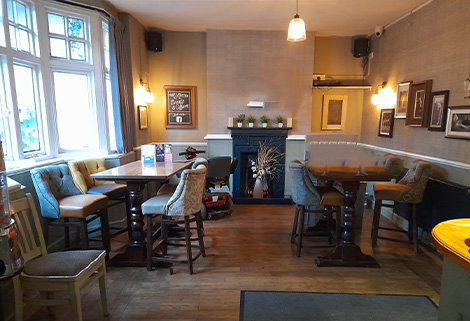
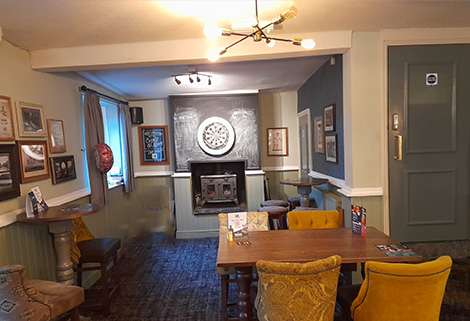
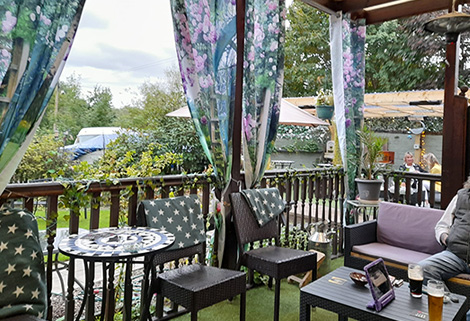
The pub interior is cosy but quite spacious. The main bar area has an alcove for darts, and there is a snug room which is almost, but not quite separate from the main bar. There are log fires in the winter, and there is a covered smoking / seating area outside which is very popular all year round, especially as it has three hanging heaters and curtains to keep everyone cosy.

As you would expect with a Marston's pub, there is a good selection of lagers, ciders and a whole selection of real ales for the connoisseur. The top shelves seem to be very well stocked, and Debbie, with her knowledge of good wines, will be sure to serve you the best.

There are no dining facilities at the pub, but on quiz nights and other special occasions, Debbie and her staff will put on a jolly amount of sandwiches or other delicious buffet foods.

the snug

royal exchange, Kinver

the garden

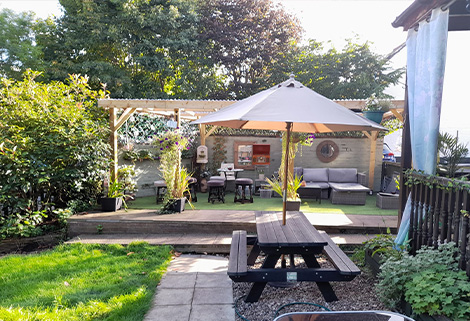
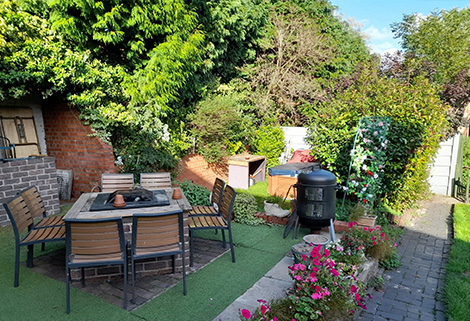
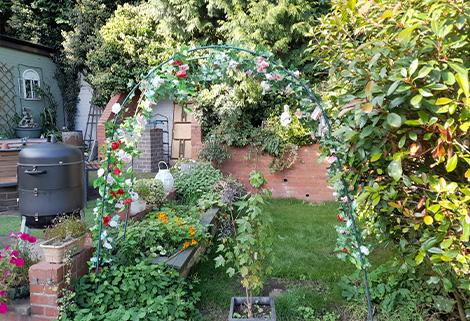
The gardens, both front and back, are Debbie and Ben's greatest achievement. Debbie of course has the ideas, and Ben carries out her instructions. It is Ben who built all the raised beds to the front and rear.

The covered outdoor area is the most popular area of the pub, in both summer and winter. It is not far from the bar, has a good view of the stage and the garden, and for colder days there is very ample heating.

The couple have built a stage area, which doubles up as a cosy seating area when no one is performing. Full of hanging baskets, it is an extension of the garden.

They have also built a BBQ area, with an outdoor oven and a raised fire pit.

They have thought of everything, so when events are on, the uncovered part of the garden has a giant canopy. The show will always go on!

royal exchange, Kinver

sheltered outdoor area

what's on

The pub is never without live entertainment for very long. With individual artists and groups, plus special events like the 'Rock and Royal' festival, or the Cheese and Wine party.

They also have a quiz night, a real ale night and a cocktails evening. Plus they have loads of ideas for future events, so well worth keeping a watchful eye out. For those sports lovers out there, there is plenty of 'Live Sport' to watch on large TVs with your mates.

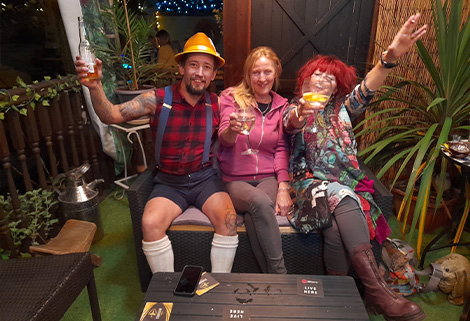
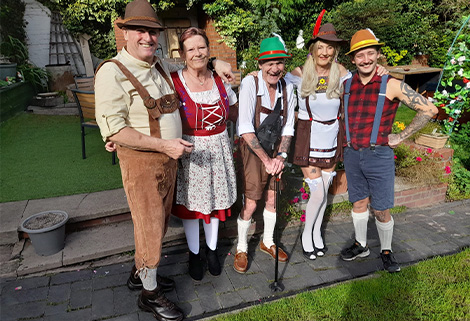
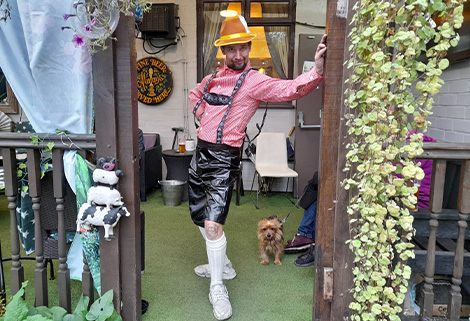
Debbie and Ben are always prepared to take part in events themselves - hence the beer fest outfits sported in some of the accompanying photos. Debbie has the reputation for being unable to sit still for more than two minutes. They are a very welcoming couple who have spread their friendliness through their customers, so that any boater, whether holiday maker, part time cruiser or well seasoned live aboard, will find him or herself welcomed by staff and punters alike.

royal exchange, Kinver - garden

the royal exchange, Kinver

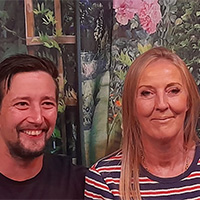
Ben Hardcastle and Debbie Burns

This has to be a pub that has to be well worth visiting. Ben and Debbie are fun loving and welcoming, but have a pub that is well run in every particular. We have always felt accepted and have been amazed at how friendly the regular customers have been toward us. And with all of their ideas for the future, definitely a pub to watch!

You can follow Debbie and Ben on Facebook

insurance cover for boats

insurance cover for boats

rcr warns of sub standard insurance cover

Breakdown and emergency assistance firm, River Canal Rescue (RCR), is calling for boaters to check their terms & conditions if they have a third-party insurance policy, as many will leave them unable to recover costs for a vessel refloat, removal and pollution management if their boat sinks.

RCR says it’s aware of a number of insurance companies that are capitalising on the demand for cheap policies by modifying their terms & conditions, including removing some common third-party risks or adding them as optional extras.

This, says managing director, Stephanie Horton, is causing major problems for owners, who due to unclear Policy Information Documents, are unaware they’ll be left to foot the bill for vessel refloat, pollution management and environmental damage claims, should their vessel sink:

“While most third-party policies will support ‘salvage’ – vessel sinking – claims, as there’s a risk you may cause damage to the environment and other vessels, do not take this for granted. Boat age is another issue; although a standard policy covers specific age-ranges, insurers can exclude certain vessels, or will only insure with a survey, not a BSS certificate, so it’s important to check.”

RCR is also concerned about claims handling, saying a number of insurers fail to appreciate boaters’ circumstances or support them during what is usually a very traumatic event.

Stephanie continues: “The emphasis is generally on claimants to limit further damage, organise estimates, report on what’s happening and pay for the work. Most insurers don’t take into account if you’re on holiday, you cannot progress the claim as you would if at home, and if you’re a liveaboard, and have just lost everything including your bank cards, phone and personal possessions, you’re not in a position to take any of the above actions.

“Before buying insurance, check the policy exclusions and optional extras, and ask how your claim will be processed if your vessel sinks or is at risk of sinking - is there a 24 hour helpline and online support?”

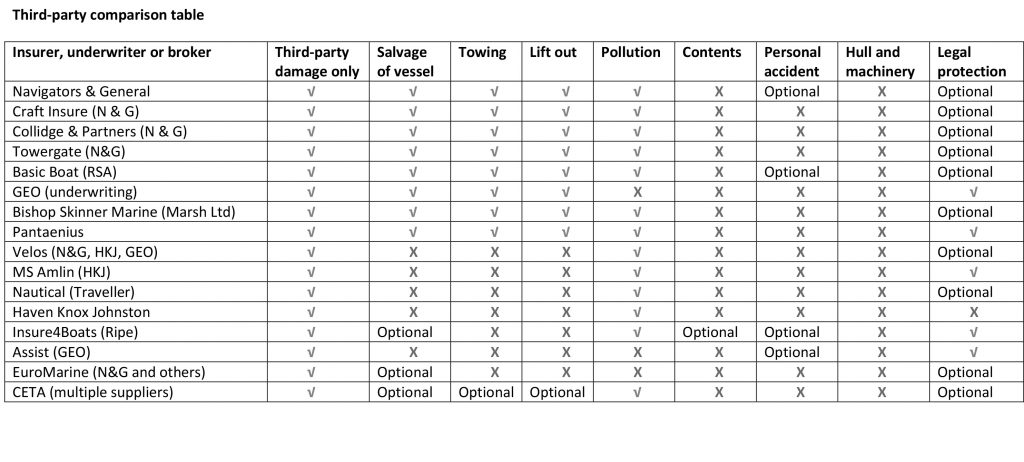
To help boaters navigate third-party policies and claims handling procedures, RCR has compiled two insurer comparison tables. Where possible its team checked all available policy documents, but this may not cover everything, so use only as a framework. Similarly, the claims handling data is based on general claims, and each case may be different.

boat insurance comparison tableRCR and its subsidiary, Canal Contracting, respond to hundreds of incidents resulting in insurance claims every year and regularly witness insurance policies failing to meet customer expectations and variations in insurer claims handling. Its Incident Care team helps boaters manage insurance claims and reduce risks following an emergency – call 01785 785680 to find out more.
melting

the boating bard

melting

It's as hot as hell in here
I'm looking for a draught
Got everything wide open
At my bow end and my aft

My fans are on full bore
To try and get a breeze
I'm sucking ice cubes frantically
whilst sitting on frozen peas

mandy mcdermott

I think I'm gonna ignite,
If I don't get a gust
I really need to chill out
Or I'll spontaneously combust

My feet resemble trotters
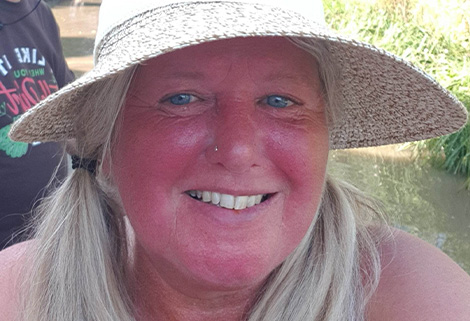
My face is rather red
My sun hat's made of leather
Think I'm going to boil my head

I'm glowing like a beacon
and dripping beads of sweat
I'm feeling rather moist but
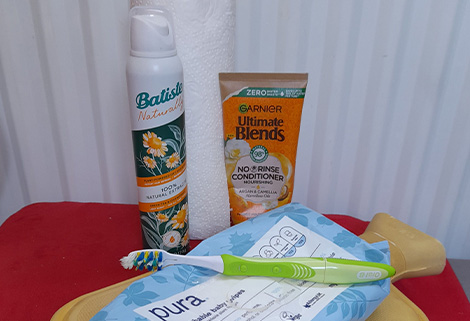
my wipes are no longer wet

I've drank my weight in water
I've googled what that means
I'll die from hyponatremia
If I can't cool my beans

I've had an ice cold shower
Though I really don't know why
Got hotter with towel rubbing
When I should've just dripped dry

I need to stand in water
but there's a big hole in my bucket
I think I'll just jump into the cut
'Cos there's nothing else for it

water conversation

the boating bard

water conversation

I wash my dishes in a thimble full
And reuse most of my crockery
I wipe plates clean with kitchen roll
But I sanitize my cutlery

I invert my clothes to get more wear
Until they start to stink
I consider the use of the washing machine
Or a hand wash in the sink

I know of boaters who multitask
Do their laundry whilst they shower
Swish their smalls round with their feet
Saving water and pump power


water conversation

I can wet wipe wash for many days
But I won't tell you how many
I dry shampoo instead of wet
Don't flush when spending a penny

My teeth are cleaned in record time
I don't rinse off all the paste
Leave in conditioner's revolutionary
Saving also on water waste

I cook veg in the smallest amount
I braise and don't sous vide
I scramble eggs, don't boil or poach
And I've never bain-marie'd

I don't recycle the hot bottle water
when making myself a brew
That's just taking it a step too far
And will probably make me...
poorly

rare plant research on Montgomery Canal

rare plant research begins on the Montgomery Canal

A comprehensive research study by Glandŵr Cymru, the Canal & River Trust in Wales, and the Rare British Plants Nursery, examining two species of rare plants in the Montgomery Canal, is underway.

The research is focused on two types of pondweed, the long-stalked potamogeton praelongus and flat-stalked potamogeton friesii, which are a part of the Potamogetonaceae family – a group of aquatic plants comprised of over a hundred species worldwide. These plants improve water quality, provide shelter for aquatic organisms, and act as a primary food source for waterfowl and fish. The research will look at developing different ways to naturally cultivate the plants, benefiting species recovery initiatives that will have an impact nationally.

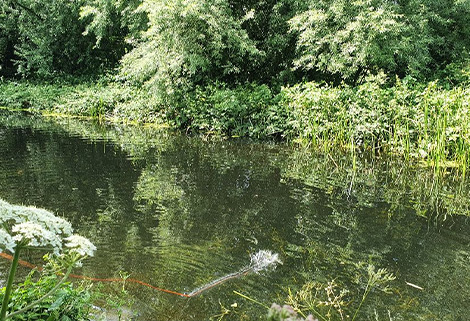
Potamogeton Praelongus in Montgomery Canal

Montgomery Canal

These plants are still rare and understudied. The research will help to understand the plants’ life cycles, reproductive mechanisms, and the ecological requirements to enable scientists to develop effective conservation strategies for them.

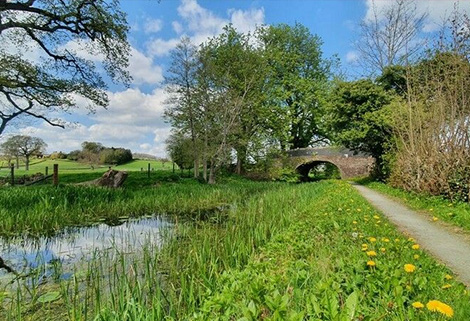
The Montgomery Canal offers an ideal human-built habitat for the species. The canal’s slow-moving waters are rich in nutrients and receive a lot of sunlight, creating conditions that closely mimic their natural habitats such as the slow backwater areas of rivers.

Glandŵr Cymru is currently restoring a 4.4-mile section of the canal between Llanymynech and Arddleen thanks to a successful Levelling Up Fund bid in partnership with Powys County Council, supported by the Montgomery Canal Partnership. One of the aims of the project is to protect the ecosystem and create conditions that will allow the plants to flourish once again.

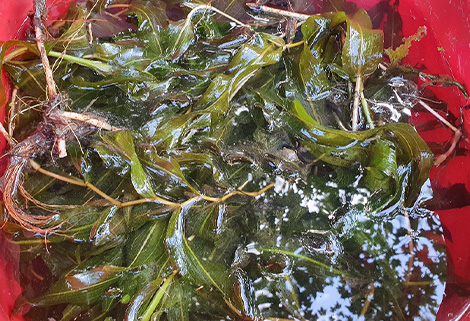
Potamogeton Praelongus in tub

Montgomery Canal

Kathryn Woodroffe, project manager at Glandŵr Cymru, said: “The Montgomery Canal is one of the most important canals in the country for nature. The pondweeds in the canal stand out as remarkable specimens for their rarity and their elusive reputation that has allowed them to persist and maintain ecological significance despite the size of their small populations. Their rarity highlights the need for this dedicated research. By studying these plants, we can discover valuable insights into the delicate balance of aquatic ecosystems and pave the way for effective conservation measures.

“The canals are a precious resource and this is just one example of the vital role they play in the natural world – in this case with research outcomes that could stretch across the UK. We are committed to protecting these special places and welcome the support of all those who value their local canal.”

Andrew Shaw, Director of The Rare British Plants Nursery, said: “We are delighted to be working on this important project. These rare pondweeds are now growing well at our plant nursery and we are already learning a lot about their ecological requirements. Our studies will enable the canal restoration works to secure the long-term future of these rare aquatic plants.”

ldk print lisa grainger

featured roving canal trader

Lisa Grainger - LDK Print

what's in a name?

My name is Lisa, and my husband is Dave. We have two daughters - Kim and Caitlin Jayne. Coming up with a business name was easy - we chose the first initials of each of our names. Thus L (Lisa) D (Dave) and K (Kim). That was in 1995. When we had our boat built in 2004, we were trying to come up with a name which incorporated both our children's names. But Kim said we should name the boat Caitlin Jayne after her younger sister as her own name was already in our established  business name.  So that is what happened.

After many years of having a land-based shop, we began to contemplate trading from our 69ft narrowboat, Caitlin Jayne, and at the end of 2017 we put the plans in to action, changed the boat license to a business license, got the appropriate insurance and joined the RCTA.

Our first floating market was Great Haywood, which we thoroughly enjoyed, but it was definitely an eye opener, to say the least. We soon realised we needed some sort of canopy to protect us and our products against the rain. So, when we got back home, we got our heads together to see what the best way would be to have something secure, yet easy to take down and not permanent or anything that might deface the boat.

Being ex market traders, we still had the market stall bars and the canopy which we could use and we had a few more bars made up that fitted on the rail of the boat. So, with what we already had in storage and few additional bars, we had our canopy.

LDK print and embroidery

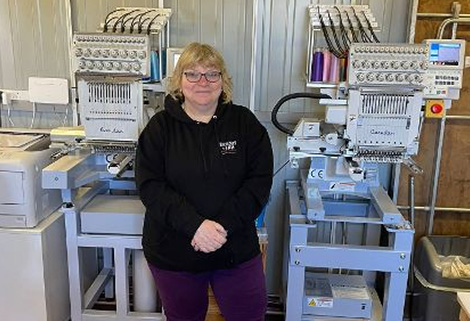
Lisa Grainger with embroidery machines

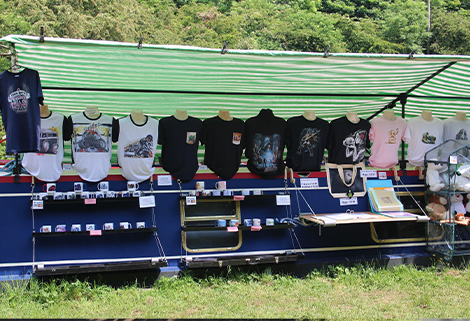
For the first couple of floating markets, we printed mugs, mouse mats, keyrings, clocks, coasters, placemats, cushions, T shirts and hoodies, but by the end of the 2018 season, we had expanded our products to include embroidered T shirts, hoodies, and polo shirts.

We have been doing embroidery since 2003 and were looking for a 2nd 15 needle embroidery machine that would match what I already had. The problem was, getting one that would fit on our boat,  as the one I already had was too big to fit through the doors of our boat.

I had approached Barudan but they only had a 9 needle machine that would fit through our doors, but we really needed a match to what we already owned.

Luck was on our side for once, because Barudan came back a few days later to say they would build us a 15-needle embroidery machine on their 9-needle frame and we would be the first people in the UK to have this machine.

When we do floating markets now we still print the above, but with the additional embroidery to T shirts, hoodies and teddies or, if customers bring their own items, we can print or embroider their clothing.

Other products include engraved products, 3D models, door plaques, bags, and a whole new range of things.

We have the best of both worlds because when we are not trading from our boat, we are back at base and producing other products that we cannot produce on our boat, like our full colour banners, and 3D printed products.

sitting dragon

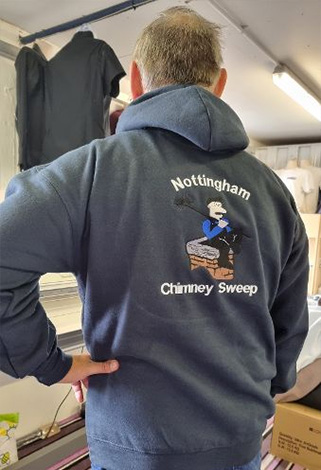
chimney sweep embroidered hoodie

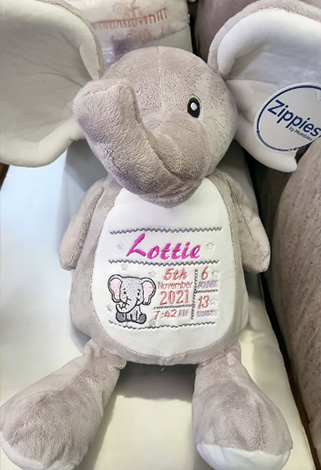
embroidered birth keepsake elephant

Basically, our services include:

  • Embroidery or printing to workwear, casual clothing, hospitality, catering, sportwear, hats, towels etc.
  • Digital and vinyl printed signs, banners, decals, vinyl graphics for vehicles, boats, etc.
  • Personalised gifts include, embroidered teddies, printed mugs, mouse mats, keyrings, cushions, place mats and coasters, clocks etc.
  • 3D printed models for children to role play, ornaments, or home decoration.
  • Laser engraving to acrylic led plaques, slate coasters and place mats, wood etc.
  • Road legal number plates – we are a registered number plate supplier.

LDK Print logo

LDK Print & Embroidery Ltd is a family run business. Established in 1995, we have, over the past few years expanded and flourished, now with a satisfied customer base from all over the country, that keeps returning year after year. We know our new customers will be more than satisfied with our services. 

07482 832082
info@ldkprint-embroidery.com
https://www.ldkprint-embroidery.com/
https://www.facebook.com/ldkprint

bedding wars

the boating bard

bedding wars

It's come around again
The time to change the bedding
We put it off for as long as we can
It's a job that we've been dreading

We all like a crisp clean bed
But now we've a crispier kind
With linen beyond its best before
In our dirt we are entwined

Our bed butts up to the window
It's fixed against the wall
It makes it difficult to change
And this is why we stall


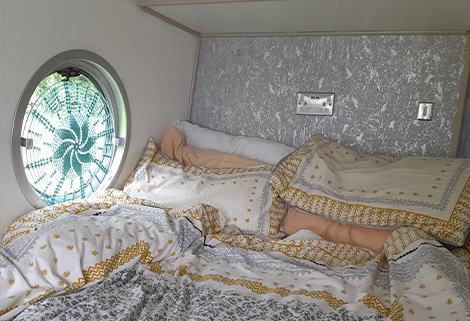
bed in narrowboat

We're avoiding the acrobatics
of replacing the fitted sheet
They must shrink with every wash
because the corners barely reach

It's a military operation
As we go in for the kill
One lays on the bed like a starfish
The other tucking with a will

The activity is quite exhausting
due to the little amount of space
what with oxygen levels falling
and a mattress in your face

Next comes the duvet and cover
It's a dangerous undertaking
Like squashing a jack in a box
When it keeps on self inflating

We use the outside in method
Hands in and invert it over
Popping the press studs frantically
Looking for bedding closure

And when the deed is done
And we are all done in
We've forgot the pillow cases
Sod that we can't be bothered!

living on an electric narrowboat

living on an electric narrowboat

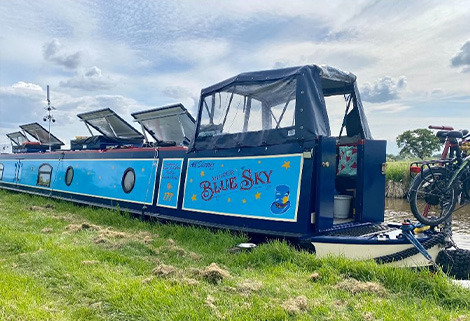
the all electric 'mister blue sky'

We get asked a lot, “Is it really all electric?”

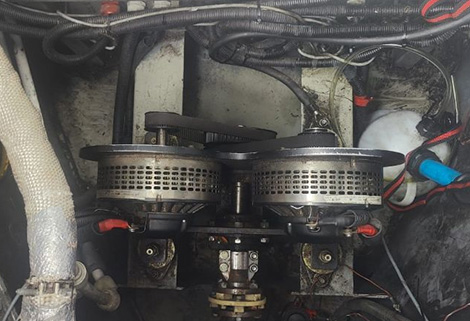
YES! We have a fully electric driven (by 2x 8kw Lynch motors) narrowboat built by Braidbar Boats in 2018.

On the technical side we have: 6x 5kw @ 48v lithium batteries. 1.5kw of solar panels with an 8kw inverter. All the electronics are Victron brand.

This gives us more than enough power for propulsion and to run all the domestics such as the 240v fridge freezer, washer/dryer etc.

electric motors

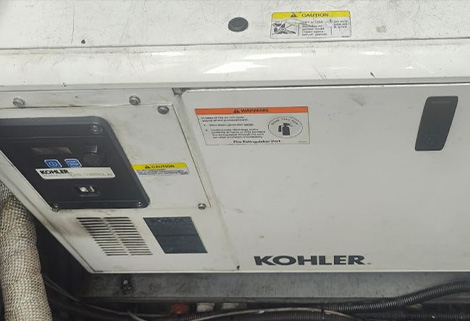
Kohler marine generator

Obviously we rely on the British weather so for winter months, say Nov till March, if we get little or no solar, we have a 7kw diesel generator which we use to charge the batteries. 2.5 hours of generator use recharges the batteries to full and this will give us approximately 2 weeks of domestic use and a couple of short cruises. We still cruise in the winter but, like most CCers, at a slower pace.

Since early April this year we have cruised from the River Weaver to Kinver and not used the generator at all, so all our power has been FREE! Our plan is to get to Stourport then head back up north to the Leeds Liverpool canal for winter cruising.

As far as the motors are concerned, in 4.5 years we have not needed to do any maintenance on them. If either becomes faulty or breaks down it is simply a case of removing by a couple of bolts and an electronic plug and sending by parcel courier. Each motor measures approximately 12”x8”. We can still cruise with one motor.

solar panels raised

solar panels lowered

Another question or statement really is “Isn’t it quiet!” Listening to the birds and our surroundings while cruising is great, a real bonus, but sometimes the anglers get a shock when they don’t hear us approaching!

We love our life on the waterways and we feel we are doing a little bit to help the environment by living off grid, and more so by having an electric boat.

the three rivers race 2023

the three rivers race 2023

The internationally famous Three Rivers Race, organised by Horning Sailing Club, takes place on the Norfolk Broads, usually during the first week-end of June.

Background
The Three Rivers Race is one of the oldest remaining on the Broads sailing calendar. Running every year since 1961, it is also one of the largest inland yachting races in Europe, encompassing three rivers and two lakes or broads in rural Norfolk. Originally, the plan was to have boats crossing the estuary at Breydon Water with the three rivers being the Bure, Yare and Waveney. However, from a safety and tide aspect this proved impractical, so the northern Broadland Rivers of the Bure, Thurne and Ant were used instead, and remain the Three Rivers of the Race to this day.

The current challenge sees helms negotiate a course in the order of 45-50 miles, depending on conditions, rounding four buoys located at Ludham Bridge on the Ant, on South Walsham Broad or Fleet Dyke, on Hickling Broad at the top end of the River Thurne and downstream on the River Bure somewhere between Stokesby and Six Mile House heading towards Great Yarmouth, starting and finishing at Horning Sailing Club on the upper Bure.

The time limit for this is 24 hours from each boat's start time. There are also 4 mast lowerings required on the course to negotiate the pair of bridges at Potter Heigham and also the bridge at Acle both ways.

Despite all of these obstacles and sometimes complex rigs, the fastest boats such as Norfolk Punts and visiting Thames A Raters can complete the race in as little as 7 hours given favourable conditions. For those boats which cannot get back in time for a swift pint in the Swan, a cooked breakfast is provided at the finish in the clubhouse to revive weary sailors.

All the boats are tracked at Horning Sailing Club for safety purposes. A team of 10 fixed motor cruiser guardships plus a range of other safety vessels keep an eye out for any problems and report back to base via radio. The efficiency of this system was underlined in 2001 when, for the only time so far in the race's history, strong winds caused abandonment of the race. Having issued the command from base at 6pm, all crews and the vast majority of boats were either at their home moorings or back at Horning Sailing Club by 11pm, despite being up to 15 miles away by river, thanks to the safety network.

Progress around the course is tracked using computer software which allows the Race Controller to see in an instant on which stretch of water each competitor was last reported by a guardship.

Three Rivers Race 2023

three rivers race 2023

three rivers race 2023

The start of the race is the time for spectators to view the fleet in one concentrated mass, waiting to be started in groups of around 10 boats upstream of the start line at Horning Sailing Club. The first start is usually at 11am and it takes over an hour to get the whole fleet started.

Once the fleet has reached Thurne Mouth, yachts can usually be seen heading off in both directions, and this decision is probably the most critical one of the whole race, dependent as it is on wind, tide and boat performance. The Three Rivers Race really is a test of seamanship over a long period and covering a wide variety of areas from close-quarters boat handling at the start to light airs sailing overnight and control at the bridge zones. Crews have travelled to Horning from all over the World to take part in a variety of craft, including the impressive Thames A Raters, Norfolk Punts, Half-Deckers, Yeomans, Yare and Bure ODs (White Boats), Reedlings, Rebels, Wayfarers, Enterprises and other dinghies, traditional Broads River Cruisers and Production Cruisers. No single-handed craft are allowed.

Leaving from Horning, competitors make their way through the street at Horning, before sailing on the more open waters of the Bure once out of the trees. Then it becomes a matter of tactics - ensuring that the tides and winds work in their favour, choosing which order to sail the remainder of the route, which includes Fleet Dyke to South Walsham Broad, the River Ant to Ludham Bridge, under Acle Bridge to Stokesby (or further, dependent on wind conditions on the day) and under Potter Heigham Bridge to Hickling Broad.

As part of this course, it requires the raising and lowering of masts to get under the bridges - always a great spectator sport, with popular viewing points including Potter Heigham and Acle, where the crowds can enjoy the excitement.

Today safety is at the forefront of the race organisers' minds, and the Three Rivers Committee, headed up by Kevin Saunders, has been planning the 2023 race since last year.

three rivers race 2023

three rivers race 2023

three rivers race 2023

2023 Race

Hosted by Horning Sailing Club, in the heart of the Norfolk Broads, the race is a true spectacle not to be missed, as the myriad of boats set sail - where small dinghies such as the Norfolk Dinghy and Wayfarer can be seen sailing against the visiting Thames A Raters, with their tall masts standing at over 40 foot high!

This year a total of 103 boats took part, starting from Horning Sailing Club from 11.00 am on Saturday 3rd June. They set sail in groups of around 10 boats at a time, starting with the Yeoman fleet. These were followed by the Wayfarer dinghies, then traditional Broads boats including Yares & Bures, Waveney One Designs and mixed dinghies. More traditional Broads boats including Reedlings, Rebels and Broads One Designs followed, then halfdeckers and production cruisers. The faster dinghies, including Norfolk Punts and the Thames A Raters, started after a short gap.

With a fair wind behind them they all made their way down the River Bure before making their individual decision as to which route to take in order to visit all the ten marks, each of which is watched over by a “guardship” with a rescue boat alongside able to respond to any emergency or search for any missing or long-overdue competitor.

Other marks which had to be rounded were those at Ludham Bridge on the River Ant, near Stokesby on the River Bure, the Stracey Arms Windpump and in Hickling Broad above Potter Heigham bridges.

Some 50 river cruisers and hire cruisers make up the remainder of the fleet, from the highly competitive to those who just want the achievement of finishing the race. This is one of the things that makes the Three Rivers Race so special - it means something different to each entrant. It's fantastic that after over 60 years the race is still going strong and attracting competitors from all over the country (and even some from abroad) to take part.
This year, the race included both previous winners and a number of sailors participating for the first time.

The MNA Boat Club Guardship “ELSA II” and her accompanying rescue dory were crewed by Club members Clive & Lois Edwards, RNLI Lifeboat crew members Malcolm & Jill Wright and Steven (Rocky) Woolford. They were stationed in South Walsham Broad at the end of the Fleet Dyke alongside the Marine Tech fuelling jetty who’s owners were very supportive and allowed us to use their facilities throughout the whole 24 hours. Thank you Rod and Nina!

The overall winner was a Yare & Bure One Design “Dinghy Skipper” which completed the course in 8 hours 24 minutes followed by a Yeoman “Firefly” and a Wayfarer “Compleat Fiasco”.

three rivers race

three rivers race 2023

three rivers race ©Holly Hancock

As regards our contribution of “ELSA ll” as a Guardship we had a fairly frantic 18 hour period even before the race started because, on our way south down the River Ant from our mooring at Barton Turf, we suddenly started to experience a weird “surging” of our engine which we thought might be a fuel filter. However, when checked, it was in fact perfectly clear. We were then led to believe it might be weed round our prop and/or rudder resulting in us spending £200 on a diver, only to find that there was no significant amount of weed affecting us!

So at 22.00 hours on 2nd June, less than 12 hours before we were due to lay our mark at South Walsham we had an engineer, Rob Fearson, from Sutton Staithe Boatyard who very kindly turned out and finally diagnosed the problem which was a wholly unexpected lack of oil in the gearbox – the cause being a leak in the gearbox cooler allowing all the oil to mix with the cooling water and them pumped out through the exhaust!

Re-filling the gearbox enabled us at least to get to our mark at South Walsham, on time the following morning, and to get most of the way home on the morning after the race had finished without further trouble – needless to say a new gearbox cooler is now being installed!

Very fortunately we had some much appreciated support from Richard and Rachel Card in their handsome motor cruise “Ness Nomad” who escorted us down the Bure and Fleet Dyke to lay our mark on the Saturday morning and then remained anchored in South Walsham Broad throughout the day in order to ferry Jill and Nikki back to Horning before we commenced our “night watch” Having “Ness Nomad” and Richard and Rachel’s sailing dinghy available on
stand-by to relieve us if we had any further trouble during the race was a huge relief in addition to which they were great company and help with recording the bunches of competitors rounding the mark so a huge “thank you” to them is due.

(Editor's note: The header photo is from the 2022 Three Rivers Race)