old bill and the queen

old bill and the queen

the boat museum receives a royal visit

Although the museum was only open at weekends for the first couple of years, visitors arrived randomly during the week. They would often get an impromptu guided tour. One such visitor was Old Bill. He introduced himself with a question, “Have you got any steam boats here?”. We hadn’t, but we liked him so we invited him in for a brew and a chat.

Bill had recently retired from lorry driving for the nearby car factory. He told us he had always been known as Old Bill because, everywhere he worked, he had been the oldest William. At Vauxhall there had been Young Bill, himself and Bill the Bum!

Like many amateur engineers of his era, Bill had a lathe in his garden shed but he’d run out of projects since retirement. His first job had been as fireman on a steam lorry and he’d yearned for involvement with a steam engine ever since.

“We don’t have a steam boat,” I explained, “But we do have a pair of hydraulic pumping engines”.
“Oh!” said Bill, “Can I have a look?”

The steam engines used to provide hydraulic power to the whole dock estate. Sadly, they were derelict and all their bearings and other brass bits had been nicked. I unlocked the door and we entered past the silent Lancashire boilers then up the steps into the engine house. Bill got very excited. “Do you think,” he asked “if anyone would mind if I just cleaned them up and painted them?”

Old Bill, realistically, wasn’t going to stop with prettification. He aimed to get an engine running. Soon he had an agreement with a brass foundry in Widnes. He would supply the wooden pattern for the required part, along with scrap brass, and they would cast the part for free. Volunteers who came along at weekends began to bring unwanted brass items with them to add to Bill’s brass stash.

Bill worked long hours in the engine house. He would often drop in for a brew, regaling us with tales of his years driving trucks, his time serving in world war II, and his childhood, playing with snowballs made from asbestos waste.

It took him 3 years to get the first engine running. Reviving the Lancashire boilers was impractical so a small vertical boiler was installed the other side of the covered arm. On steaming days the job of fireman fell to me, using scrap wood as fuel. A simple intercom was used for communication across the water.

As time passed the Boat Museum increased in fame. I acquired a wooden motor boat called Sarah that, like Lilith, needed rebuilding. It developed a bad habit of sinking.

We had an arrangement with the local fire station when a boat sank. They would come and pump it out and put it down to training. The one proviso was that, if they should get an emergency call, they would rush away to answer it.

One day Sarah sank, gunwales under, right in the most prominent part of the museum. I summoned the brigade and they started getting set up, then an emergency call came in and they were off, returning later to recover their equipment.

The museum committee started to take an unusually intolerant view of my sunken boat. They let me know that they were expecting a visit from an unspecified but very important person, and Sarah was an embarrassment.


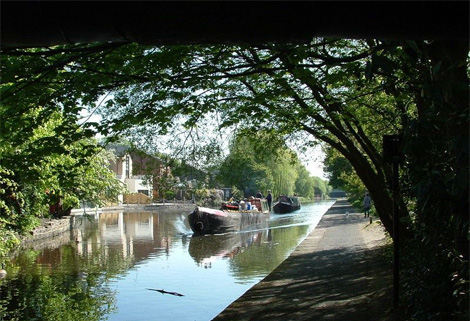
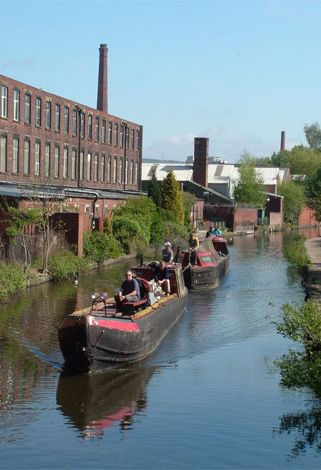
Forget-me-not towing Lilith in 2017

Lorries began to arrive, delivering half of Derbyshire in the form of crushed limestone to make new roads and paths. A British Waterways dredger turned up and started work. BWB also started work repairing the bottom lock, giving access to the ship canal. This required the use of three huge Sykes Univac pumps, two on the land and one on a work flat.

The job finished on a Friday. The two pumps on the land were taken away but the work flat was brought up the locks and left in the outer basin with the pump still on board.

When the workers had gone I went to have a look. There were suction pipes, diesel in the tank and a starting handle. I shafted the boat into the museum and tied her abreast of Sarah. The suction pipes were soon connected up and fed into the sunken boat.

I spun the handle, knocked down the decompressors one by one and the big 3 cylinder Lister roared into life. Water started to jet across the basin from the pump outlet and a mini Niagara started all along Sarah’s gunwales. In almost no time the cascade stopped and the boat popped up like a cork. The big pump ran out of water to shift, so I rigged up a little electric pump to complete the job.

With Sarah safely afloat I shafted the work flat back to where I’d found it and carefully re-placed all the equipment so that, when they came to collect it, no-one would be any the wiser. After 50 years I don’t think anyone will be bothered!

It soon became clear that our mystery guests were to be none other than Queen Elizabeth II and Prince Philip. We began to get posh impromptu visitors, who we’d never seen before, claiming to have been the first to think of having a boat museum there. It’s amazing what a royal visit will bring out of the woodwork!

A few days before Her Majesty was due to arrive, stop planks were inserted at the first bridge-hole. Police divers dragged the basin and checked under the boats for bombs. This was quite handy as they found a lot of the tools that I’d dropped in over time.

With the divers' work done the police ringed the whole site, one copper every few yards and every third one with a dog. Access was only possible with a pass. I had a pass, but nobody informed the officers that I lived there. Every time they had a shift change I would get interrogated by bored and suspicious policemen, who clearly thought that my pass was a forgery. I had a wonderful but scruffy mongrel called Caspar who was invaluable in guarding the site, but was not happy about all the police dogs on his manor.

Forget-me-not towing Lilith in 2017On the big day, Old Bill came dressed in his shiniest overalls. The royal visitors wanted to see his engine running. The sun shone and crowds of visitors assembled, many of the ladies wearing dresses of delicate shades of pink or white.

My job, of course, was to fire the boiler. This had the added benefit of keeping me out of the way as my Cromwellian sympathies were well known. For the first and last time I was supplied with the luxury of coal to fuel the fire.

I had full pressure in good time. The intercom crackled and Bill told me that it looked like it would be a while before the royal party reached the engine house, so we might as well run the engine.

This happened a couple more times, then Bill said he thought they wouldn’t be much longer. I had a full boiler, full pressure and the safety valves just sizzling. To cool things down I put on the damper and filled the firebox with coal. Deprived of air, the coal began coking, and a haze of sulphurous yellow smoke drifted from the chimney.

The intercom crackled again. “They’re coming over now!” said Bill, “Give me steam!"

I removed the damper and, from inside the firebox came a loud WUMPF as oxygen ignited the hot coal. As the products of combustion exited the boiler they took with them the layers of soot that had built up in the passages.

A great cloud of black ordure rose from the chimney, sailed above the island warehouse and descended on the ladies in pink and white dresses...

Bill was dead chuffed about meeting the Queen and later related to us the entire conversation that he had with her, several times.

******

Bill carried on with his work in the engine house for many more years, leaving a legacy that is enjoyed to this day by museum visitors.

The old boiler was replaced with a new gas fired one, eliminating any future risks of dry cleaning claims.

Caspar moved to Runcorn with me in 1982. Sadly, he later succumbed to cancer aged about 10.

Sarah’s original name turned out to be Forget me Not, built originally as a horse boat in 1927 for number one boatman Henry Grantham. She was motorised at Braunston in 1929 and fitted with a counter stern in 1931. She was launched after a comprehensive rebuild in 1994 and now is the principal motor boat for the Wooden Canal Boat Society. Among other things, she tows Hazel on well-being trips. After 32 years in the water she now needs another overhaul.

author avatar
Chris Leah
Chris Leah has been living on boats since the early 1970s, when he began to train as a teacher. He bought a wooden joey in 1974, and the restoration of this and other wooden boats took over his life completely. He is still involved with boats, but Lilith is now owned by the Wooden Canal Boat Society.
This entry was posted in Miscellaneous on by .

About Chris Leah

Chris Leah has been living on boats since the early 1970s, when he began to train as a teacher. He bought a wooden joey in 1974, and the restoration of this and other wooden boats took over his life completely. He is still involved with boats, but Lilith is now owned by the Wooden Canal Boat Society.